One life, filed into five areas, kept on paper, published here.
Zach Phillips
1Yes = ∞No
Saying yes to a thing is exactly equivalent to saying no to everything else.
1 YES equals INFINITE (ETERNAL) NO. Also, 1 NO is much less than INFINITE NO.
So if you’re the type of person who doesn’t like saying no, the best thing you can possibly do is say no. 👇
Do you have lots of things you want to do? Say no as much as possible.
Not sure what you want to do? You might consider saying yes.
When considering saying yes, it’s important to know what you’re saying yes to.
What is this thing? Who’s expecting this thing? Is everything covered? Do the people covering everything know what they’re saying yes to?
Is this thing worth saying no to literally everything else?
And of course, if you don’t mind saying no, then by all means, say yes.
I wrote about how saying yes to one thing is saying no to everything else.
Saying yes to a thing is exactly equivalent to saying no to everything else.
1 YES equals INFINITE (ETERNAL) NO. Also, 1 NO is much less than INFINITE NO.
So if you’re the type of person who doesn’t like saying no, the best thing you can possibly do is say no. 👇
Do you have lots of things you want to do? Say no as much as possible.
Not sure what you want to do? You might consider saying yes.
When considering saying yes, it’s important to know what you’re saying yes to.
What is this thing? Who’s expecting this thing? Is everything covered? Do the people covering everything know what they’re saying yes to?
Is this thing worth saying no to literally everything else?
And of course, if you don’t mind saying no, then by all means, say yes.
Keep Moving
Me, a pedestrian, approaching a street corner.
You, a single car, approaching the same intersection at 90 degrees.
ME (internal dialogue, narrated) Go go just go GO GOOOO!
YOU, A SINGLE CAR (driver politely waves me across) Go ahead little walking person!
This has to stop. 👇
A car can keep moving and get out of the way without a pedestrian breaking her stride. It’s so much more comfortable to slow down a half-step than it is to awkwardly speed up while a menacing, throbbing car spitting noxious steam and putrescence waits.
Lest you think my position is somehow on the side of the cars, let me be perfectly clear: We pedestrians and bicyclists allow big scary aluminum whales to share our streets. Unless it’s putting out a fire or transporting someone with disabilities, it’s lucky to be here.
Keep moving and stay out of the way.
Obviously this doesn’t apply when the number of cars is greater than one. If a car has another car behind it, it must stop and wait for all pedestrians, until the heat death of the universe if necessary.
Every motor vehicle’s job is to keep moving and stay out of the way. A car is a wickedly dangerous filthy nuisance and we shouldn’t have to suffer its heaving, sputtering sighs or trust the brake-foot of its driver who is typing an email with his meat-thumbs.
Sadly, my car is guilty too. Because a not-insignificant percentage of society thinks it’s good and proper when a single car deigns to permit a pedestrian to cross as it waits, we live in a bizarro world where many pedestrians think it’s rude for a car to stay out of their way.
While we’re on the subject, can we get rid of cars in cities yet? Once you notice them, it’s like HOLY SHIT THERE ARE GIANT UNATTRACTIVE METAL WHALE CARCASSES SITTING IN LITERALLY EVERY PLACE THERE AREN’T SIGNS EXPLICITLY BANNING THEM WHO APPROVED THIS DESIGN?
I wrote about what cars should do when they approach an intersection at the same time as a pedestrian.
Me, a pedestrian, approaching a street corner.
You, a single car, approaching the same intersection at 90 degrees.
ME (internal dialogue, narrated) Go go just go GO GOOOO!
YOU, A SINGLE CAR (driver politely waves me across) Go ahead little walking person!
This has to stop. 👇
A car can keep moving and get out of the way without a pedestrian breaking her stride. It’s so much more comfortable to slow down a half-step than it is to awkwardly speed up while a menacing, throbbing car spitting noxious steam and putrescence waits.
Lest you think my position is somehow on the side of the cars, let me be perfectly clear: We pedestrians and bicyclists allow big scary aluminum whales to share our streets. Unless it’s putting out a fire or transporting someone with disabilities, it’s lucky to be here.
Keep moving and stay out of the way.
Obviously this doesn’t apply when the number of cars is greater than one. If a car has another car behind it, it must stop and wait for all pedestrians, until the heat death of the universe if necessary.
Every motor vehicle’s job is to keep moving and stay out of the way. A car is a wickedly dangerous filthy nuisance and we shouldn’t have to suffer its heaving, sputtering sighs or trust the brake-foot of its driver who is typing an email with his meat-thumbs.
Sadly, my car is guilty too. Because a not-insignificant percentage of society thinks it’s good and proper when a single car deigns to permit a pedestrian to cross as it waits, we live in a bizarro world where many pedestrians think it’s rude for a car to stay out of their way.
While we’re on the subject, can we get rid of cars in cities yet? Once you notice them, it’s like HOLY SHIT THERE ARE GIANT UNATTRACTIVE METAL WHALE CARCASSES SITTING IN LITERALLY EVERY PLACE THERE AREN’T SIGNS EXPLICITLY BANNING THEM WHO APPROVED THIS DESIGN?
Walking Philadelphia
I’ve gotten very consistent with exercise but I’ve never liked doing it for its own sake. The healthiest I’ve ever been was walking/biking 7 miles to work for a year.
I’m thinking about doing something a little crazy: Walking every single street in the city of Philadelphia. 👇
There are 2,215 miles of roads in Philadelphia, minus a few highways. So if I do a 4-5 mile walk 3 days a week for 3 years, I can easily walk every street. I plan to shoot one roll of film on each of the walks (that’s a lot of rolls of film but I can develop and scan myself).
The tricky part will be getting to the outskirts from Center City where I live. I can pretty easily bike to most of them, but later on I may take the train or bus.
I can use some of that walking time to call people I love on the phone, something I don’t do enough.
This isn’t the first time I’ve done something extreme involving walking. My dad decided to walk around all of the Finger Lakes and I walked two of them with him. One of them was Skaneateles Lake (the best lake ever). It was a 12 hour day of walking. We walked 44 miles.
When I tell people my plan, the first thing most of them say is “You don’t want to walk every street in Philadelphia!” It makes me sad. I’ve lived on a lot of streets. There are safe ways to go anywhere (as a man anyway). I wish people could feel less scared of their neighbors.
At first I looked for a real map, but I’m sad to say that it appears the map people who make attractive maps that include every street in Philadelphia and a nice solid outline of the city are all dead and gone. If you know who the Map People are today, please tell me.
Good news, though: There’s an app called StreetFerret that was made for precisely my purpose, walking (or running or biking) every street in a city, satisfyingly filling it all in, the whole map. It syncs with Strava data. I’d still like an analog map if you know of one.
It’s kind of a perfect little project for me:
- The best exercise for humans is walking.
- I get to see all of Philadelphia (the best city in America).
- Photography is great awareness practice for me.
- I can make calls.
- I can make something from it? Maybe? If it’s fun?
I wrote about a project I’m thinking of doing that seems cool/fine/fun to me but people look at me weird when I tell them.
I’ve gotten very consistent with exercise but I’ve never liked doing it for its own sake. The healthiest I’ve ever been was walking/biking 7 miles to work for a year.
I’m thinking about doing something a little crazy: Walking every single street in the city of Philadelphia. 👇
There are 2,215 miles of roads in Philadelphia, minus a few highways. So if I do a 4-5 mile walk 3 days a week for 3 years, I can easily walk every street. I plan to shoot one roll of film on each of the walks (that’s a lot of rolls of film but I can develop and scan myself).
The tricky part will be getting to the outskirts from Center City where I live. I can pretty easily bike to most of them, but later on I may take the train or bus.
I can use some of that walking time to call people I love on the phone, something I don’t do enough.
This isn’t the first time I’ve done something extreme involving walking. My dad decided to walk around all of the Finger Lakes and I walked two of them with him. One of them was Skaneateles Lake (the best lake ever). It was a 12 hour day of walking. We walked 44 miles.
When I tell people my plan, the first thing most of them say is “You don’t want to walk every street in Philadelphia!” It makes me sad. I’ve lived on a lot of streets. There are safe ways to go anywhere (as a man anyway). I wish people could feel less scared of their neighbors.
At first I looked for a real map, but I’m sad to say that it appears the map people who make attractive maps that include every street in Philadelphia and a nice solid outline of the city are all dead and gone. If you know who the Map People are today, please tell me.
Good news, though: There’s an app called StreetFerret that was made for precisely my purpose, walking (or running or biking) every street in a city, satisfyingly filling it all in, the whole map. It syncs with Strava data. I’d still like an analog map if you know of one.
It’s kind of a perfect little project for me:
- The best exercise for humans is walking.
- I get to see all of Philadelphia (the best city in America).
- Photography is great awareness practice for me.
- I can make calls.
- I can make something from it? Maybe? If it’s fun?
The Girl Squirrel
I’ve been showing favorite childhood movies to my kids (as you do). Man, they sure are violent. It doesn’t seem to bother my kids (didn’t bother me either, I don’t think…) but this sadistic, monstrous scene from Sword in the Stone has forever scarred us all:
I have to warn you before you watch this scene again (don’t watch it for the first time, just don’t)—I feel like when it ended, a part of me was lost forever. I can never be fully myself again: https://www.youtube.com/watch?v=Vas-TTFyi6M
There’s no resolution. We don’t pick up the story later. It’s just pure sadness, loss, a death deeper than death.
77.4% of these movies begin with one of the protagonist’s parents dying but nothing touches the sadness of this girl squirrel. Nothing.
Perhaps the innate defenses we have to protect us from serious trauma (like the death of a parent) don’t get triggered by this girl squirrel scene, so we’re open to the full spectrum of excruciating pain.
As someone who lost his mom at 5 years old, I can tell you, there are some complicated (if crude) protective mechanisms in place, kind of like a safety valve that shuts off when the flow of negative emotions is too great.
I wonder if the Disney scientists discovered the optimal, maximum pain they could deliver without triggering the safety valve, forever altering all children with the true pain of loss.
One thing is clear: Ratings boards don’t know what’s going to have the biggest effect on kids.

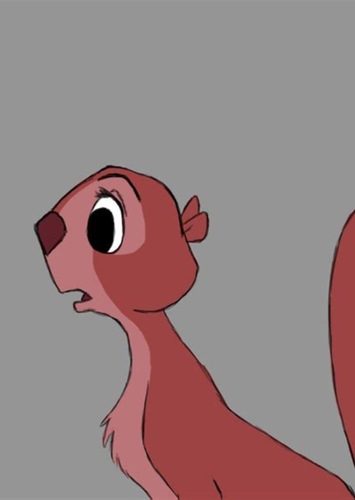
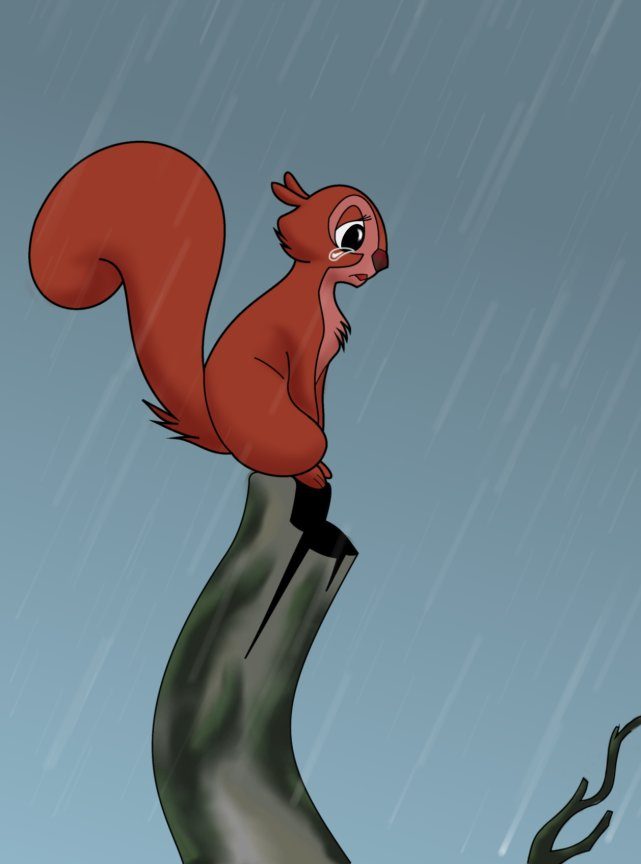
I wrote about what might be the optimally saddest scene in any children’s movie ever.
I’ve been showing favorite childhood movies to my kids (as you do). Man, they sure are violent. It doesn’t seem to bother my kids (didn’t bother me either, I don’t think…) but this sadistic, monstrous scene from Sword in the Stone has forever scarred us all: 
I have to warn you before you watch this scene again (don’t watch it for the first time, just don’t)—I feel like when it ended, a part of me was lost forever. I can never be fully myself again: https://www.youtube.com/watch?v=Vas-TTFyi6M
There’s no resolution. We don’t pick up the story later. It’s just pure sadness, loss, a death deeper than death.
77.4% of these movies begin with one of the protagonist’s parents dying but nothing touches the sadness of this girl squirrel. Nothing.
Perhaps the innate defenses we have to protect us from serious trauma (like the death of a parent) don’t get triggered by this girl squirrel scene, so we’re open to the full spectrum of excruciating pain. 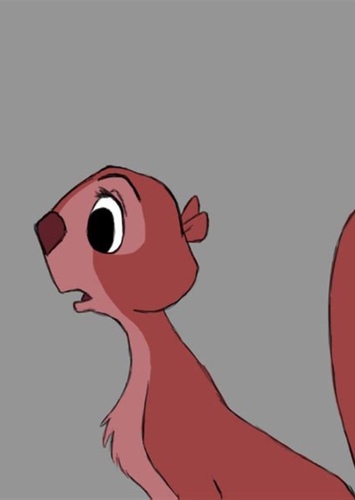
As someone who lost his mom at 5 years old, I can tell you, there are some complicated (if crude) protective mechanisms in place, kind of like a safety valve that shuts off when the flow of negative emotions is too great.
I wonder if the Disney scientists discovered the optimal, maximum pain they could deliver without triggering the safety valve, forever altering all children with the true pain of loss.
One thing is clear: Ratings boards don’t know what’s going to have the biggest effect on kids.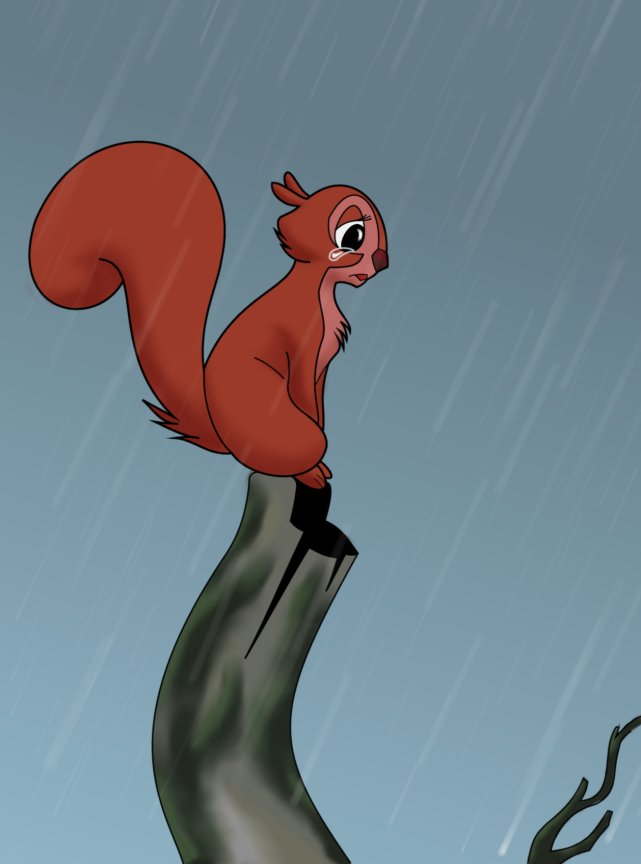
Thermostatic Unintuitiveness
My friend @Mikey_Two texted me: “My wife doesn’t understand thermostats. Maybe my biggest pet peeve.”
This got me thinking about how the design decisions of one interface can completely throw off the intuitiveness of other interfaces. 👇
Home thermostats start with a pretty big intuitiveness problem: When you set them to a temperature, air starts blowing or radiators start radiating at a different temperature than the current air. The perceived and actual temperature of the new air can vary widely.
Because you’ve set the temperature to a specific number immediately prior to the variable-feeling air that comes into the space, it’s totally reasonable to assume that the temperature you’ve set is relevant to the temperature of this new air.
It isn’t.
Allowing for some ramp up/down, HVAC systems are either distributing the hottest or coldest air they can until the temperature reaches the number on the thermostat. Then they stop.
But when it’s “really hot,” a not-small percentage of people set it “really cold” to compensate.
What ultimately ruined people’s understanding of how thermostats work is the car thermostat. Car thermostats have the same controls as a home thermostat, but the blowing air, from inches away, is dialable to the just-right-goldilocks temperature. It’s intuitive. It “makes sense.”
I don’t claim to have the solution to thermostat interface design, but I think it might look a lot more like a progress bar than the current ambient temperature ticking up or down.
70 [🟧🟧🟧——————]
That might help.
I wrote about how car thermostats have ruined so many people’s understanding of home thermostats.
My friend @Mikey_Two texted me: “My wife doesn’t understand thermostats. Maybe my biggest pet peeve.”
This got me thinking about how the design decisions of one interface can completely throw off the intuitiveness of other interfaces. 👇
Home thermostats start with a pretty big intuitiveness problem: When you set them to a temperature, air starts blowing or radiators start radiating at a different temperature than the current air. The perceived and actual temperature of the new air can vary widely.
Because you’ve set the temperature to a specific number immediately prior to the variable-feeling air that comes into the space, it’s totally reasonable to assume that the temperature you’ve set is relevant to the temperature of this new air.
It isn’t.
Allowing for some ramp up/down, HVAC systems are either distributing the hottest or coldest air they can until the temperature reaches the number on the thermostat. Then they stop.
But when it’s “really hot,” a not-small percentage of people set it “really cold” to compensate.
What ultimately ruined people’s understanding of how thermostats work is the car thermostat. Car thermostats have the same controls as a home thermostat, but the blowing air, from inches away, is dialable to the just-right-goldilocks temperature. It’s intuitive. It “makes sense.”
I don’t claim to have the solution to thermostat interface design, but I think it might look a lot more like a progress bar than the current ambient temperature ticking up or down.
70 [🟧🟧🟧——————]
That might help.
Open Closed Source
The assumption is that the way to monetize is by locking everyone into your walled garden “for free” and then feeding them as chum to your fellow aspiring monopolists.
- This is supposed to be illegal, 2. It’s a fool’s game longterm, and 3. It ignores the power of software. 👇
The true power of software is in its costless replication. The ability to “stand on the shoulders of giants” has never been more stark than it is in software. Once a thing has been built, someone else can start, immediately, right from where the last person left off.
There’s a huge middleground between open source programming tools and the monolithic applications that have sucked up the attention market. “No-code” platforms have sprung up to let “non-programmers” build tools, but most are ultimately aiming to become further walled gardens.
The sad irony (and “lost value” if that’s how you think) is that those in the best position to help new companies prototype and solve new problems (and spur Growth™ and Innovation™), are the walled garden kingpins themselves.
And they can make lots of money doing it.
I’m not talking about anything revolutionary or even novel. A simplistic example is white labeling.
If we can all benefit from (and pay for) access to Amazon’s cloud infrastructure, why can’t we benefit from (and pay for) Twitter’s microposting infrastructure, for example?
Twitter’s a pretty good example because it behaves like a simple protocol and it’s very easy to imagine hundreds of businesses that could use it. If Twitter opened up white label access, they could have a piece of the revenue of every one of those hundreds of businesses.
I’m not talking about Twitter becoming Twilio and providing some kind of metered API for programmers to use. I’m talking about Twitter saying “Here’s your own Twitter and an ever-growing set of customizations, here’s a license, and here’s what it costs to use.”
Instead of needing to weigh every feature or development decision against “will this work for literally everyone in the world?” 100 new social networks could test, say, 100 ways to create safe communities online.
There are gobs of money to be made here and the only barrier to that is lack of imagination. Anyone who thinks the most optimal web is one where five advertising companies own the whole thing is just a sad sad person waiting for the inevitable heat death of the universe.
I wrote about the simplest way all walled garden platforms can monetize and improve the world at the same time.
The assumption is that the way to monetize is by locking everyone into your walled garden “for free” and then feeding them as chum to your fellow aspiring monopolists.
- This is supposed to be illegal, 2. It’s a fool’s game longterm, and 3. It ignores the power of software. 👇
The true power of software is in its costless replication. The ability to “stand on the shoulders of giants” has never been more stark than it is in software. Once a thing has been built, someone else can start, immediately, right from where the last person left off.
There’s a huge middleground between open source programming tools and the monolithic applications that have sucked up the attention market. “No-code” platforms have sprung up to let “non-programmers” build tools, but most are ultimately aiming to become further walled gardens.
The sad irony (and “lost value” if that’s how you think) is that those in the best position to help new companies prototype and solve new problems (and spur Growth™ and Innovation™), are the walled garden kingpins themselves.
And they can make lots of money doing it.
I’m not talking about anything revolutionary or even novel. A simplistic example is white labeling.
If we can all benefit from (and pay for) access to Amazon’s cloud infrastructure, why can’t we benefit from (and pay for) Twitter’s microposting infrastructure, for example?
Twitter’s a pretty good example because it behaves like a simple protocol and it’s very easy to imagine hundreds of businesses that could use it. If Twitter opened up white label access, they could have a piece of the revenue of every one of those hundreds of businesses.
I’m not talking about Twitter becoming Twilio and providing some kind of metered API for programmers to use. I’m talking about Twitter saying “Here’s your own Twitter and an ever-growing set of customizations, here’s a license, and here’s what it costs to use.”
Instead of needing to weigh every feature or development decision against “will this work for literally everyone in the world?” 100 new social networks could test, say, 100 ways to create safe communities online.
There are gobs of money to be made here and the only barrier to that is lack of imagination. Anyone who thinks the most optimal web is one where five advertising companies own the whole thing is just a sad sad person waiting for the inevitable heat death of the universe.
Giving a Fuck
Over my first 5 years as a creative director I closed 95% of the jobs I wrote a proposal for. While it may have had something to do with price (I tried to price “high” which turned out to be “just enough to stay in business”), I think most of it had to do with giving a fuck.
I’m not the one writing proposals at my production house anymore but, needless to say, my percentage had dropped off significantly before I stopped being the one primarily responsible. I’d like to explore why and share some experience about what has worked the best for me.
Lest you assume that after years of giving a fuck I became jaded and gave less of a fuck: This is not the case. I give as much of a fuck now as I ever did. But, at some point, how much of a fuck I truly give stopped making it on to the proposal page.
There’s a dreaded compromise in a creative company between the creative energy it takes to do great work and the (very similar if not more intense) creative energy it takes to write great proposals.
Adequately managing creativebrain burnout and replenishment is mission critical in a creative company. For very sound reasons, we usually decide to favor real work we’ve been hired for over proposal work. We try to “streamline” as much of proposal-writing as possible.
The more a proposal is “streamlined,” the less care it conveys.
There are as many ways to demonstrate care through a proposal as there are people writing proposals but I believe that this demonstration of authentically giving a fuck is pretty much the whole game.
Beyond demonstrating competence and fitting the budget, the message of every good proposal I’ve written is “I understand your creative challenge and am thinking about it deeply. I’m genuinely excited to find solutions and I give even more of a fuck about the outcome than you do.”
This can’t be faked. This person is coming to you with something very important to them, something that connects many parts of their work and objectives, their hopes and dreams. The only way to convince them it’s important to you is by finding the genuine fuck you give.
And the only way to find that is by being honestly curious and empathetic, digging in and allowing their problem to become your problem.
When you know you’re the one who should have the job, they will too.
I wrote about my experience writing creative proposals over the years and what has worked.
Over my first 5 years as a creative director I closed 95% of the jobs I wrote a proposal for. While it may have had something to do with price (I tried to price “high” which turned out to be “just enough to stay in business”), I think most of it had to do with giving a fuck.
I’m not the one writing proposals at my production house anymore but, needless to say, my percentage had dropped off significantly before I stopped being the one primarily responsible. I’d like to explore why and share some experience about what has worked the best for me.
Lest you assume that after years of giving a fuck I became jaded and gave less of a fuck: This is not the case. I give as much of a fuck now as I ever did. But, at some point, how much of a fuck I truly give stopped making it on to the proposal page.
There’s a dreaded compromise in a creative company between the creative energy it takes to do great work and the (very similar if not more intense) creative energy it takes to write great proposals.
Adequately managing creativebrain burnout and replenishment is mission critical in a creative company. For very sound reasons, we usually decide to favor real work we’ve been hired for over proposal work. We try to “streamline” as much of proposal-writing as possible.
The more a proposal is “streamlined,” the less care it conveys.
There are as many ways to demonstrate care through a proposal as there are people writing proposals but I believe that this demonstration of authentically giving a fuck is pretty much the whole game.
Beyond demonstrating competence and fitting the budget, the message of every good proposal I’ve written is “I understand your creative challenge and am thinking about it deeply. I’m genuinely excited to find solutions and I give even more of a fuck about the outcome than you do.”
This can’t be faked. This person is coming to you with something very important to them, something that connects many parts of their work and objectives, their hopes and dreams. The only way to convince them it’s important to you is by finding the genuine fuck you give.
And the only way to find that is by being honestly curious and empathetic, digging in and allowing their problem to become your problem.
When you know you’re the one who should have the job, they will too.
The Economics of “Free”
It’s Basic Economics™.
For The System™ to be sustainable, when you buy a thing, you must receive less value than you paid.
value /ˈvalyo͞o/ benefit, usefulness, importance
When you pay $0 (Twitter/Facebook), the only way that’s sustainable is if they make your life worse. 👇
I’m not making the claim here that “free” products always make everyone’s life worse (I’ll save that argument for another day). I’m just saying that the companies are actively trying to make everyone’s life worse.
It’s their only path to profitability.
“All profit-seeking businesses have incentive to provide as little as possible relative to cost. How is this different?”
If you pay $10 and get $5 in value, at least that’s $5. If you pay $0 all the company can do is rob you or inflict cruelty on you and charge others to watch.
The way this is usually discussed is “You are the product.”
While this is true, it isn’t specific enough. “You are the product” means that you are subhuman, beneath contempt. Any thought of benefitting you can only be in service of tricking you into less benefit and more pain.
This isn’t just bad for the customer, by the way. This is bad for the company, for the humanity of the people working there, for culture, war and peace, and the world at large.
“Free” products are simply the apotheosis of a purely extractive attitude in business.
The way out of this is clear: Charge the people who use your products for your products, and give them value: Make their lives better.
If you have a “free” tier, be sure it’s only ever in service of attracting customers to an honest exchange of value.
When evaluating any product, the first thing you should look for is where and how you can give the company money in exchange for the value they offer. If you can’t find that, run screaming into the night.*
*as I hypocritically post this as a Twitter thread, for “free”
I wrote about what companies really have to do to profit from charging their customers $0.
It’s Basic Economics™.
For The System™ to be sustainable, when you buy a thing, you must receive less value than you paid.
value /ˈvalyo͞o/ benefit, usefulness, importance
When you pay $0 (Twitter/Facebook), the only way that’s sustainable is if they make your life worse. 👇
I’m not making the claim here that “free” products always make everyone’s life worse (I’ll save that argument for another day). I’m just saying that the companies are actively trying to make everyone’s life worse.
It’s their only path to profitability.
“All profit-seeking businesses have incentive to provide as little as possible relative to cost. How is this different?”
If you pay $10 and get $5 in value, at least that’s $5. If you pay $0 all the company can do is rob you or inflict cruelty on you and charge others to watch.
The way this is usually discussed is “You are the product.”
While this is true, it isn’t specific enough. “You are the product” means that you are subhuman, beneath contempt. Any thought of benefitting you can only be in service of tricking you into less benefit and more pain.
This isn’t just bad for the customer, by the way. This is bad for the company, for the humanity of the people working there, for culture, war and peace, and the world at large.
“Free” products are simply the apotheosis of a purely extractive attitude in business.
The way out of this is clear: Charge the people who use your products for your products, and give them value: Make their lives better.
If you have a “free” tier, be sure it’s only ever in service of attracting customers to an honest exchange of value.
When evaluating any product, the first thing you should look for is where and how you can give the company money in exchange for the value they offer. If you can’t find that, run screaming into the night.*
*as I hypocritically post this as a Twitter thread, for “free”
How They Getcha
“They don’t build them like they used to.”
The idea that materials used to be expensive and labor cheap (or free/enslaved) tries to explain this, but it’s much better explained by the fact that maximization of profit has no interest in building something that lasts. 👇
The past few years of my collecting creative tools has been focused on those things that just “can’t” be built anymore, not because there aren’t the people with the skills and desire to build excellent tools, but because the economic system won’t support those who build them.
Let’s take the example of mechanical film cameras. Because no one will build them anymore, there’s a limited supply. These tools last forever, until you break them (and even then you can fix them, more on that later).
This means that prices will just go up and up.
My assumption has been validated. Since I started collecting film cameras a few years ago, most of the cameras I’ve bought have doubled in street value. I didn’t buy them as investments, but can you imagine if digital cameras increased in, or even held, their value?
Funny enough, my fascination with this subject started with a 1971 Seiko watch. Once I learned about how it worked (no one had ever taught me about mechanical watches with no power or battery), the fact it was still working (and cool) ~50 years later got me thinking about a lot.
Our profit-maximizing culture (fully codified in publicly-traded markets) is designed to eliminate as many expenses as possible and then try to hide all the cheap plasticky bits under the hood. Not only does this devalue everything we buy, but it destroys pride in craftsmanship.
Not only does profit maximization make it so we can’t have nice things, it writes off all damage to the natural human creative spirit and to the environment. The saddest part of all is that it doesn’t even accomplish the one benefit it claims to provide (cheaper goods).
The only reason a modern tool seems cheaper is because of the price on the label, which doesn’t account for all the hidden costs and the fact that it’ll be thrown away in 3 years or sold at an 80% loss.
Let’s take an extreme example from the film camera world. I believe that Leica is the only company still producing a mechanical film camera (they and Nikon are the only companies producing a film stills camera at all).
A Leica MP costs ~$5,000 and will still work exactly as well 200 years later (maybe much longer). It can be left to great-great-grandchildren or sold at a high price at any point in its lifetime.
A Canon DSLR costs ~$3,000 and will be in a landfill in fewer than 10 years.
What’s counterintuitive is that more expensive things are usually ultimately less expensive to the owner, not to mention to the environment and to human happiness.
We have this idea about companies selling things—that “how they getcha” is by charging more. That’s an antiquated concept of how they getcha. How they getcha is by giving you less, exploiting labor, and destroying the world.
The lower the price, the more suspicious we should be.
I wrote about how “they don’t build them like they used to” and why.
“They don’t build them like they used to.”
The idea that materials used to be expensive and labor cheap (or free/enslaved) tries to explain this, but it’s much better explained by the fact that maximization of profit has no interest in building something that lasts. 👇
The past few years of my collecting creative tools has been focused on those things that just “can’t” be built anymore, not because there aren’t the people with the skills and desire to build excellent tools, but because the economic system won’t support those who build them.
Let’s take the example of mechanical film cameras. Because no one will build them anymore, there’s a limited supply. These tools last forever, until you break them (and even then you can fix them, more on that later).
This means that prices will just go up and up.
My assumption has been validated. Since I started collecting film cameras a few years ago, most of the cameras I’ve bought have doubled in street value. I didn’t buy them as investments, but can you imagine if digital cameras increased in, or even held, their value?
Funny enough, my fascination with this subject started with a 1971 Seiko watch. Once I learned about how it worked (no one had ever taught me about mechanical watches with no power or battery), the fact it was still working (and cool) ~50 years later got me thinking about a lot.
Our profit-maximizing culture (fully codified in publicly-traded markets) is designed to eliminate as many expenses as possible and then try to hide all the cheap plasticky bits under the hood. Not only does this devalue everything we buy, but it destroys pride in craftsmanship.
Not only does profit maximization make it so we can’t have nice things, it writes off all damage to the natural human creative spirit and to the environment. The saddest part of all is that it doesn’t even accomplish the one benefit it claims to provide (cheaper goods).
The only reason a modern tool seems cheaper is because of the price on the label, which doesn’t account for all the hidden costs and the fact that it’ll be thrown away in 3 years or sold at an 80% loss.
Let’s take an extreme example from the film camera world. I believe that Leica is the only company still producing a mechanical film camera (they and Nikon are the only companies producing a film stills camera at all).
A Leica MP costs ~$5,000 and will still work exactly as well 200 years later (maybe much longer). It can be left to great-great-grandchildren or sold at a high price at any point in its lifetime.
A Canon DSLR costs ~$3,000 and will be in a landfill in fewer than 10 years.
What’s counterintuitive is that more expensive things are usually ultimately less expensive to the owner, not to mention to the environment and to human happiness.
We have this idea about companies selling things—that “how they getcha” is by charging more. That’s an antiquated concept of how they getcha. How they getcha is by giving you less, exploiting labor, and destroying the world.
The lower the price, the more suspicious we should be.
Looking for Horse Movie Recommendations
A question for horse people who like horse movies (I would not presume that all horse people like horse movies): Where does The Man From Snowy River rank among horse movies?
I have no frame of reference, but the franchise really seems like a premium horse cinema experience. 👇
My 3-year-old is really into horses (unicorns, but horses can sometimes scratch the unicorn itch). I want to make sure that, as she grows up and ventures out into this world, I am providing her with a strong foundation of taste in horse cinema.
When I watch The Man From Snowy River and particularly Return to Snowy River (in which Brian Dennehy has been casually swapped for Kirk Douglas without acknowledgment), my immediate reaction is: This seems like a LOT of impressive horse depictions.
I would estimate that 80%+ of shots in this these films include horses, and some of the shots include (no exaggeration) HUNDREDS of horses. The horse-to-shot ratio is extremely high.
The acting and acrobatics performed by these horses exceeds what I understood to be possible.
I’m no horse expert and have not done a comprehensive survey of horse cinema, but it’s hard for me to imagine there are other films with this many horses of this quality.
The films also have what should be an iconic score.
https://www.youtube.com/watch?v=AyRb2_g7gQw
I approach this judgment with caution, however, because I don’t want my daughter to one day be rejected by a horseclique because of her father’s pedestrian understanding of horse cinema culture.
In addition to amazement at its pure feats of coordinated horse athletics, Return To Snowy River makes me also question whether there could be a story more rich in horse drama.
Spoilers ahead.
The death of Danny the Horse as he demonstrates a second time his ability to run down a steep hill is more devastating than the death of Artax in The Neverending Story, and to say that Jim’s relationship with The Stallion is dramatically complicated would be an understatement.
The Stallion “kills” Jim’s father. Jim’s “taming” of The Stallion marks the moment he becomes a man (The Man). In the end, not only does Jim befriend The Stallion and ride him to victory, but The Stallion saves Jim’s life thanks to his wild instinct. Jim then sets him free.
If there are any horse cinema connoisseurs out there who can give me any recommendations to vary my daughter’s horse cinema palate, I welcome recommendations.
And thank you.
I wrote a request for horse movie recommendations outside of The Man From Snowy River.
A question for horse people who like horse movies (I would not presume that all horse people like horse movies): Where does The Man From Snowy River rank among horse movies?
I have no frame of reference, but the franchise really seems like a premium horse cinema experience. 👇
My 3-year-old is really into horses (unicorns, but horses can sometimes scratch the unicorn itch). I want to make sure that, as she grows up and ventures out into this world, I am providing her with a strong foundation of taste in horse cinema.
When I watch The Man From Snowy River and particularly Return to Snowy River (in which Brian Dennehy has been casually swapped for Kirk Douglas without acknowledgment), my immediate reaction is: This seems like a LOT of impressive horse depictions.
I would estimate that 80%+ of shots in this these films include horses, and some of the shots include (no exaggeration) HUNDREDS of horses. The horse-to-shot ratio is extremely high.
The acting and acrobatics performed by these horses exceeds what I understood to be possible.
I’m no horse expert and have not done a comprehensive survey of horse cinema, but it’s hard for me to imagine there are other films with this many horses of this quality.
The films also have what should be an iconic score.
https://www.youtube.com/watch?v=AyRb2_g7gQw
I approach this judgment with caution, however, because I don’t want my daughter to one day be rejected by a horseclique because of her father’s pedestrian understanding of horse cinema culture.
In addition to amazement at its pure feats of coordinated horse athletics, Return To Snowy River makes me also question whether there could be a story more rich in horse drama.
Spoilers ahead.
The death of Danny the Horse as he demonstrates a second time his ability to run down a steep hill is more devastating than the death of Artax in The Neverending Story, and to say that Jim’s relationship with The Stallion is dramatically complicated would be an understatement.
The Stallion “kills” Jim’s father. Jim’s “taming” of The Stallion marks the moment he becomes a man (The Man). In the end, not only does Jim befriend The Stallion and ride him to victory, but The Stallion saves Jim’s life thanks to his wild instinct. Jim then sets him free.
If there are any horse cinema connoisseurs out there who can give me any recommendations to vary my daughter’s horse cinema palate, I welcome recommendations.
And thank you.