One life, filed into five areas, kept on paper, published here.
Zach Phillips
Practice and Self-Judgment
I’m pretty sure that 100% of what makes practice seem hard is self-judgment. Get rid of “I’m bad at this—that was stupid—why can’t I—I should be better at this” and practice is not only easy, but delightfully fun and satisfying. 👇
If you won’t or can’t figure out how to remove self-judgment from practice, it will sabotage the whole purpose of the activity, turning it into an excruciating slog.
When meditating or learning a new skill or song, if you let yourself practice, it’s like all the heavy, solid bricks of your brain loosen and transform into a massive murmuration of starlings. As soon as self-judgment takes, THUMP, it all collapses into immovable bricks again.
By definition, if you’re practicing something, you’re exploring the edges of your competence. There’s some pretty deep irony in thinking you should be better at the thing you’re practicing.
Recognizing self-judgment so it doesn’t take hold is itself something that can be practiced, and no, you’re not supposed to be better at it than you are.
I wrote about the barrier to practice.
I’m pretty sure that 100% of what makes practice seem hard is self-judgment. Get rid of “I’m bad at this—that was stupid—why can’t I—I should be better at this” and practice is not only easy, but delightfully fun and satisfying. 👇
If you won’t or can’t figure out how to remove self-judgment from practice, it will sabotage the whole purpose of the activity, turning it into an excruciating slog.
When meditating or learning a new skill or song, if you let yourself practice, it’s like all the heavy, solid bricks of your brain loosen and transform into a massive murmuration of starlings. As soon as self-judgment takes, THUMP, it all collapses into immovable bricks again.
By definition, if you’re practicing something, you’re exploring the edges of your competence. There’s some pretty deep irony in thinking you should be better at the thing you’re practicing.
Recognizing self-judgment so it doesn’t take hold is itself something that can be practiced, and no, you’re not supposed to be better at it than you are.
I Want to Hurt You!
We aren’t there yet, our daughter is 3 years old and our son is 1, but I’m anticipating a moment in the not-too-distant future with one or both of them shouting at us in a rage: “I HATE YOU!”
How might this relate to The Discourse and judgments of good and evil? Bear with me. 👇
When a child in a grocery store stomps in a puddle of seething rage shouting at her parents “I HATE YOU!” does this mean that love for her parents been snuffed out permanently? That she has true “hate” and “evil” in her heart?
Of course not. She just really wants to HURT THEM.
I believe that most of the harmful discourse is “just” wanting to hurt people, and funny enough, it’s a much gentler view.
How can I be certain that “I WANT TO HURT YOU” is more gentle than “I HATE YOU”? I mean, “HURT” is right in there!
Because everyone has felt this.
I can’t say I remember a moment of being full of Pure Evil or Hatred. But I’ve definitely wanted to hurt someone. I’ve said and done hurtful things for the express purpose of hurting (including yelling at my parents that I hate them I’m pretty sure, will need to verify).
We’re at a cultural moment where we parse a lot of statements and use them to judge and define what they mean about the True Nature of a person. It might do us well to allow at least a 7% chance that they’re just trying to hurt us.
And maybe we can give them a pass for that.
I wrote about a different way to interpret hateful words.
We aren’t there yet, our daughter is 3 years old and our son is 1, but I’m anticipating a moment in the not-too-distant future with one or both of them shouting at us in a rage: “I HATE YOU!”
How might this relate to The Discourse and judgments of good and evil? Bear with me. 👇
When a child in a grocery store stomps in a puddle of seething rage shouting at her parents “I HATE YOU!” does this mean that love for her parents been snuffed out permanently? That she has true “hate” and “evil” in her heart?
Of course not. She just really wants to HURT THEM.
I believe that most of the harmful discourse is “just” wanting to hurt people, and funny enough, it’s a much gentler view.
How can I be certain that “I WANT TO HURT YOU” is more gentle than “I HATE YOU”? I mean, “HURT” is right in there!
Because everyone has felt this.
I can’t say I remember a moment of being full of Pure Evil or Hatred. But I’ve definitely wanted to hurt someone. I’ve said and done hurtful things for the express purpose of hurting (including yelling at my parents that I hate them I’m pretty sure, will need to verify).
We’re at a cultural moment where we parse a lot of statements and use them to judge and define what they mean about the True Nature of a person. It might do us well to allow at least a 7% chance that they’re just trying to hurt us.
And maybe we can give them a pass for that.
Farewell Floor
I’d like to report a crime.
When we renovated our apartment, we made the tragic decision to tear up these wonderful, beautiful, amazing, 100-year-old wood factory floors. This little thread is me offering my respect and thanks to this beautiful, functional surface. 👇
We walked on this warm, soft, creaky floor for five years. It was polished smooth by ten million steps before we arrived.
This building began its life at the turn of the century as a cigar factory. It also spent some time as a cookie factory. These floors saw it all.
It’s hard to describe just how against my nature and values it is to erase something so perfect that has existed for so long and still functions. The truth is that the folks who developed this building into artist lofts in the 80s didn’t think about: Sound. At all. Not even once.
If you want a perfect recipe for neighbor hatred, separate their living spaces with two to three inches of wood.
We deemed this change necessary first for sound insulation. Then for design. Then for a bunch of other technical/code reasons which take too long to explain.
I trust that our new floors will last at least another hundred years, but I’ll always miss these.
Thank you old Philadelphia factory floors. You kept our steps warm and soft through challenging times. You held up our daughter for her first crawl. You were perfect.




I wrote about the old factory floors we lived with for five years and that were so tragic to pull up.
I’d like to report a crime.
When we renovated our apartment, we made the tragic decision to tear up these wonderful, beautiful, amazing, 100-year-old wood factory floors. This little thread is me offering my respect and thanks to this beautiful, functional surface. 👇
We walked on this warm, soft, creaky floor for five years. It was polished smooth by ten million steps before we arrived.
This building began its life at the turn of the century as a cigar factory. It also spent some time as a cookie factory. These floors saw it all.
It’s hard to describe just how against my nature and values it is to erase something so perfect that has existed for so long and still functions. The truth is that the folks who developed this building into artist lofts in the 80s didn’t think about: Sound. At all. Not even once.
If you want a perfect recipe for neighbor hatred, separate their living spaces with two to three inches of wood.
We deemed this change necessary first for sound insulation. Then for design. Then for a bunch of other technical/code reasons which take too long to explain.
I trust that our new floors will last at least another hundred years, but I’ll always miss these.
Thank you old Philadelphia factory floors. You kept our steps warm and soft through challenging times. You held up our daughter for her first crawl. You were perfect.
The Creative Urgency Demon
Previous me, more coercive, more giddyup, thought that publishing a daily post would take IMPORTANT TIME away from my BIG, IMPORTANT PROJECTS.
After doing it 91 days in a row I’m surprised to say that it benefits everything else that I do, especially larger projects. 👇
The first thing that publishing every day does is prime the pump. It’s much easier to stay making things than it is to start making things just like it’s much easier to stay hiking uphill 90 minutes in, all warmed up, than it is to walk those first 1000 stiff steps.
The second thing publishing every day does is reveal my ideas about things, wrong ones, interesting ones, sometimes compelling ones. When those ideas make it out of my head, they have a chance to meet other ideas, learn about themselves, make friends, and contribute.
The third and perhaps most important thing for me is that publishing every day keeps a very pesky demon at bay: The Creative Urgency Demon. Making something seems to be the only way to calm that demon.
When he shuts the hell up, I have the freedom to explore, to play, to relax.
I think that The Creative Urgency Demon is something innate to us. Often the only way to stop my 1-year-old from destroying the house is to put him in front of a piece of paper with a crayon. He can sit there for an hour, perfectly content.
Scratch that itch, quell that Demon.
Calming The Creative Urgency Demon is particularly important to large projects. The Demon only knows how to turn up the urgency, which reduces capacity, leads to bad decisions, and makes everyone deeply unhappy.
Now everything can be approached from a place of calm awareness.
Regarding the IMPORTANT TIME itself: Posting every day has been taking me 20-40 minutes, never more than an hour, and at this point I don’t think I could ever give it up. It gives me back too much time, calm, focus, and happiness. It’s too valuable to stop.
I wrote about how creating something small every day allows me to be more mindful, deliberate, and flexible with the bigger things I want to make.
Previous me, more coercive, more giddyup, thought that publishing a daily post would take IMPORTANT TIME away from my BIG, IMPORTANT PROJECTS.
After doing it 91 days in a row I’m surprised to say that it benefits everything else that I do, especially larger projects. 👇
The first thing that publishing every day does is prime the pump. It’s much easier to stay making things than it is to start making things just like it’s much easier to stay hiking uphill 90 minutes in, all warmed up, than it is to walk those first 1000 stiff steps.
The second thing publishing every day does is reveal my ideas about things, wrong ones, interesting ones, sometimes compelling ones. When those ideas make it out of my head, they have a chance to meet other ideas, learn about themselves, make friends, and contribute.
The third and perhaps most important thing for me is that publishing every day keeps a very pesky demon at bay: The Creative Urgency Demon. Making something seems to be the only way to calm that demon.
When he shuts the hell up, I have the freedom to explore, to play, to relax.
I think that The Creative Urgency Demon is something innate to us. Often the only way to stop my 1-year-old from destroying the house is to put him in front of a piece of paper with a crayon. He can sit there for an hour, perfectly content.
Scratch that itch, quell that Demon.
Calming The Creative Urgency Demon is particularly important to large projects. The Demon only knows how to turn up the urgency, which reduces capacity, leads to bad decisions, and makes everyone deeply unhappy.
Now everything can be approached from a place of calm awareness.
Regarding the IMPORTANT TIME itself: Posting every day has been taking me 20-40 minutes, never more than an hour, and at this point I don’t think I could ever give it up. It gives me back too much time, calm, focus, and happiness. It’s too valuable to stop.
A Tickling Dilemma
Tickling is a highly controversial thing. The recipient’s reaction is pure laughter and joy but they totally, totally want you to stop.
I tickle my 1- and 3-year-olds frequently, and it’s one of the most fun things I do, but I do wonder if it’s actually not nice. 👇
I’m also one of the most ticklish people maybe ever. If something so much as grazes past my foot, I will involuntarily kick that thing hard enough to render it unconscious.
But I do love to laugh…
How someone could ever want a “footrub” is entirely beyond my ability to comprehend. You could cause me to give up the nuclear codes simply with the threat of a footrub. You could be 19 inches away but moving closer to my feet and I would be considering betraying my countrymen.
I’m sure there are big takes that I’m teaching my kids negative things about consent and body autonomy (just looked it up, yes there are these takes), but my 3-year-old follows up at least 62% of tickles with… “DO IT AGAIN!”
Desires to tickle my children, to pick them up and throw them in the air, to nuzzle them and make weird noises… I cannot convey just how innate and instinctual these things feel.
I’m not a person who ever once did babytalk to a dog or a cat (or a baby) in my life. I thought when I had kids that I’d be checking my watch waiting until they could catch a ball or discuss a plot point in a TV show, but their baby-ness instantly transformed me into playfulness.
I watch animals play with their young in very much the same ways I play with my children, and I can’t help but feel like tickling is right and good…
But seriously, don’t fucking touch my feet.
I wrote some thoughts about tickling my children and tickling in general.
Tickling is a highly controversial thing. The recipient’s reaction is pure laughter and joy but they totally, totally want you to stop.
I tickle my 1- and 3-year-olds frequently, and it’s one of the most fun things I do, but I do wonder if it’s actually not nice. 👇
I’m also one of the most ticklish people maybe ever. If something so much as grazes past my foot, I will involuntarily kick that thing hard enough to render it unconscious.
But I do love to laugh…
How someone could ever want a “footrub” is entirely beyond my ability to comprehend. You could cause me to give up the nuclear codes simply with the threat of a footrub. You could be 19 inches away but moving closer to my feet and I would be considering betraying my countrymen.
I’m sure there are big takes that I’m teaching my kids negative things about consent and body autonomy (just looked it up, yes there are these takes), but my 3-year-old follows up at least 62% of tickles with… “DO IT AGAIN!”
Desires to tickle my children, to pick them up and throw them in the air, to nuzzle them and make weird noises… I cannot convey just how innate and instinctual these things feel.
I’m not a person who ever once did babytalk to a dog or a cat (or a baby) in my life. I thought when I had kids that I’d be checking my watch waiting until they could catch a ball or discuss a plot point in a TV show, but their baby-ness instantly transformed me into playfulness.
I watch animals play with their young in very much the same ways I play with my children, and I can’t help but feel like tickling is right and good…
But seriously, don’t fucking touch my feet.
The Freedom to Work
Some results from the universal basic income study in Stockton: Those who received unconditional monthly payments were MORE likely to work than those who did not.
Turns out that the foundation of our economic thought, that humans are basically lazy and no-good, is wrong. 👇
There are way better reasons to explore UBI and other means of repairing our dangerous levels of inequality than increasing productivity, but since that’s what social safety net naysayers lean on, and they’ve been shown to be exactly wrong, why not talk about productivity too?
It’s intuitively obvious to anyone who has ever been stressed out with financial insecurity: Stress hurts productivity. The idea that it benefits productivity is absurd. Stress leads to avoidance, exhaustion, mistakes, self-soothing behaviors.
Extreme stress leads to paralysis.
Economic insecurity might be the #1 generator of productivity-destroying stress, and yet the establishment ruling class of the country thinks it’s a tool to be used to increase productivity.
And let’s eliminate stress from the conversation altogether. Having some money makes it possible to do things like:
- Hire a babysitter while you take a shift or look for a job
- Take care of health and family emergencies
- Take classes/training
I’ve never met a lazy human. I’ve met disempowered, self-doubting, stressed out, or otherwise paralyzed humans, but never a lazy one. Laziness is a concept invented by a disembodied, coercive culture with no interest in what humans are really like, only what it can get from them.
I don’t know what the right recipe is, if it’s UBI or something else, but I do know that opposition to a social safety net rests entirely on a foundation of dumb ideas created by self-hating people.
To have any chance of solving our problems, these ideas need to die forever.
I wrote about the universal basic income results in Stockton, California and an idea I’ve had for a long time for an incubator of sorts.
Some results from the universal basic income study in Stockton: Those who received unconditional monthly payments were MORE likely to work than those who did not.
Turns out that the foundation of our economic thought, that humans are basically lazy and no-good, is wrong. 👇
There are way better reasons to explore UBI and other means of repairing our dangerous levels of inequality than increasing productivity, but since that’s what social safety net naysayers lean on, and they’ve been shown to be exactly wrong, why not talk about productivity too?
It’s intuitively obvious to anyone who has ever been stressed out with financial insecurity: Stress hurts productivity. The idea that it benefits productivity is absurd. Stress leads to avoidance, exhaustion, mistakes, self-soothing behaviors.
Extreme stress leads to paralysis.
Economic insecurity might be the #1 generator of productivity-destroying stress, and yet the establishment ruling class of the country thinks it’s a tool to be used to increase productivity.
And let’s eliminate stress from the conversation altogether. Having some money makes it possible to do things like:
- Hire a babysitter while you take a shift or look for a job
- Take care of health and family emergencies
- Take classes/training
I’ve never met a lazy human. I’ve met disempowered, self-doubting, stressed out, or otherwise paralyzed humans, but never a lazy one. Laziness is a concept invented by a disembodied, coercive culture with no interest in what humans are really like, only what it can get from them.
I don’t know what the right recipe is, if it’s UBI or something else, but I do know that opposition to a social safety net rests entirely on a foundation of dumb ideas created by self-hating people.
To have any chance of solving our problems, these ideas need to die forever.
The Outliner: Where The Human and the Computer Meet
I’ve been in love with the outliner since I first met OmniOutliner (later Workflowy, Dynalist, and now @RoamResearch). Here’s why I think it’s so fundamentally important.
The outliner is the closest-to-sweetspot interface we have between a human brain and a computer brain. 👇
Humans are embodied spatial navigators. Even those of us who think we aren’t spatially gifted have the ability to instantly generate a mental map of everything in a room that we just walked into. We’re constantly measuring distances, tracking movement, triangulating.
Computers are disembodied rows of switches that grow in capability as they abstract and normalize increasingly complex patterns of rows of switches.
Computers need valid, consistent data. Their rock-solid reliability is tied completely to how inflexible they are.
Humans are flexible enough to take in any kind of data at any time, but they are inconsistent, unstructured, and the only workable systems they have for organizing are based on spatial, real-world paradigms like “files” and “folders.”
To illustrate: People who win memory contests don’t win them by building databases in their minds with rows and columns. They win by imagining a “Mind Palace” that they walk through and know where all the items are.
We know where things are by where we reliably find them.
This is why the vast majority will always be more comfortable with files and folders than with tagging, relational databases, other abstract computer organization paradigms, even if those interfaces are Better™.
Enter the outliner: The perfect blend between space and structure.
The outliner is both highly structured (rigidly so) and totally freeform, simultaneously. Its primary characteristic is its infinitely-nestable hierarchy.
On the human side, this hierarchy works a lot like files and folders where the “files” behave as “folders” themselves.
On the computer side, every block has one parent and unlimited children and grandchildren, forever.
Roam’s page and block reference behavior/interface has managed to not affect the compromise between human and computer at all. These features have managed to make Roam somehow better both for the human brain and the computer brain.
A yet-unexplored frontier in outliners is the sibling relationship and inheritance up, down, and laterally in the hierarchy. I think OmniOutliner made a pretty big mistake by adding rigid spreadsheet columns.
I’m very curious what @RoamResearch has planned for its Attributes.
To sum up: Files and folders are too human-y and miss out on most of the advantages of a computer. Tagging, databases, and all the varying representations of both are too computer-y and are unnatural and fatiguing for humans to grapple with.
Outliners strike the perfect balance.
I wrote about why I think outliners are so important. If you’ve come this far in your life without the use of one, I really recommend checking them out.
I’ve been in love with the outliner since I first met OmniOutliner (later Workflowy, Dynalist, and now @RoamResearch). Here’s why I think it’s so fundamentally important.
The outliner is the closest-to-sweetspot interface we have between a human brain and a computer brain. 👇
Humans are embodied spatial navigators. Even those of us who think we aren’t spatially gifted have the ability to instantly generate a mental map of everything in a room that we just walked into. We’re constantly measuring distances, tracking movement, triangulating.
Computers are disembodied rows of switches that grow in capability as they abstract and normalize increasingly complex patterns of rows of switches.
Computers need valid, consistent data. Their rock-solid reliability is tied completely to how inflexible they are.
Humans are flexible enough to take in any kind of data at any time, but they are inconsistent, unstructured, and the only workable systems they have for organizing are based on spatial, real-world paradigms like “files” and “folders.”
To illustrate: People who win memory contests don’t win them by building databases in their minds with rows and columns. They win by imagining a “Mind Palace” that they walk through and know where all the items are.
We know where things are by where we reliably find them.
This is why the vast majority will always be more comfortable with files and folders than with tagging, relational databases, other abstract computer organization paradigms, even if those interfaces are Better™.
Enter the outliner: The perfect blend between space and structure.
The outliner is both highly structured (rigidly so) and totally freeform, simultaneously. Its primary characteristic is its infinitely-nestable hierarchy.
On the human side, this hierarchy works a lot like files and folders where the “files” behave as “folders” themselves.
On the computer side, every block has one parent and unlimited children and grandchildren, forever.
Roam’s page and block reference behavior/interface has managed to not affect the compromise between human and computer at all. These features have managed to make Roam somehow better both for the human brain and the computer brain.
A yet-unexplored frontier in outliners is the sibling relationship and inheritance up, down, and laterally in the hierarchy. I think OmniOutliner made a pretty big mistake by adding rigid spreadsheet columns.
I’m very curious what @RoamResearch has planned for its Attributes.
To sum up: Files and folders are too human-y and miss out on most of the advantages of a computer. Tagging, databases, and all the varying representations of both are too computer-y and are unnatural and fatiguing for humans to grapple with.
Outliners strike the perfect balance.
The Awkward Age of The 35mm Adapter
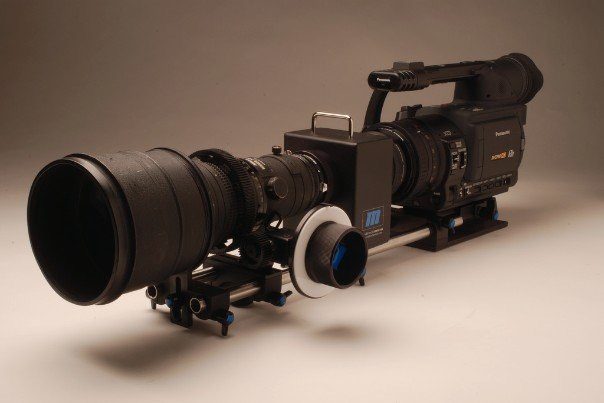
I love awkward little in-between moments in technology. One of the funniest was a two-year period (about 2006-2008) when all filmmakers used these things called “35mm adapters” mounted on camcorders. Here’s a picture of one setup that I used to use. 👇
That little metal monstrosity in the middle with the M on it has a 9 volt battery spinning a piece of ground glass inside. You can attach old Nikon lenses to it. The back of it is a macro adapter that screws on to the camcorder.
This let us actually get larger image circles into our tiny-sensor camcorders literally by making a tiny movie theatre inside a black metal box and filming it with the camcorder. The results were beautiful though.
Every filmmaker was screaming for a large sensor digital cinema camera, and then the 5D Mark II came but it didn’t shoot 24 frames per second 🤦♂️. https://twitter.com/zachphillips/status/1343560660555329536?s=21
So we kept using these goofy adapters until Canon stopped being idiots and this brief awkward moment in history was over.
Still, there’s something I like about the 35mm adapter over the 5D. Something analog about that ground glass (but losing 3 stops of light was a bit much 🙂).

I wrote about one of my favorite little quirky technological in-between eras.
I love awkward little in-between moments in technology. One of the funniest was a two-year period (about 2006-2008) when all filmmakers used these things called “35mm adapters” mounted on camcorders. Here’s a picture of one setup that I used to use. 👇 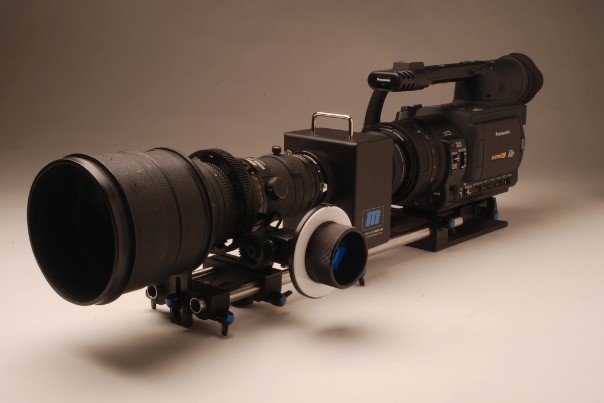
That little metal monstrosity in the middle with the M on it has a 9 volt battery spinning a piece of ground glass inside. You can attach old Nikon lenses to it. The back of it is a macro adapter that screws on to the camcorder. 
This let us actually get larger image circles into our tiny-sensor camcorders literally by making a tiny movie theatre inside a black metal box and filming it with the camcorder. The results were beautiful though. 
So we kept using these goofy adapters until Canon stopped being idiots and this brief awkward moment in history was over.
Still, there’s something I like about the 35mm adapter over the 5D. Something analog about that ground glass (but losing 3 stops of light was a bit much 🙂).
I’m a Software Fan
I’m currently on a team making software and I spent four years as a middling-designer/not-good-developer, but my whole life I’ve been a software FAN. I follow designers/developers like celebrities/sportsgame players.
This is a thread celebrating a few of my favorites. 👇
First, the OG… The @OmniGroup. OmniOutliner might be the software that has had the greatest impact on my life. When you combine the unparalleled utility of an outliner with everything it has inspired and led to, it’s hard to think of a more important app (for me).
And to think at one point OmniOutliner shipped with MacOS! Imagine how different the world would be if more people discovered the value of the outliner…
We’ll find out soon: They’re finally discovering it with @RoamResearch.
The original @dropbox team changed the world forever, adding a feature that we always expected from our computers. While it’s difficult to figure out exactly what they’re doing now, it can’t be overstated just how important, and how perfect, Dropbox once was.
This is not a favorite at all but I’ll give credit where due. While I’ve mostly hated everything this company has ever stood for, Microsoft Excel was and will always be the app that enabled the ascendency of personal computing. It’s crazy how much of the world still runs on it.
The team at @culturedcode is, to me, the Michael Jordan of interface design. What they’ve done is nothing short of magic: simple, delightful to manipulate with a finger, mouse, or keyboard… impossibly good.
I’ve felt for years that Things should have been acquired by Apple and used as the basis for the future of all Apple operating systems. It is Leica-level interface design: perfect, timeless, the apotheosis of the medium in my opinion.
Then there’s the team behind @UlyssesApp. My goodness, what a beautiful and incredible writing app. While I still can’t use it for my work because they won’t support Fountain syntax (👎), I sure hope I can one day.
Things, Ulysses, Leica… What’s with Germans and tool design?
Then there are the lone wolves like Greg Pierce at @agiletortoise who created what is simply a perfect (and perfectly necessary) app in @draftsapp, the best text capture tool to date. Once you realize you can start in Drafts, it removes an unnecessary step from so many decisions.
Another lone wolf who can’t go without mentioning is @marcoarment. Both his original Instapaper and @overcastfm have been reliable, daily companions for years.
Then there’s @lorenb, the designer/developer whose history/portfolio is the most likely to encourage those of us who probably shouldn’t become designer/developers to just move on and do something else with our time.
As much as I’ve been disappointed by @airtable, it’s only because I truly feel they’ve achieved the best web interface that has ever existed. The first time I converted a field to a linked record to a table that didn’t yet exist, I knew that this team was the best in the world.
And @figmadesign… What sorcery is this? No one was even expecting we’d have 10% of this functionality in a web app and now it’s replaced Illustrator (!) for many of us. Not only does it have the functionality but it feels more intuitive, more native(!), and FASTER(?!)…
And even though @gruber still hasn’t added three lines of CSS so you can read his site on the mobile devices he blogs about (at this point it’s a Bit™ 🙂), his creation of Markdown has changed my life and inspired so many of us to make our own tools to scratch our own itches.
Inspired by Markdown, I began tinkering with a screenwriting variant only to discover @johnaugust had already done it with what became Fountain.
John and his team then provided the world with the best screenwriting app and even gave us a Courier that doesn’t suck (🙏🙏🙏).
Lastly, @RoamResearch, who I mentioned at the beginning of this thread. It’s the most friendly, flexible, and powerful tool I’ve ever used, but what excites me most about Roam is the next generation of software fans (like me) it has created.
They’re the ones I’m following now.
I wrote about a bunch of software designers and developers I’m a fan of.
I’m currently on a team making software and I spent four years as a middling-designer/not-good-developer, but my whole life I’ve been a software FAN. I follow designers/developers like celebrities/sportsgame players.
This is a thread celebrating a few of my favorites. 👇
First, the OG… The @OmniGroup. OmniOutliner might be the software that has had the greatest impact on my life. When you combine the unparalleled utility of an outliner with everything it has inspired and led to, it’s hard to think of a more important app (for me).
And to think at one point OmniOutliner shipped with MacOS! Imagine how different the world would be if more people discovered the value of the outliner…
We’ll find out soon: They’re finally discovering it with @RoamResearch.
The original @dropbox team changed the world forever, adding a feature that we always expected from our computers. While it’s difficult to figure out exactly what they’re doing now, it can’t be overstated just how important, and how perfect, Dropbox once was.
This is not a favorite at all but I’ll give credit where due. While I’ve mostly hated everything this company has ever stood for, Microsoft Excel was and will always be the app that enabled the ascendency of personal computing. It’s crazy how much of the world still runs on it.
The team at @culturedcode is, to me, the Michael Jordan of interface design. What they’ve done is nothing short of magic: simple, delightful to manipulate with a finger, mouse, or keyboard… impossibly good.
I’ve felt for years that Things should have been acquired by Apple and used as the basis for the future of all Apple operating systems. It is Leica-level interface design: perfect, timeless, the apotheosis of the medium in my opinion.
Then there’s the team behind @UlyssesApp. My goodness, what a beautiful and incredible writing app. While I still can’t use it for my work because they won’t support Fountain syntax (👎), I sure hope I can one day.
Things, Ulysses, Leica… What’s with Germans and tool design?
Then there are the lone wolves like Greg Pierce at @agiletortoise who created what is simply a perfect (and perfectly necessary) app in @draftsapp, the best text capture tool to date. Once you realize you can start in Drafts, it removes an unnecessary step from so many decisions.
Another lone wolf who can’t go without mentioning is @marcoarment. Both his original Instapaper and @overcastfm have been reliable, daily companions for years.
Then there’s @lorenb, the designer/developer whose history/portfolio is the most likely to encourage those of us who probably shouldn’t become designer/developers to just move on and do something else with our time.
As much as I’ve been disappointed by @airtable, it’s only because I truly feel they’ve achieved the best web interface that has ever existed. The first time I converted a field to a linked record to a table that didn’t yet exist, I knew that this team was the best in the world.
And @figmadesign… What sorcery is this? No one was even expecting we’d have 10% of this functionality in a web app and now it’s replaced Illustrator (!) for many of us. Not only does it have the functionality but it feels more intuitive, more native(!), and FASTER(?!)…
And even though @gruber still hasn’t added three lines of CSS so you can read his site on the mobile devices he blogs about (at this point it’s a Bit™ 🙂), his creation of Markdown has changed my life and inspired so many of us to make our own tools to scratch our own itches.
Inspired by Markdown, I began tinkering with a screenwriting variant only to discover @johnaugust had already done it with what became Fountain.
John and his team then provided the world with the best screenwriting app and even gave us a Courier that doesn’t suck (🙏🙏🙏).
Lastly, @RoamResearch, who I mentioned at the beginning of this thread. It’s the most friendly, flexible, and powerful tool I’ve ever used, but what excites me most about Roam is the next generation of software fans (like me) it has created.
They’re the ones I’m following now.