One life, filed into five areas, kept on paper, published here.
Zach Phillips
I wrote about my commitment to learning in public and the most cardinal reason why.
Tot towers.

Creative Tool Choice & Quality
A creative intention necessarily includes tool choice. Without “putting pen to paper,” The Intention doesn’t transform into The Act. It remains daydreaming (nothing wrong with daydreaming unless it isn’t wanted).
Here are some reasons why tool choice often becomes a block. 👇
The two big reasons we get hung up on creative tools are:
- “Making stuff” could as accurately be described as “playing with creative tools.” Some tools are more fun than others (Play is what we’re doing here).
- The pernicious, meaningless thought: “Quality is important.”
Many will say “Creative tool obsession is just PROCRASTINATION from THE WORK.”
I used to think this. I now know that this frame is deeply unhelpful. Judging oneself this way is the surest path to probably never making anything, and doing so joylessly.
It also simply isn’t true.
Addressing the “Quality” noise first (it’s just noise): Artistic Quality a) is not a Real Thing, b) can only even be discussed in terms of the creative intention, which includes the tools chosen, and c) has never once been helpful to think about when approaching creative work.
It’s certainly counterintuitive that focusing on quality wouldn’t help you produce higher quality. A lot of truths are counterintuitive in this coercive, managerial culture.
All of this Quality thinking can be summed up in the phrase: “This better be good.”
Feeling inspired?
Let’s say we take the quality nonsense seriously… We can only even have an entertaining discussion about creative quality in terms of its intention, which includes tool choice. Therefore, tool choice cannot affect quality.
Yes, this is what I’m saying: Creative tools cannot affect even a notion of artistic quality, because that quality could only be judged on the full creative intention behind the work, which always includes the tools chosen.
What about just “getting it right”? Can’t this be measured? Again, only in terms of intention.
Did you intend for that shot to be 3 stops underexposed? No? Then yeah, that didn’t work.
Was the shot underexposed because your camera is bad in low light? Then you have two choices:
A) Acquire the tools to fulfill this arbitrary intention (hard), or B) Shift your arbitrary intention to account for the tools you have (easy)
Neither choice affects Quality.
My use of “arbitrary intention” isn’t pejorative. Creative intention is and should always be arbitrary. Like Play.
MY 3-YEAR-OLD We’re going to stack these blocks as high as they go until the tower falls.
There is no reason. The decision has been made and we are doing it NOW.
But because certain tools allow/encourage creating certain types of stuff, our creative intentions tend to flow into what I’ll call Pools of Practicality. This is why football/soccer/calcio is the most popular sport in the world (and it isn’t close).
I’ll write more about Pools of Practicality and how they create illusions and false choices around creative tools at a later date.
Meanwhile, may we all have fun with our creative tools. They matter. A lot. But they’ll never affect the quality of our work.
For an extremely dumb example just to illustrate the extreme: Is Raiders of the Lost Ark “higher quality” than an average tech YouTuber video made today? Well, the sensor size on the tech YouTuber’s Canon DSLR is larger than the film gate they shot Raiders on.
"Well, if you’re going to write a whole voiceover script for yourself, you may as well film it on a nicer camera.
The quality of creative work can only be discussed in the context of the work’s intention, and
When we speak about a work’s “quality,” it helps to be clear what we’re judging that quality against. This applies equally to all media, but I’ll just use filmmaking as an example because I know it well. 👇
I wrote about creative intentions, creative tool choice, and quality.
#Boneyard
People ≠ Brands
One person may have many brands, but no brand may have a person. 👇
Our culture and economic system beckons people to become subservient to brands. Brands attempt to possess as many people as possible. People determine a brand’s value. Individuals then attempt to turn themselves into brands, which they perceive as more valuable than themselves.
As soon as one tries to become a brand, one loses one’s ability to see. Vision is narrowed. Awareness collapses. Tyranny pervades. All decisions become either overtly or covertly in service of The Brand™.
Brands have many names, wear many costumes, and whisper many friendly, “encouraging” words. Just remember: They are a paper bag of french fries. Eat them with salt and ketchup before they get cold, if you like, before disposing of their greasy trappings. They are nothing.
One should have one’s own newspaper. One’s own art gallery. One’s own talk show. One’s own fan club. One’s own garage sale featuring carnival rides.
If one wants.
One may have as many brands as one may hold in one’s clutches.
Brands are commodities, people are not.
I wrote about some reasons why people should not “brand themselves.”
Top 5 Bad Companies I Give Money To
Here are the Top 5 companies I willingly give money to, ranked by how against my values it is to do so, counted down from “terribly” to “most unconscionably.”
-
eBay/PayPal
-
Google
-
Facebook
-
Amazon
-
Factory Farming Monopolies
I’ll also rank them by “hardest to break from.”
eBay/PayPal is an example of a company that’s never done one good thing in its entire existence because it just stumbled into being the only game in town at what it does. I have no patience for a company with this much power to make the web better and more valuable to others but refuses to make even a 2% effort. Disgusting.
Google is an example of a company does much of its job very well, but they picked exactly the wrong job, becoming an advertising and mass surveillance company when they could have actually usefully indexed the world’s information for use/reuse and the advancement of humanity. A heartbreaking missed opportunity.
Facebook is a combination of the absolute worst of eBay/PayPal and Google. They’ve both never made a single attempt to do something good, ever, and they started their whole business with the singular purpose of mass surveillance and destroying anything good that anyone ELSE might want to do along the way. They are abominable.
Amazon’s endgame is the full monopolization of everything. They are an incredibly efficient, Borg-like machine who cannot be stopped. We cower and wait for the day they finally subsume all resources, labor, and human culture and happiness into the gaping abyss of their unquenchable maw.
And finally, the collection of Factory Farming Monopolies that own all of big agriculture. They needlessly torture animals 24 hours a day. I think it’s probably the worst thing we all allow to go on (and in my case, pay to support 🤦♂️) with near unanimity.
The worst part of the Factory Farming Monopolies is I think it would actually be the easiest to give up direct support to.
So in order from least difficult to most difficult to break from completely, here are the same five:
-
Factory Farming Monopolies
-
eBay/PayPal
-
Facebook
-
Google
-
Amazon
So the worst actor is the “easiest” (still hard) to break from.
I’d be very curious about others’ feelings about this subject, both my lists and their own.
I’ll do another thread specifically about why I rank them this way
I wrote about really bad companies that I hypocritically give money to.
My Favorite Clickety-Clackety Keyboards
Clickety-clackety keyboards are the best keyboards, but they annoy other people. So you need to be able to swap out something like a daskeyboard (with all black keys, no letters on them) for an Apple Magic Keyboard (the black version). But what if you want even more clackety…
The Mattias Tactile Pro echoes like the feeling of hacking into a mainframe in 1986 with Matthew Broderick looking over your shoulder, eyes wide, mouth slightly open, rubbing his fingers together, anticipating the very moment when BAM! SYNTHESIZERS!
WE’RE IN!
Sometimes you want to really work out your fingers and make little snapping sounds, with every keypress SNAP, SNAP, like you’re SNAPPING the letters and words together with little snap’n’pop firecrackers you hurl at the page. The Underwood Champion is for you… Champion.
But when you really, really want the clickety-clacketyest keyboard of all, you switch to this one… It’s like firing a machine gun. No one can deny you are WORKING. VERY IMPORTANT WORK. I made a video some years ago about another magical thing it can do:
VIDEO
You have too much self-respect to accept without scrutiny the keyboard that’s issued with your computer. There’s too much clicketyness out there in the universe…
But probably keep your Apple Magic Keyboard (the black version) for calls/not making everyone around you hate you.
I wrote about clickety-clackety keyboards and some good options for you if you really want to click and clack hard.
Hamburgerification
I don’t remember where I heard this, but something like “If you want the best chance of being successful in business, you should sell hamburgers. People will always buy hamburgers.”
So the bulk of our smartest minds are currently focused on turning everything into hamburgers. 👇
The big problem with focusing on Hamburgerification is that focused attention is a limited resource. Every moment you think about how to turn something into a hamburger is a moment that you aren’t playing, mastering a skill, cultivating empathy, connecting with other humans.
As an early employee at Facebook said: “The best minds of my generation are thinking about how to make people click ads.”
“How can we turn XXXXX into a hamburger” is a very specific problem. It demands a very specific type of thinking.
There’s nothing wrong with pursuing a scalable business. I’m currently doing one myself. But not all businesses can or should be about massive scale.
But when all you have is a billionaire-or-bust sledgehammer, everything looks like a hamburger.
I wrote about how our business environment has everyone thinking about hamburgers and hamburgers only.
I don’t remember where I heard this, but something like “If you want the best chance of being successful in business, you should sell hamburgers. People will always buy hamburgers.”
So the bulk of our smartest minds are currently focused on turning everything into hamburgers. 👇
The big problem with focusing on Hamburgerification is that focused attention is a limited resource. Every moment you think about how to turn something into a hamburger is a moment that you aren’t playing, mastering a skill, cultivating empathy, connecting with other humans.
As an early employee at Facebook said: “The best minds of my generation are thinking about how to make people click ads.”
“How can we turn XXXXX into a hamburger” is a very specific problem. It demands a very specific type of thinking.
There’s nothing wrong with pursuing a scalable business. I’m currently doing one myself. But not all businesses can or should be about massive scale.
But when all you have is a billionaire-or-bust sledgehammer, everything looks like a hamburger.
Cuts
This problem is built right into our financial system. Why, and I ask this earnestly, does Apple need to grow? Worse yet, why does Apple’s growth rate need to be accelerating? Anyone who understands basic math/physics knows that’s not a sustainable thing. Yet this is
Exactly Wrong Writing
I offended some people I care about with this post from last week. I’m sad because the way they read it was exactly the opposite of how it was intended. This means I wrote it exactly wrong.
This may be a problem with publishing every single day that needs adjustment. 👇
My purpose in writing this post was to show how my mistrust/doubts of my own feelings and experience has been hugely unhelpful to me. On top of avoiding/not paying attention to my feelings, when they’ve gotten too strong to suppress, my next defense was judging/dismissing them.
Then I wrote the following, and the way I wrote it I realize now was careless and hurtful.
This is one of the reasons in the past I’ve been skeptical of some mental illness. Like, is this Depression? How depressed? Depressed enough to miss work? Depressed enough to get medicated?
I can see how talk like this can be offensive to sufferers but I’m legitimately baffled.
The voice in these paragraphs is myself in the past, doubting how to measure my own feelings, my own pain. The point of posting this is to share that I’m no longer baffled.
I thought I was making my intentions clear two sentences later—
Two things have helped me begin to get over this (unhelpful) frame…
—but I had already lost some with my prior clumsiness.
I’m someone who has struggled heavily with my own psychology (18 years sober, 20 years in therapy, a library of self-help books, a staff of coaches) but I’ve never been diagnosed with DSM mental illness. I should have left that term out completely. I’m talking about feelings.
When I discover I’ve been wrong about something, I feel this incredible need to share how wrong I was in a way that might have convinced Confused Me earlier. Waking up to the fact that feelings might be important in my mid-thirties has me wanting to shout from rooftops.
But when what I was wrong about implicates a lot more than myself, I better make sure I at least do a proper revision and check it with someone else first.
Thanks for bearing with me.
And MY GOD I have to stop with the all caps stand-in for italics on Twitter. I’m a guy who needs italics, so Twitter friends will just have to tolerate Markdown style italics. Apologies for all the underscores.
I wrote about how platforms like Twitter and Facebook not providing the means to italicize writing leads to a less civil world.
Summary
Creative constraints are helpful, but for platforms like Twitter or Facebook not to have italics is constraint run amok. In fact, I think this lack of italics has substantially contributed to the toxic social media environment.
No italics leaves you only ONE OPTION. 👇
The big problem with ALL CAPS is that it’s at least 7.2x more aggressive than italics, but without italics, it’s really your only option other than plain text Markdown styling. And most people don’t know plain text Markdown styling.
SO IT’S ALL CAPS ALL DAY.
Now all you fancy writerly people who think that italics, like exclamation points, are for losers, or overused, or whatever… look, most people aren’t fancy and writerly like you. We write more conversationally. Italics are helpful to us.
Italicize any word in “I didn’t say she stole my wallet” and the sentence takes on an entirely different meaning (and when all you have is ALL CAPS for emphasis, it’s impossible to emphasize the “I” in that sentence, just saying).
It already takes much more skill for most people to get our point across in writing. When you make us shout every time we just want to emphasize a few words, you’re raising the temperature in the room.
Adding italics would bring down anger at least 4.8%.
Italics for world peace.
Italics For World Peace
Creative constraints are helpful, but for platforms like Twitter or Facebook not to have italics is constraint run amok. In fact, I think this lack of italics has substantially contributed to the toxic social media environment.
No italics leaves you only ONE OPTION. 👇
The big problem with ALL CAPS is that it’s at least 7.2x more aggressive than italics, but without italics, it’s really your only option other than plain text Markdown styling. And most people don’t know plain text Markdown styling.
SO IT’S ALL CAPS ALL DAY.
Now all you fancy writerly people who think that italics, like exclamation points, are for losers, or overused, or whatever… look, most people aren’t fancy and writerly like you. We write more conversationally. Italics are helpful to us.
Italicize any word in “I didn’t say she stole my wallet” and the sentence takes on an entirely different meaning (and when all you have is ALL CAPS for emphasis, it’s impossible to emphasize the “I” in that sentence, just saying).
It already takes much more skill for most people to get our point across in writing. When you make us shout every time we just want to emphasize a few words, you’re raising the temperature in the room.
Adding italics would bring down anger at least 4.8%.
Italics for world peace.
I discussed something I wrote wrongly a couple weeks ago and that offended some people I care about.
I offended some people I care about with this post from last week. I’m sad because the way they read it was exactly the opposite of how it was intended. This means I wrote it exactly wrong.
This may be a problem with publishing every single day that needs adjustment. 👇
My purpose in writing this post was to show how my mistrust/doubts of my own feelings and experience has been hugely unhelpful to me. On top of avoiding/not paying attention to my feelings, when they’ve gotten too strong to suppress, my next defense was judging/dismissing them.
Then I wrote the following, and the way I wrote it I realize now was careless and hurtful.
This is one of the reasons in the past I’ve been skeptical of some mental illness. Like, is this Depression? How depressed? Depressed enough to miss work? Depressed enough to get medicated?
I can see how talk like this can be offensive to sufferers but I’m legitimately baffled.
The voice in these paragraphs is myself in the past, doubting how to measure my own feelings, my own pain. The point of posting this is to share that I’m no longer baffled.
I thought I was making my intentions clear two sentences later—
Two things have helped me begin to get over this (unhelpful) frame…
—but I had already lost some with my prior clumsiness.
I’m someone who has struggled heavily with my own psychology (18 years sober, 20 years in therapy, a library of self-help books, a staff of coaches) but I’ve never been diagnosed with DSM mental illness. I should have left that term out completely. I’m talking about feelings.
When I discover I’ve been wrong about something, I feel this incredible need to share how wrong I was in a way that might have convinced Confused Me earlier. Waking up to the fact that feelings might be important in my mid-thirties has me wanting to shout from rooftops.
But when what I was wrong about implicates a lot more than myself, I better make sure I at least do a proper revision and check it with someone else first.
Thanks for bearing with me.
And MY GOD I have to stop with the all caps stand-in for italics on Twitter. I’m a guy who needs italics, so Twitter friends will just have to tolerate Markdown style italics. Apologies for all the underscores.
Themes First, Characters Ongoing
When writing stories, at least for me (and maybe I’m doing it wrong), I’m usually thinking about concept/theme first, not characters.
While the strength of the characters is the most important thing, it’s usually not the first thing and this can be tricky to navigate. 👇
A story’s concept/theme can feel so clear and decisive like “YEAH, it’s a zombie movie but with no zombies, and it’s about a virus that causes people to lose control of their rage, and it’s ultimately about notions of free will and culpability… We’ll need some good characters!”
Characters are hard for lots of reasons. While I find it effortless to write interesting, dynamic supporting roles, my protagonists are usually boring and sucky. More on that another day.
But my confidence really drops when I think “Shouldn’t I have started with characters?”
The thing about a lowercase-s story is that it’s linear, time-limited, and self-contained. Those are really helpful constraints.
The thing about a character is that it’s a person. Wicked complicated, unbounded, impossible to pin down.
I can craft a story with compelling themes and rising tension but none of it matters if no one cares about the characters.
I think I need to stop thinking about characters as “things” I’m “crafting.” I need to treat them as if they’re all already here. Because they are.
Every character that I’m able to channel in imagination or on the page is a character that’s been with me, grown with me, and is made up of bits and pieces of everything I’ve ever experienced, everyone I’ve ever met, and the way I interpret what they’ve experienced.
Rather than trying to define my characters, forcing them into my little dramatic devices so that they can grind my axes for me, it works much better when I simply ask them what they think, what they would do, and then just listen.
Summary
I wrote some thinking about how to approach writing characters differently from the way I think about writing the other elements of a story.
When writing stories, at least for me (and maybe I’m doing it wrong), I’m usually thinking about concept/theme first, not characters.
While the strength of the characters is the most important thing, it’s usually not the first thing and this can be tricky to navigate. 👇
A story’s concept/theme can feel so clear and decisive like “YEAH, it’s a zombie movie but with no zombies, and it’s about a virus that causes people to lose control of their rage, and it’s ultimately about notions of free will and culpability… We’ll need some good characters!”
Characters are hard for lots of reasons. While I find it effortless to write interesting, dynamic supporting roles, my protagonists are usually boring and sucky. More on that another day.
But my confidence really drops when I think “Shouldn’t I have started with characters?”
The thing about a lowercase-s story is that it’s linear, time-limited, and self-contained. Those are really helpful constraints.
The thing about a character is that it’s a person. Wicked complicated, unbounded, impossible to pin down.
I can craft a story with compelling themes and rising tension but none of it matters if no one cares about the characters.
I think I need to stop thinking about characters as “things” I’m “crafting.” I need to treat them as if they’re all already here. Because they are.
Every character that I’m able to channel in imagination or on the page is a character that’s been with me, grown with me, and is made up of bits and pieces of everything I’ve ever experienced, everyone I’ve ever met, and the way I interpret what they’ve experienced.
Rather than trying to define my characters, forcing them into my little dramatic devices so that they can grind my axes for me, it works much better when I simply ask them what they think, what they would do, and then just listen.
Actual Meaning of Multimedia
There are many examples of words that are ruined long before they actually become useful to describe something.
Today, let’s talk about “Multimedia”!!!!! 📽️✍️🎙️🌈….. 👇
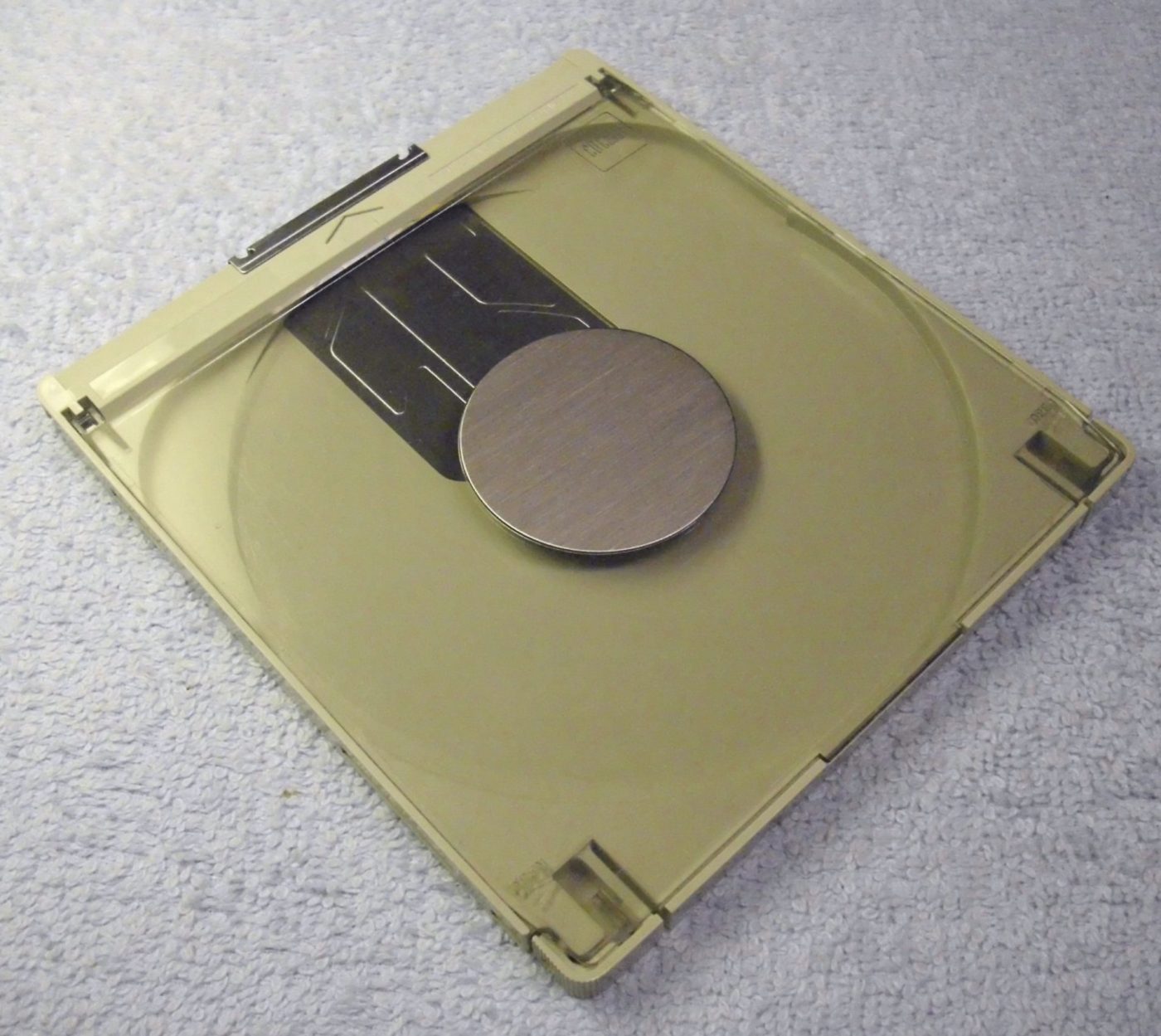
The word “multimedia” calls to mind a CD-ROM, the kind that you had to mount inside of a little beige plastic caddy before inserting it into your Macintosh Quadra.
At that time multimedia generally meant “words AAAAAND pictures and maybe SOUUUUUNDS all on ONE THING.”
Later on “multimedia” became a catch-all word for anything that someone might make (like the awful word “content” is used today).
Some tools (and words are just tools) need to sit around in a drawer for a few decades before we find a good use for them…
As the world becomes more conscious of accessibility and the fact that different people learn in different ways at different times, the word “multimedia” finally has a good use: Much of what we make is published across multiple media. Prose/Film/Radio is the most common combo.
A note on multimedia work: Translation between media shouldn’t be automatic. Some thought should go into how something is best presented in each medium, even if sometimes it’s as simple as a text-to-voice, voice-to-text, or just saving out an audio version of a video.
Many works are single-media-only and they must be. There’s no clear film version of most radio stories just as there’s no prose version of a great film.
This is multimedia.
But there can always be a radio version of prose or poetry. 98% of YouTube videos could just be audio.
But because the word is ruined, we’ll need to use a word like multiformat, which I don’t hate, but…
It shoulda been you, multimedia… It shoulda been you.
My next experiment on my little blog is to begin making these posts multiformat.