One life, filed into five areas, kept on paper, published here.
Zach Phillips
The Fully Mechanical Bolex
I love mechanical things, both for their objective coolness and their implications for a green future. A future with nice things that we take care of, less waste, and dignified manufacture.
Among my top 5 mechanical favorites is the Bolex H16 16mm camera. I made a video about it: https://youtu.be/pJnMQgxb3Ao 👇
My friend (and filmmaking colleague) Mauro and I and our baby daughters and our pregnant wives went to Avalon, NJ and Mauro shot me explaining how the Bolex works. I included some Bolex footage of my daughter Louisa on the beach. Here’s one roll/100 feet/3 minutes of Kodak 16mm:
Here are a few mindblowing things about the Bolex.
Better than HD resolution (arguably better than 4k)
The thing is 50 years old and still works perfectly
It’s FULLY MECHANICAL, NO BATTERY, NO POWER, just a spring that you wind up and it goes
We don’t make things like this anymore.
A Bolex isn’t for most people. Developing and scanning movie film is… costly. BUT it’s perfect for these home movies and it’s my most common wedding gift. I shoot 100 feet, add music, and voilà, A very special document of the day (also helps when you don’t know anyone).
Here’s my cousin Lindsay’s wedding I shot on the Bolex. By the way, I’m removing the music from all these because I don’t have experience with or trust Twitter’s algorithm.
And here’s a more somber occasion shot on the Bolex: The spreading of my grandmother Geema’s ashes at Skaneateles Lake. This was when I had a (really) cheap lens. Still awesome. Music composed by my sister.
Now, the quality of film is beyond the scope of this conversation, but it’s undeniably (and literally) organic. The colors, the dynamic range, the grain… The stuff that comes out of the Bolex just always feels great and has this “forever” quality to it.
The Bolex is as cool as it gets, but while film is practical for 92% of photography (yes, moreso than digital), it’s IMpractical for 96% of cinematography.
But the reason it’s so fascinating is… if we can make something that does THIS with zero power, what else can we make?
Thread
I love mechanical things, both for their objective coolness and their implications for a green future. A future with nice things that we take care of, less waste, and dignified manufacture.
Among my top 5 mechanical favorites is the Bolex H16 16mm camera. I made a video about it: https://youtu.be/pJnMQgxb3Ao 👇
My friend (and filmmaking colleague) Mauro and I and our baby daughters and our pregnant wives went to Avalon, NJ and Mauro shot me explaining how the Bolex works. I included some Bolex footage of my daughter Louisa on the beach. Here’s one roll/100 feet/3 minutes of Kodak 16mm:
Here are a few mindblowing things about the Bolex.
Better than HD resolution (arguably better than 4k)
The thing is 50 years old and still works perfectly
It’s FULLY MECHANICAL, NO BATTERY, NO POWER, just a spring that you wind up and it goes
We don’t make things like this anymore.
A Bolex isn’t for most people. Developing and scanning movie film is… costly. BUT it’s perfect for these home movies and it’s my most common wedding gift. I shoot 100 feet, add music, and voilà, A very special document of the day (also helps when you don’t know anyone).
Here’s my cousin Lindsay’s wedding I shot on the Bolex. By the way, I’m removing the music from all these because I don’t have experience with or trust Twitter’s algorithm.
And here’s a more somber occasion shot on the Bolex: The spreading of my grandmother Geema’s ashes at Skaneateles Lake. This was when I had a (really) cheap lens. Still awesome. Music composed by my sister.
Now, the quality of film is beyond the scope of this conversation, but it’s undeniably (and literally) organic. The colors, the dynamic range, the grain… The stuff that comes out of the Bolex just always feels great and has this “forever” quality to it.
The Bolex is as cool as it gets, but while film is practical for 92% of photography (yes, moreso than digital), it’s IMpractical for 96% of cinematography.
But the reason it’s so fascinating is… if we can make something that does THIS with zero power, what else can we make?
Delaware/Philadelphia Election Year Connection
Now that @JoeBiden is safely inaugurated, I want to talk about how crazy it has been to be a Wilmington/Philadelphia (née Syracuse) person through this past year.
The word “surreal” has grown soft through overuse, but… this shit has been surreal. 👇
I’ve met Hunter and Beau and I worked on a project (incidentally the project I’m most proud of) with Ashley. But here’s what you need to understand about Delaware: That’s not special. Everyone knows everyone in Delaware. Truly. We have this thing called “The Delaware Twist.”
“The Delaware Twist,” coined by Kristen Kuipers, is this thing when you’re about to talk about someone in Delaware and you look around because it’s entirely possible the person is right behind you.
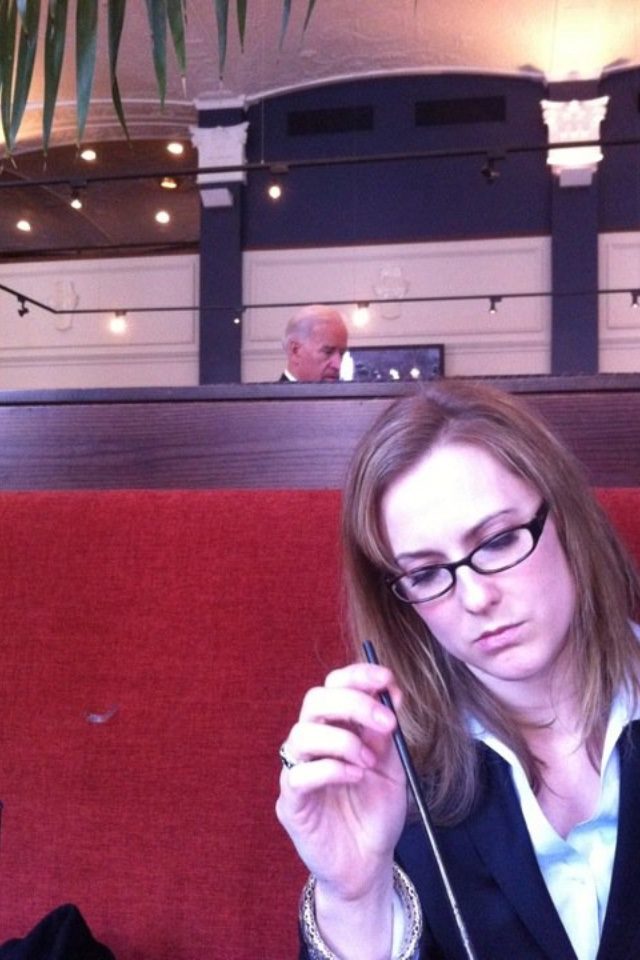
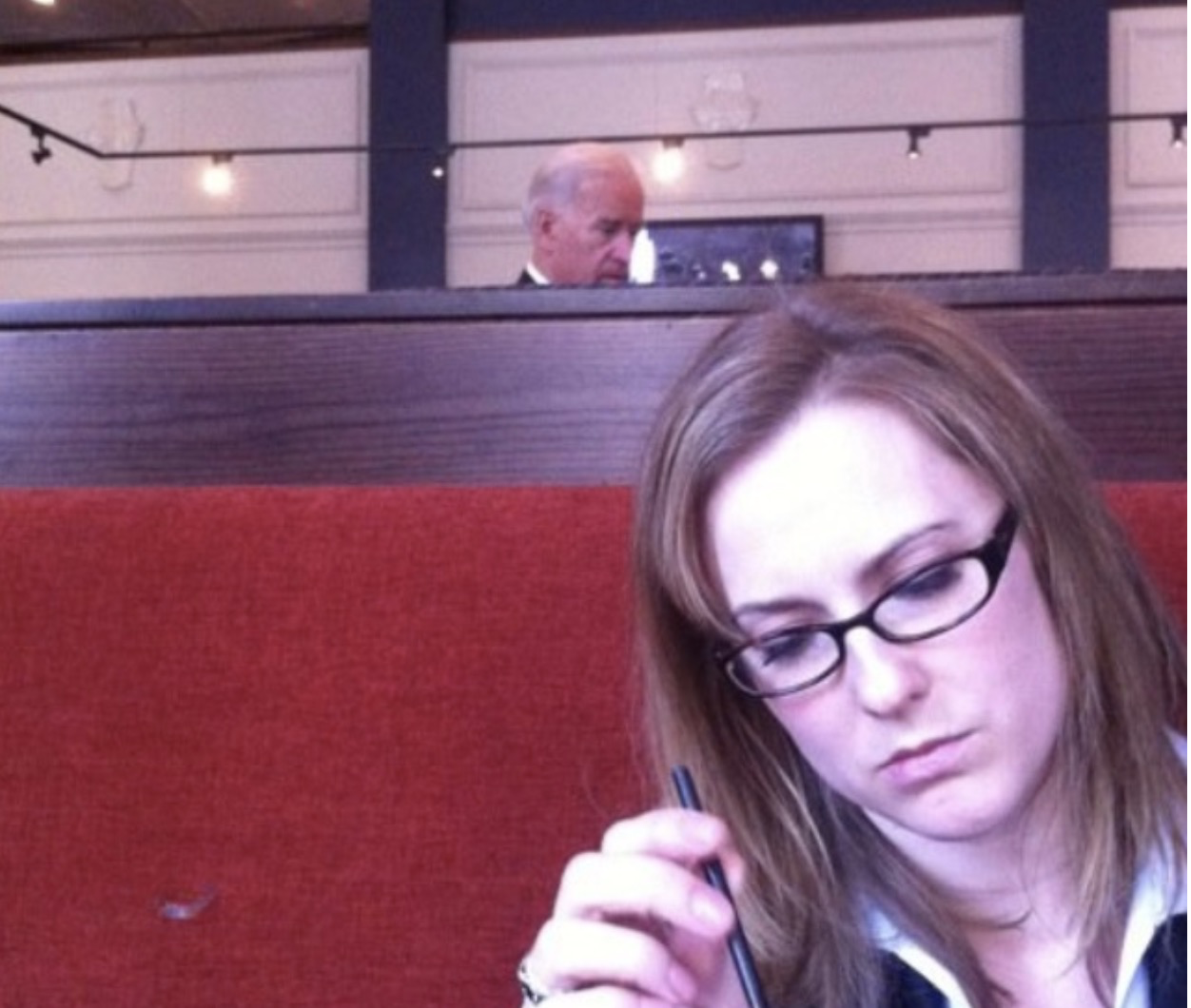
Here’s a picture of my wife. She and the guy behind her both went to Syracuse Law.
I’m not exaggerating about The Delaware Twist. It is a physiological, pre-cognitive, reptilian response. You just check who’s behind you before speaking.
This picture of my wife (girlfriend at the time) was at lunch in our building in Wilmington in 2010. I was in my pajamas:
I spent four years with an office IN the Joseph R. Biden Railroad Station in Wilmington. Our office was ON the platform. When he was VP, we’d have black SUVs pull up in the alley, Biden would get off the train, wave to us, and disappear. I’ll never have an office that cool again.
My current office has a network link and Senator Chris Coons uses it to go on TV.
In March, my COO, in a not-good-joke way, asked Coons “So, are we all gonna die?” He responded: “We’re about to experience the greatest disruption of civilian life since the Second World War.”
“Oh.”
Then I got a call from one of my nerd heroes in California that they potentially wanted to use our studios as Biden Media HQ. I met with the Biden team several times, and I recommended The Queen for one of the things they needed. They ended up using it for everything. 🤦♂️
Then, on election night, when I knew Biden had won Arizona and Georgia (yes I called Georgia election night, I have proof, texts showed the Trump team knew it… use Twitter, it’s amazing), it became clear this thing was going to be called for Biden when Philadelphia was counted…
I live in Philadelphia. Our count put Biden over the top. There was no better place to be in America the day they called the election. It was a lot like the other good thing that happened in the last four years (the Eagles winning The Greatest Game Ever Played).
Then there was Four Seasons Total Landscaping, objectively the funniest thing that happened in the last four years. Here’s the worst brag in this whole unintentional bragthread: My wife and I had stayed in the actual Four Seasons for our one date night of the year that week!
Then there’s this guy, who fixed everyone’s Macs, and whose shop (“shoppe” 🙄) I personally hung out in, nerding out about Steve Jobs/Apple lore with him. He never gave any indication that he was bananapants aside from the hat. For any doubters, he is, definitely, blind.
There’s more but I’ll stop. This thing has just felt really… close to home. Thanks for allowing my unbearable indulgence. Needed to purge this. Philadelphia, Wilmington, and the 30 minutes between them got a front row seat for a really important fight.
Thank God it’s over for now.


Summary
Post Draft
Tweets
Now that @JoeBiden is safely inaugurated, I want to talk about how crazy it has been to be a Wilmington/Philadelphia (née Syracuse) person through this past year.
The word “surreal” has grown soft through overuse, but… this shit has been surreal. 👇
I’ve met Hunter and Beau and I worked on a project (incidentally the project I’m most proud of) with Ashley. But here’s what you need to understand about Delaware: That’s not special. Everyone knows everyone in Delaware. Truly. We have this thing called “The Delaware Twist.”
“The Delaware Twist,” coined by Kristen Kuipers, is this thing when you’re about to talk about someone in Delaware and you look around because it’s entirely possible the person is right behind you.
Here’s a picture of my wife. She and the guy behind her both went to Syracuse Law.
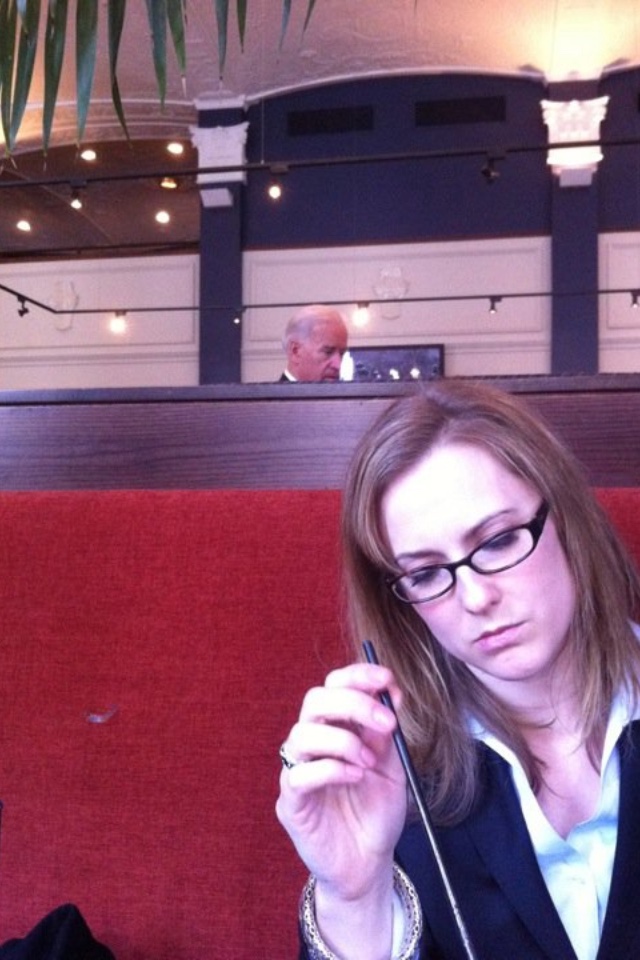
I’m not exaggerating about The Delaware Twist. It is a physiological, pre-cognitive, reptilian response. You just check who’s behind you before speaking.
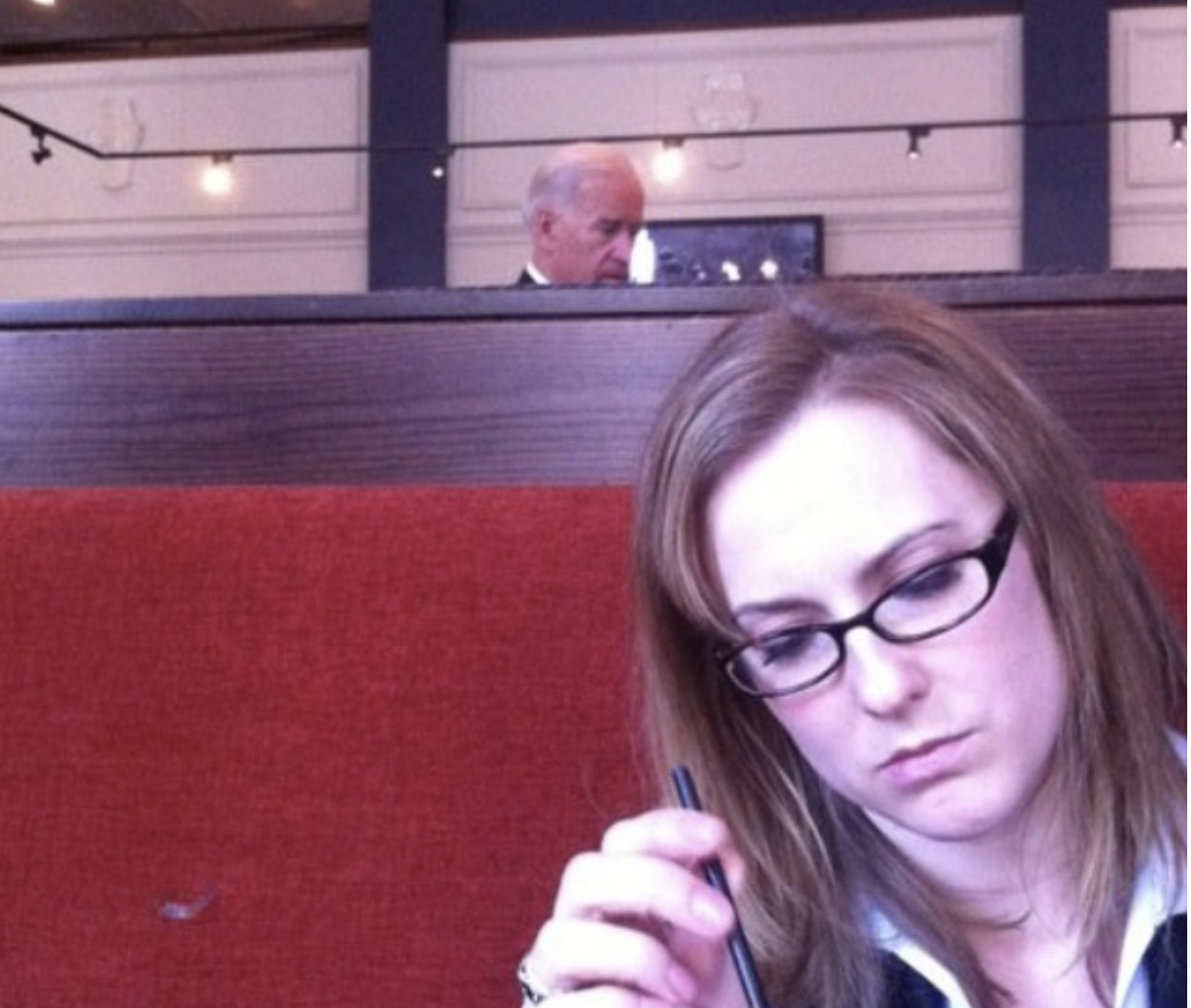
This picture of my wife (girlfriend at the time) was at lunch in our building in Wilmington in 2010. I was in my pajamas:
I spent four years with an office IN the Joseph R. Biden Railroad Station in Wilmington. Our office was ON the platform. When he was VP, we’d have black SUVs pull up in the alley, Biden would get off the train, wave to us, and disappear. I’ll never have an office that cool again.


My current office has a network link and Senator Chris Coons uses it to go on TV.
In March, my COO, in a not-good-joke way, asked Coons “So, are we all gonna die?” He responded: “We’re about to experience the greatest disruption of civilian life since the Second World War.”
“Oh.”
Then I got a call from one of my nerd heroes in California that they potentially wanted to use our studios as Biden Media HQ. I met with the Biden team several times, and I recommended The Queen for one of the things they needed. They ended up using it for everything. 🤦♂️
Then, on election night, when I knew Biden had won Arizona and Georgia (yes I called Georgia election night, I have proof, texts showed the Trump team knew it… use Twitter, it’s amazing), it became clear this thing was going to be called for Biden when Philadelphia was counted…
I live in Philadelphia. Our count put Biden over the top. There was no better place to be in America the day they called the election. It was a lot like the other good thing that happened in the last four years (the Eagles winning The Greatest Game Ever Played).

Then there was Four Seasons Total Landscaping, objectively the funniest thing that happened in the last four years. Here’s the worst brag in this whole unintentional bragthread: My wife and I had stayed in the actual Four Seasons for our one date night of the year that week!
Then there’s this guy, who fixed everyone’s Macs, and whose shop (“shoppe” 🙄) I personally hung out in, nerding out about Steve Jobs/Apple lore with him. He never gave any indication that he was bananapants aside from the hat. For any doubters, he is, definitely, blind.

There’s more but I’ll stop. This thing has just felt really… close to home. Thanks for allowing my unbearable indulgence. Needed to purge this. Philadelphia, Wilmington, and the 30 minutes between them got a front row seat for a really important fight.
Thank God it’s over for now.
My friend/twice-roommate Cameron (@llewellynguitars) told me he was building guitars. I’m an acoustic player, mildly interested in electric, but I wanted to support him, so I ordered one.
I just got my guitar. I was NOT expecting this. I think this may truly be the finest guitar ever made.
Cameron made this guitar with chisels and sandpaper. Every detail is perfection. In some ways beyond perfection. Anything above 320 grit sandpaper is considered overkill. He hand-sanded this to 2000.
I can’t even believe what he’s done.
The body is made of thick (thicc) quilted maple, the most beautiful piece I’ve ever seen. It’s a 3-dimensional holographic aquarium of delights. The back is book-matched walnut. The lumber guy called Cameron months later to tell him it was the nicest tree they’d ever processed.
The neck is Brazilian Rosewood. The fret board is a piece of Kingwood with its bottom edge being this perfectly thin strip of sapwood.
The headstock is seamlessly integrated maple, for its weight, so that the guitar is perfectly balanced.
The whole guitar weighs 6 pounds, and he achieved that by using titanium for some of the components and playing with the walnut (heavy) to maple (light) ratio. Parts of this guitar he built multiple times before getting it just right.
There are honestly too many details to go into here. The electronics cover fits perfectly flush, attached by four rare earth magnets. The tuning pegs are geared so that no matter which string, a half turn is a half step. Even the knobs are carefully crafted.
The fret markers are custom stainless steel and brass mosaic pins filled with luminant resin… Yes, the fret markers glow in the dark (for when I’m on stage one day).
The fifth fret marker is flanked by 18 karat gold pins, denoting that this is the fifth guitar Cameron has made.
I specifically requested that my guitar be the fifth (I have a weird brain about numbers), and that he sign it. He apparently doesn’t believe in signing, so these gold pins were his way of signing…
I could say more but just look at it. And maybe order one.
Llewellyn Guitars Intro
My friend/twice-roommate Cameron told me he was building guitars. I’m an acoustic player, mildly interested in electric, but I wanted to support him, so I ordered one.
I just got my guitar. I was NOT expecting this. I think this may truly be the finest guitar ever made. 👇
Cameron made this guitar with chisels and sandpaper. Every detail is perfection. In some ways beyond perfection. Anything above 320 grit sandpaper is considered overkill. He hand-sanded this to 2000.
I can’t even believe what he’s done.
The body is made of thick (thicc) quilted maple, the most beautiful piece I’ve ever seen. It’s a 3-dimensional holographic aquarium of delights. The back is book-matched walnut. The lumber guy called Cameron months later to tell him it was the nicest tree they’d ever processed.
The neck is Brazilian Rosewood. The fret board is a piece of Kingwood with its bottom edge being this perfectly thin strip of sapwood.
The headstock is seamlessly integrated maple, for its weight, so that the guitar is perfectly balanced.
The whole guitar weighs 6 pounds, and he achieved that by using titanium for some of the components and playing with the walnut (heavy) to maple (light) ratio. Parts of this guitar he built multiple times before getting it just right.
There are honestly too many details to go into here. The electronics cover fits perfectly flush, attached by four rare earth magnets. The tuning pegs are geared so that no matter which string, a half turn is a half step. Even the knobs are carefully crafted.
The fret markers are custom stainless steel and brass mosaic pins filled with luminant resin… Yes, the fret markers glow in the dark (for when I’m on stage one day).
The fifth fret marker is flanked by 18 karat gold pins, denoting that this is the fifth guitar Cameron has made.
I specifically requested that my guitar be the fifth (I have a weird brain about numbers), and that he sign it. He apparently doesn’t believe in signing, so these gold pins were his way of signing.
As someone who makes tools, I don’t know if there’s any way I can adequately express what a masterpiece Cameron has achieved with this guitar. I have never seen its equal.
I expect this guitar might be played by my children’s children’s children one day.
I tried to capture the spirit of the guitar at my desk with these video clips but I intend to give it a truly proportionate cinematic treatment later. I also interviewed Cameron about its genesis (resentment at every guitar he’s owned, the most common asset of a great toolmaker).
Cameron is on Instagram (llewellynguitars) and Twitter @llewellynguitar. If 1. you have the means, 2. want one of the finest guitars ever built, and 3. don’t mind waiting, I recommend you contact him before he becomes unreachable.
And if you know a rockstar, please pass along.
Again, this really isn’t hyperbole… To my knowledge, I have in my possession the greatest guitar ever built. I do not deserve this thing. And to pre-answer the most common question, I’ll quote Cameron: “It plays like it looks like it plays.”
Summary
Post Draft
Tweets
My friend/twice-roommate Cameron told me he was building guitars. I’m an acoustic player, mildly interested in electric, but I wanted to support him, so I ordered one.
I just got my guitar. I was NOT expecting this. I think this may truly be the finest guitar ever made. 👇
Cameron made this guitar with chisels and sandpaper. Every detail is perfection. In some ways beyond perfection. Anything above 320 grit sandpaper is considered overkill. He hand-sanded this to 2000.
I can’t even believe what he’s done.
The body is made of thick (thicc) quilted maple, the most beautiful piece I’ve ever seen. It’s a 3-dimensional holographic aquarium of delights. The back is book-matched walnut. The lumber guy called Cameron months later to tell him it was the nicest tree they’d ever processed.
The neck is Brazilian Rosewood. The fret board is a piece of Kingwood with its bottom edge being this perfectly thin strip of sapwood.
The headstock is seamlessly integrated maple, for its weight, so that the guitar is perfectly balanced.
The whole guitar weighs 6 pounds, and he achieved that by using titanium for some of the components and playing with the walnut (heavy) to maple (light) ratio. Parts of this guitar he built multiple times before getting it just right.
There are honestly too many details to go into here. The electronics cover fits perfectly flush, attached by four rare earth magnets. The tuning pegs are geared so that no matter which string, a half turn is a half step. Even the knobs are carefully crafted.
The fret markers are custom stainless steel and brass mosaic pins filled with luminant resin… Yes, the fret markers glow in the dark (for when I’m on stage one day).
The fifth fret marker is flanked by 18 karat gold pins, denoting that this is the fifth guitar Cameron has made.
I specifically requested that my guitar be the fifth (I have a weird brain about numbers), and that he sign it. He apparently doesn’t believe in signing, so these gold pins were his way of signing.
As someone who makes tools, I don’t know if there’s any way I can adequately express what a masterpiece Cameron has achieved with this guitar. I have never seen its equal.
I expect this guitar might be played by my children’s children’s children one day.
I tried to capture the spirit of the guitar at my desk with these video clips but I intend to give it a truly proportionate cinematic treatment later. I also interviewed Cameron about its genesis (resentment at every guitar he’s owned, the most common asset of a great toolmaker).
Cameron is on Instagram (llewellynguitars) and Twitter @llewellynguitar. If 1. you have the means, 2. want one of the finest guitars ever built, and 3. don’t mind waiting, I recommend you contact him before he becomes unreachable.
And if you know a rockstar, please pass along.
Again, this really isn’t hyperbole… To my knowledge, I have in my possession the greatest guitar ever built. I do not deserve this thing. And to pre-answer the most common question, I’ll quote Cameron: “It plays like it looks like it plays.”
MLK Spiritual Field
As someone who spends a lot of time writing words for other people, I’m very interested in why speeches and performances like the one Martin Luther King Jr. gave at the March on Washington for Jobs and Freedom inspire so much emotion in us.
Here’s the answer I’m pretty settled on. 👇
I don’t think it’s because the “I Have A Dream” speech is so well-written (it is) or because MLK is such a talented orator (he is) or even because the stakes of the historical moment are so high (they are).
All of these make the speech perfect, but they aren’t what move us to tears.
I don’t think it’s because of the hopefulness of Dr. King’s message or the sadness about so much injustice or the devastation of still being where we are.
Here’s why I think Dr. King’s speech moves us so deeply: His willingness to open up his Dream, his deepest desire, in the most vulnerable way, shows us that we have the same desire, and it’s one that most of us don’t allow ourselves to experience.
MLK’s speech evokes qualities in us that are already present. It reminds us of our own core goodness which our egos, and particularly our cultural conditioning, don’t allow us to see.
To be sure, we could not recognize that goodness if it were not who we are.
The moral clarity of this desire burns so hot that it cuts right through to the core of our being and we’re reminded of our own true nature and purpose.
As we consider MLK’s unimpeded truth (and our own deepest desire) that the world be rid of the Evil of racism, let’s also consider the other two great Evils of society that King spoke on with every bit as much moral clarity: the Evils of poverty and war.
Racism should not ever exist.
Poverty should not ever exist.
War should not ever exist.
We already deeply believe this. All the power we need to permanently obliterate these Evils is already within us.
Thank God for people like Martin Luther King who show that to us.
Summary
Post Draft
Tweets
As someone who spends a lot of time writing words for other people, I’m very interested in why speeches and performances like the one Martin Luther King Jr. gave at the March on Washington for Jobs and Freedom inspire so much emotion in us.
Here’s the answer I’m pretty settled on. 👇
I don’t think it’s because the “I Have A Dream” speech is so well-written (it is) or because MLK is such a talented orator (he is) or even because the stakes of the historical moment are so high (they are).
All of these make the speech perfect, but they aren’t what move us to tears.
I don’t think it’s because of the hopefulness of Dr. King’s message or the sadness about so much injustice or the devastation of still being where we are.
Here’s why I think Dr. King’s speech moves us so deeply: His willingness to open up his Dream, his deepest desire, in the most vulnerable way, shows us that we have the same desire, and it’s one that most of us don’t allow ourselves to experience.
MLK’s speech evokes qualities in us that are already present. It reminds us of our own core goodness which our egos, and particularly our cultural conditioning, don’t allow us to see.
To be sure, we could not recognize that goodness if it were not who we are.
The moral clarity of this desire burns so hot that it cuts right through to the core of our being and we’re reminded of our own true nature and purpose.
As we consider MLK’s unimpeded truth (and our own deepest desire) that the world be rid of the Evil of racism, let’s also consider the other two great Evils of society that King spoke on with every bit as much moral clarity: the Evils of poverty and war.
Racism should not ever exist.
Poverty should not ever exist.
War should not ever exist.
We already deeply believe this. All the power we need to permanently obliterate these Evils is already within us.
Thank God for people like Martin Luther King who show that to us.
Mechanical Writing Device
There’s a product that I want to exist. While it possibly could exist today, it wouldn’t be quite good enough yet: A mechanical writing device that will last 100 years and will build up an entire market ecosystem around it.
Here are the only three requirements: 👇
-
There’s no charging, or even a charging cable. Minimal electronics of any kind. Every press of a key on the mechanical keyboard ever-so-slightly winds a mainspring (or series of mainsprings) which mechanically power the screen/interface/wireless connection via an escapement.
-
It needs to run @RoamResearch (or, even better, the eventual open protocol which comes from Roam’s hierarchical, zoomable, referenceable outliner, which stands on the shoulders of All The Great Outliners That Came Before).
-
Because its software is based on the most robust writing environment ever created, perfectly flexible and better today than the tools most people still write in 40 years later… this device will never need to be replaced. It should last 100 years or longer, like a Leica.
I am aware of products like the Freewrite by Astrohaus (I have both of them) and the AlphaSmart (I have every model). Both have issues and neither thinks big enough.
A writing-only device that has access to the power of the world’s best writing environment, and nothing else, would change everything.
Boutique companies could build their own versions of this, with different finishes and key feel and screen technologies. They could charge incredible amounts of money because the device would last forever, be handed down for generations.
Watchmakers and typewriter repair people and others like them, who have fewer and fewer things to feed their passionate mechanical craft, would have a whole new class of products to work on.
Any comparisons to steampunk are mistaken, because this is the opposite of steam. Not only is there no filthy hot steam… there isn’t even a battery. Just mechanical bliss and the soft whirring of some mainsprings if you put your ear against the device.
I dream of a world where one of the most urgent initiatives to combat waste, pollution, resource depletion, and climate change is to build things that last FOREVER, like film cameras and lenses, bicycles, knives, musical instruments, etc..
Digital is almost ready. THIS close.
Summary
Post Draft
Tweets
There’s a product that I want to exist. While it possibly could exist today, it wouldn’t be quite good enough yet: A mechanical writing device that will last 100 years and will build up an entire market ecosystem around it.
Here are the only three requirements: 👇
-
There’s no charging, or even a charging cable. Minimal electronics of any kind. Every press of a key on the mechanical keyboard ever-so-slightly winds a mainspring (or series of mainsprings) which mechanically power the screen/interface/wireless connection via an escapement.
-
It needs to run @RoamResearch (or, even better, the eventual open protocol which comes from Roam’s hierarchical, zoomable, referenceable outliner, which stands on the shoulders of All The Great Outliners That Came Before).
-
Because its software is based on the most robust writing environment ever created, perfectly flexible and better today than the tools most people still write in 40 years later… this device will never need to be replaced. It should last 100 years or longer, like a Leica.
I am aware of products like the Freewrite by Astrohaus (I have both of them) and the AlphaSmart (I have every model). Both have issues and neither thinks big enough.
A writing-only device that has access to the power of the world’s best writing environment, and nothing else, would change everything.
Boutique companies could build their own versions of this, with different finishes and key feel and screen technologies. They could charge incredible amounts of money because the device would last forever, be handed down for generations.
Watchmakers and typewriter repair people and others like them, who have fewer and fewer things to feed their passionate mechanical craft, would have a whole new class of products to work on.
Any comparisons to steampunk are mistaken, because this is the opposite of steam. Not only is there no filthy hot steam… there isn’t even a battery. Just mechanical bliss and the soft whirring of some mainsprings if you put your ear against the device.
I dream of a world where one of the most urgent initiatives to combat waste, pollution, resource depletion, and climate change is to build things that last FOREVER, like film cameras and lenses, bicycles, knives, musical instruments, etc…
Digital is almost ready. THIS close.
Transcendental Meditation Access Point
I’ve practiced many forms of meditation over the years. While my current practice doesn’t include it much, I’d like to offer my experience with Transcendental Meditation™ and why it’s such a great “beginner” meditation for a certain kind of person (and definitely was for me). 👇
First let’s make fun of Transcendental Meditation™ and the ™ which I went through the “proper channels” and paid $$$ to learn. It smacks of grift at best and Scientology at worst—it’s “just” basic mantra meditation—but I’ll argue that even this is part of why it works for some.
Just as religious and spiritual practices the world over have had to incorporate customs of the local heathen, the genius of Maharishi’s Transcendental Meditation™ is that it properly judged the religion of America/Americanized countries, not as Christianity, but as Money.
The surest way that Americans express their values is by buying things and the amount they pay is the measure of their commitment. Paying for TM™, getting your own secret mantra, celebrity marketing, what better way for a spiritual practice to find its purchase in the USA?
And this is another reason why TM™ appeals particularly well to productivity-obsessed American artists/entrepreneurs: When you look up the list of celebrities who espouse TM™‘s virtues, it’s like the who’s who of the most successful and most creative people ever.
Some Transcendental Meditation™ celebrities: The Beatles, Oprah, David Lynch, Jerry Seinfeld, Russell Simmons, Howard Stern, Tom Hanks, Mick Jagger, Ellen DeGeneres, Clint Eastwood—
So, $$$, fame, creative excellence. But what about the TM™ practice itself?
My anecdotal experience is that many Driven™ people, claiming a strong desire to build great structures/make great art/change the world, have a pretty loud, not too helpful internal dialogue going. This internal dialogue is addressed in a pretty elegant way by mantra meditation.
My understanding of how TM™ worked well as a beginner practice for someone like me goes like this:
The mind thinks, like the heart beats. That’s what it does.
Rather than “stop thinking” (unhelpful) or “simply observe” (advanced/huh?), TM™ provides a sound for the mind to DO.
While most meditation instruction is simple but a mindfuck (what do you mean “notice”?), mantra meditation instruction is actually simple. Just keep your eyes closed and keep making the sound. When you realize you’ve stopped making the sound, just make the sound again. That’s it!
Most people I introduce to TM™ have a similar experience. The short version is “I feel like I just meditated.” This is helpful and positive, again, for a certain type of person.
I rarely use it now, I’m doing other practices, but TM™ was a super important leg of this journey.
Of course, eventually you’ll need to separate meditation from any and all notions of “productivity” or “improvement” or even “doing,” but to start with, if you’re in this culture and have had trouble connecting with meditation, TM™ might be the best practice to start with.
If you want a mantra to play with, I hear you can use the sound “rum” and it works pretty good.
And no, I’m not telling you my mantra. You kidding me? I paid $600 for that shit!
The Filmmaking Feedback Loop
The most important difference between “thinkin’ about stuff” and a generative creative process is the feedback loop: Building something outside your brain, looking at it, and iterating.
The tricky thing with filmmaking is just how much work it requires to externalize a film. 👇
Even if you remove all non-visual filmmaking elements: dialogue, sound, music. Even if you remove environments and performances… Left only with blocking/staging of characters, camera movement, and cuts/shot flow, it is crazy difficult (expensive) to build, “see,” and iterate.
The more elements in a medium that need to work in concert, the harder it is to create a meaningful feedback loop.
There are three unusual people that do this well for filmmaking:
- Genius Visualizers
- Genius Sketchers (who draw real fast)
- Super Patient and/or Rich People
For the rest of us, it’s easy to get stuck in a single facet of the movie: the dialogue, the performance, the shots, the sets, the music.
Without the ability to quickly write or sketch these elemental dances and iterate on them, we get stuck thinking about one or two at a time.
I’m now 100% convinced that the problem with the filmmaking feedback loop is not about talent or will. It’s about tools. Seriously.
The technological solution that visual storytelling has been waiting on for 100 years can now be had for $300 (the cost of a VR headset).
I can now scan an environment (or not), walk into virtual space, pose characters, set cameras, build and iterate story, intuitively, like I’m playing with dolls (or $25,000/day worth of cast and crew).
The scale of this shift in accessibility to filmmaking cannot be overstated.
My friend @charlesforman and his team created a storyboarding app called Storyboarder. The cool kids already use it. But an unbelievably robust set of VR features that I’ve been playing with is shipping imminently. It even has multiplayer…
Storyboarder is free, by the way.
I’ll share some more visuals of how this all works next week, and then you’ll start to see me streaming on here and everywhere as I filmmake (actually filmmake, not think about/talk about/write about, but FILMMAKE).
Summary
Post Draft
The most important difference between “thinkin’ about stuff” and a generative creative process is the feedback loop: Building something outside your brain, looking at it, and iterating.
The tricky thing with filmmaking is just how much work it requires to externalize a film. 👇
Even if you remove all non-visual filmmaking elements: dialogue, sound, music. Even if you remove environments and performances… Left only with blocking/staging of characters, camera movement, and cuts/shot flow, it is crazy difficult (expensive) to build, “see,” and iterate.
The more elements in a medium that need to work in concert, the harder it is to create a meaningful feedback loop.
There are three unusual people that do this well for filmmaking:
- Genius Visualizers
- Genius Sketchers (who draw real fast)
- Super Patient and/or Rich People
For the rest of us, it’s easy to get stuck in a single facet of the movie: the dialogue, the performance, the shots, the sets, the music.
Without the ability to quickly write or sketch these elemental dances and iterate on them, we get stuck thinking about one or two at a time.
I’m now 100% convinced that the problem with the filmmaking feedback loop is not about talent or will. It’s about tools. Seriously.
The technological solution that visual storytelling has been waiting on for 100 years can now be had for $300 (the cost of a VR headset).
I can now scan an environment (or not), walk into virtual space, pose characters, set cameras, build and iterate story, intuitively, like I’m playing with dolls (or $25,000/day worth of cast and crew).
The scale of this shift in accessibility to filmmaking cannot be overstated.
My friend @charlesforman and his team created a storyboarding app called Storyboarder. The cool kids already use it. But an unbelievably robust set of VR features that I’ve been playing with is shipping imminently. It even has multiplayer…
Storyboarder is free, by the way.
I’ll share some more visuals of how this all works next week, and then you’ll start to see me streaming on here and everywhere as I filmmake (actually filmmake, not think about/talk about/write about, but FILMMAKE).
Notes
Film
Positions of cameras
Movements of cameras
Blocking and staging of actors and objects
The positions and movements of cameras in relation to
Environments
Dramaturgy
Performances of actors
Sound design
Music
Paper and Pen
There are several things I’m ashamed to have discovered way too late in life.
One of them is the incredible problem-solving and generative power of a quiet hour with nothing but a hard or amorphous problem, a single sheet of paper, and a pen. 👇
Features of this set up (uninterrupted 60-90 minutes, single sheet of paper/notebook spread, pen, nothing else), in order of importance:
- The boundaries at the edge of the paper.
- Nothing else to do but fill the paper or stare at the wall (no devices).
- Known ending time.
I have never discovered a better method for increasing clarity. And increasing clarity is tied with exercise as the best way I’ve ever found to reduce anxiety. And anxiety is the greatest impediment to me enjoying anything that I’m doing, which greatly affects how much I can do.
It is remarkable how well a paper and pen work.
As a computer kid (started on a Macintosh 512 in 1988), I sort of skipped that for most of my life. I’m glad I gave it another shot in my 30s, because it’s something I turn to now for the hardest problems, and it never fails.
Tweets
There are several things I’m ashamed to have discovered way too late in life.
One of them is the incredible problem-solving and generative power of a quiet hour with nothing but a hard or amorphous problem, a single sheet of paper, and a pen. 👇
Features of this set up (uninterrupted 60-90 minutes, single sheet of paper/notebook spread, pen, nothing else), in order of importance:
- The boundaries at the edge of the paper.
- Nothing else to do but fill the paper or stare at the wall (no devices).
- Known ending time.
I have never discovered a better method for increasing clarity. And increasing clarity is tied with exercise as the best way I’ve ever found to reduce anxiety. And anxiety is the greatest impediment to me enjoying anything that I’m doing, which greatly affects how much I can do.
It is remarkable how well a paper and pen work.
As a computer kid (started on a Macintosh 512 in 1988), I sort of skipped that for most of my life. I’m glad I gave it another shot in my 30s, because it’s something I turn to now for the hardest problems, and it never fails.
Idea Accessibility
One lesson from design is that there’s no downside to focusing on maximum accessibility. If a website or a kitchen utensil is easier for someone with a disability to use, benefits, many unconsidered, will carry over to everyone else.
This concept also applies to ideas. 👇
The reason to focus on making your idea translate to the hardest-to-reach person isn’t necessarily because you need to reach that person. It’s because the process will strengthen your communication of the idea to everyone else. It will probably even strengthen the idea itself.
Richard Feynman, genius physics lecturer and the subject of many of my most gratifying YouTube spelunks, said that if you can’t explain something in simple terms to a freshman (or better yet, a sixth grader), you don’t understand it yourself.
This also applies to ideas core to identity: our seemingly disparate understandings of morality, right and wrong.
Sometimes, there is something irreconcilable at the root of our disagreements, but often, it’s mostly a lack of understanding.
The whole culture could benefit from expressing our feelings, positions, and beliefs on hard mode, with the intent of reaching the least reachable.
Not because they “deserve” it, not to succeed/change them, but because it helps us reach EVERYONE better and grow in understanding.
Tweets
One lesson from design is that there’s no downside to focusing on maximum accessibility. If a website or a kitchen utensil is easier for someone with a disability to use, benefits, many unconsidered, will carry over to everyone else.
This concept also applies to ideas. 👇
The reason to focus on making your idea translate to the hardest-to-reach person isn’t necessarily because you need to reach that person. It’s because the process will strengthen your communication of the idea to everyone else. It will probably even strengthen the idea itself.
Richard Feynman, genius physics lecturer and the subject of many of my most gratifying YouTube spelunks, said that if you can’t explain something in simple terms to a freshman (or better yet, a sixth grader), you don’t understand it yourself.
This also applies to ideas core to identity: our seemingly disparate understandings of morality, right and wrong.
Sometimes, there is something irreconcilable at the root of our disagreements, but often, it’s mostly a lack of understanding.
The whole culture could benefit from expressing our feelings, positions, and beliefs on hard mode, with the intent of reaching the least reachable.
Not because they “deserve” it, not to succeed/change them, but because it helps us reach EVERYONE better and grow in understanding.
Earnestly Wrong
The most offensive thing to most people is having their views “misrepresented,” sort of.
“Because you THIS you must be ALL OF THAT.” —> 🤬🤬🤬🤬🤬
What I think this is really about is an innate knowing of ourselves: That we’re complicated, much more than any one facet. 👇
The fear of being misrepresented doesn’t have a lot of good outcomes. In fact, I think they are all bad. We’re in an especially fraught time for this now, when it can be really scary to question one’s own thoughts out loud, which is a lot of what conversation is about.
One result of so many “afraid of saying the wrong thing” is a growing anger against what used to be called “political correctness” and is now called “cancel culture.” But even those of us who scoff at those terms: There IS a feeling in the air, isn’t there? What do we do with it?
The answer can’t be to “get rid of cancel culture.” That’s a cop-out, as is any solution that requires a whole bunch of people (who aren’t you) to change.
Those of us who are afraid of saying the wrong thing—what can WE do?
I think we need to be willing to be Earnestly Wrong.
Being Earnestly Wrong means being curious about what parts of your ingrained thoughts and beliefs might be wrong, being willing to share them with others, and most importantly, being willing to sit with the uncomfortable feeling of being wrong, even publicly wrong.
Judging others for being offended is really just being offended that others are judging you.
You probably aren’t righteously angry at them. Your feelings are hurt.
Whenever you find yourself thinking “that person really needs some thicker skin,” it’s probably you who needs the thicker skin.
Why does it feel so uncomfortable that you made them uncomfortable? You can sit with that. You don’t need any permission. It won’t be the last time.
Being Earnestly Wrong isn’t about prostrations and false apologies and demonstrations of guilt. These are defensive postures. They are about protection from judgment. There’s no earnestness, no humility, no willingness to engage or undergo any real change.
Being Earnestly Wrong, you will at some point be mistaken for being maliciously wrong. Rather than retreating into defensive position or lashing out, notice: If this is happening to you, maybe it’s happening to others as well, and maybe you’re the one doing it.
Breathe a little.
Summary
Post Draft
Tweets
The most offensive thing to most people is having their views “misrepresented,” sort of.
“Because you THIS you must be ALL OF THAT.” —> 🤬🤬🤬🤬🤬
What I think this is really about is an innate knowing of ourselves: That we’re complicated, much more than any one facet. 👇
The fear of being misrepresented doesn’t have a lot of good outcomes. In fact, I think they are all bad. We’re in an especially fraught time for this now, when it can be really scary to question one’s own thoughts out loud, which is a lot of what conversation is about.
One result of so many “afraid of saying the wrong thing” is a growing anger against what used to be called “political correctness” and is now called “cancel culture.” But even those of us who scoff at those terms: There IS a feeling in the air, isn’t there? What do we do with it?
The answer can’t be to “get rid of cancel culture.” That’s a cop-out, as is any solution that requires a whole bunch of people (who aren’t you) to change.
Those of us who are afraid of saying the wrong thing—what can WE do?
I think we need to be willing to be Earnestly Wrong.
Being Earnestly Wrong means being curious about what parts of your ingrained thoughts and beliefs might be wrong, being willing to share them with others, and most importantly, being willing to sit with the uncomfortable feeling of being wrong, even publicly wrong.
Judging others for being offended is really just being offended that others are judging you.
You probably aren’t righteously angry at them. Your feelings are hurt.
Whenever you find yourself thinking “that person really needs some thicker skin,” it’s probably you who needs the thicker skin.
Why does it feel so uncomfortable that you made them uncomfortable? You can sit with that. You don’t need any permission. It won’t be the last time.
Being Earnestly Wrong isn’t about prostrations and false apologies and demonstrations of guilt. These are defensive postures. They are about protection from judgment. There’s no earnestness, no humility, no willingness to engage or undergo any real change.
Being Earnestly Wrong, you will at some point be mistaken for being maliciously wrong. Rather than retreating into defensive position or lashing out, notice: If this is happening to you, maybe it’s happening to others as well, and maybe you’re the one doing it.
Breathe a little.