One life, filed into five areas, kept on paper, published here.
Zach Phillips
Liz Baby Pattern
My sister Liz is a genius. In addition to being a dance instructor, a composer who plays all instruments, and one of the best improv performers I’ve ever seen, she’s now doing surface pattern design.
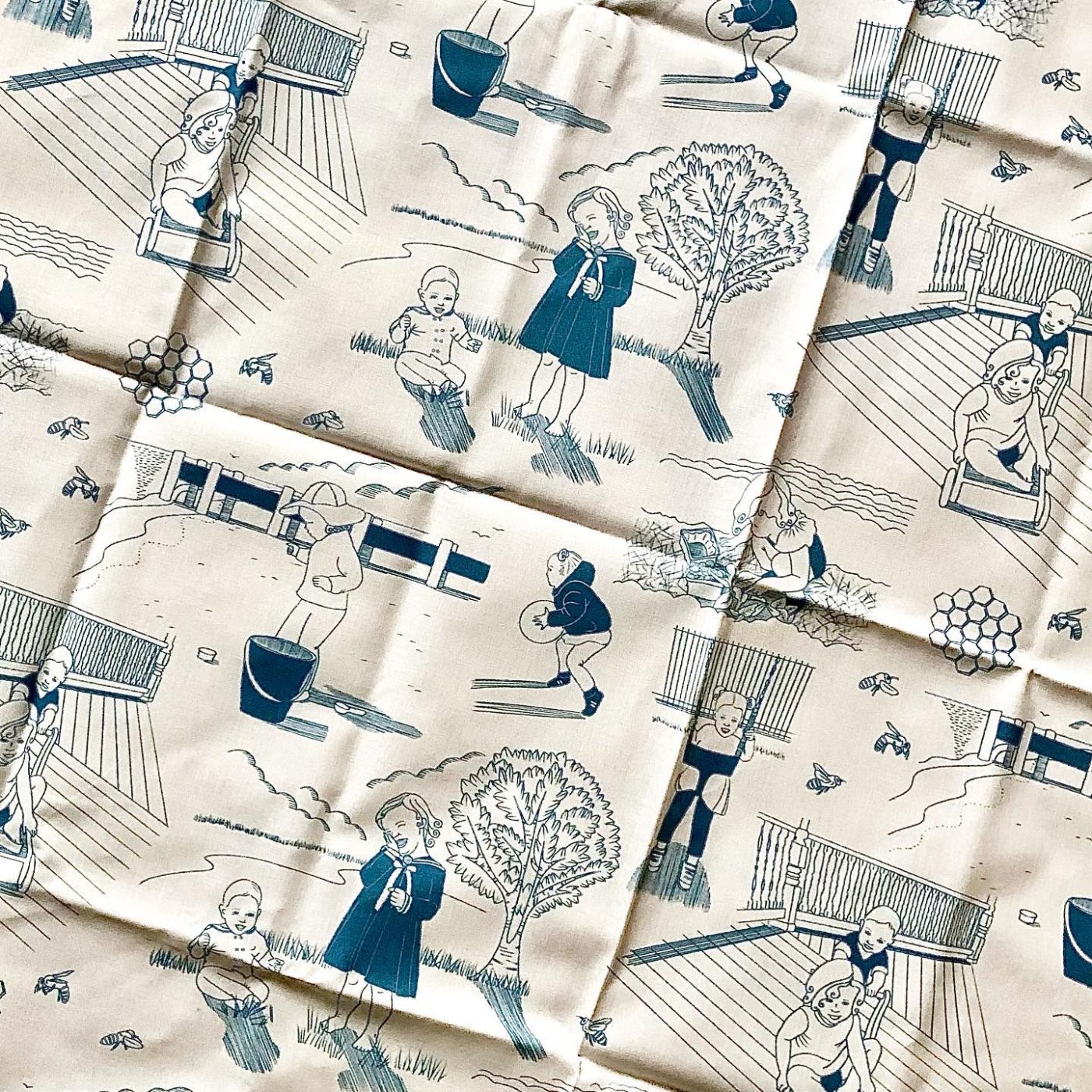
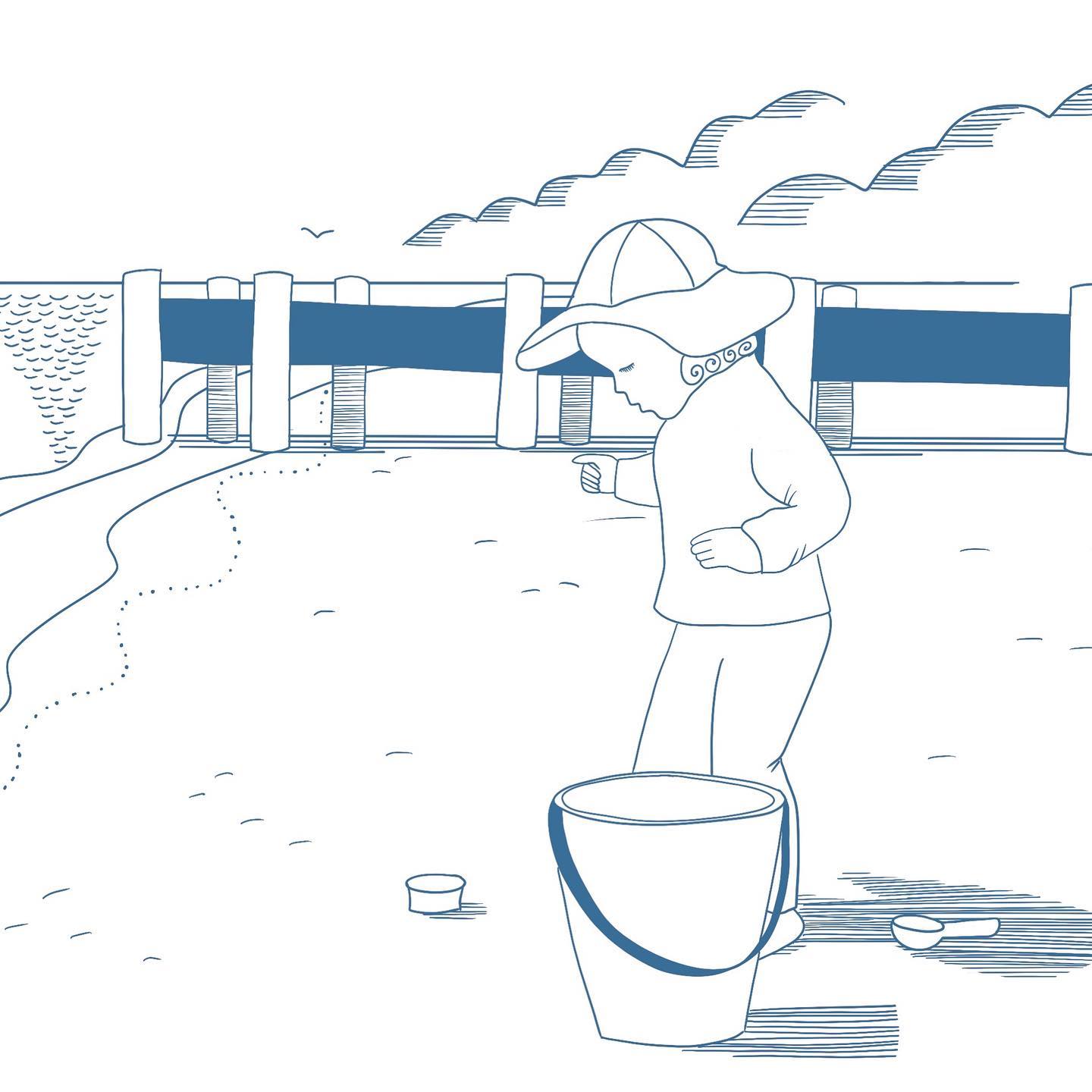
For Christmas, she pulled photos of my kids off Instagram and made this fabric:
Somehow, this pattern manages to maximize cuteness, tastefulness, and versatility. Fully personalized, just stuff she found on my Instagram.
I think people would pay for this (and she would want that). I’m curious if the price that feels fair to the consumer would be enough…
The reason I think it works as a product is that it’s one-of-a-kind but totally repeatable. Send photos, Liz makes the pattern, choose color and items—sheets, napkins, wallpaper—there’s an issue of proofing and “notes” which add to the cost—but this is a serious amount of work…
I have very few followers and I’ve never done a poll, but if you were going to pay for a custom designed pattern based on your photos, which pricing method feels best?
Flat rate for pattern design, items a la carte?
Minimum order size and 100% for design?
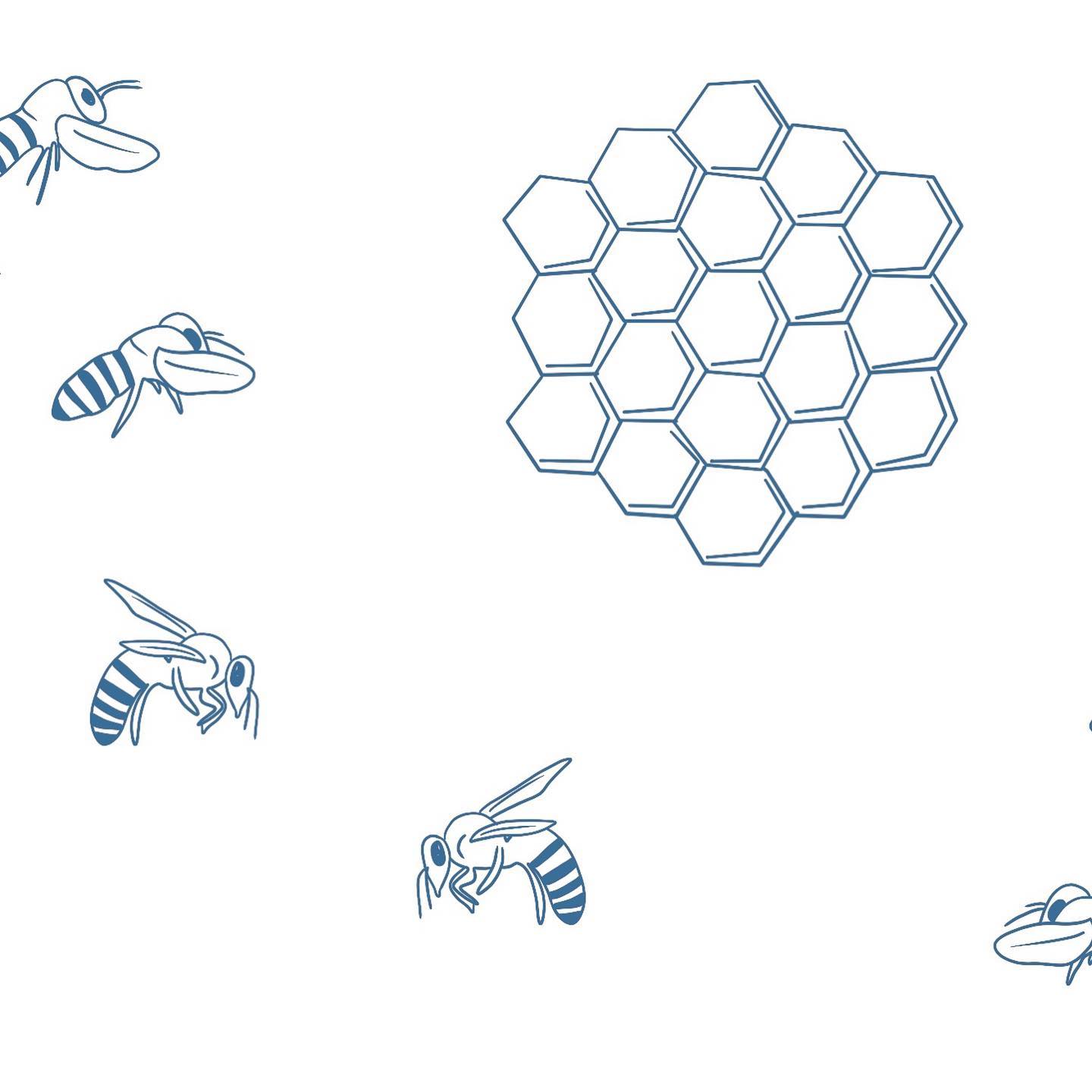
Here’s a side-by-side of a photo I took and how she treated it. It’s just so cool. If there are any people with business knowledge in this space that could help my sister evaluate the opportunity, I would be most grateful if you hit her up: https://www.elizabethand.co/.



Summary
Post Draft
Images






Tweets
My sister Liz is a genius. In addition to being a dance instructor, a composer who plays all instruments, and one of the best improv performers I’ve ever seen, she’s now doing surface pattern design.
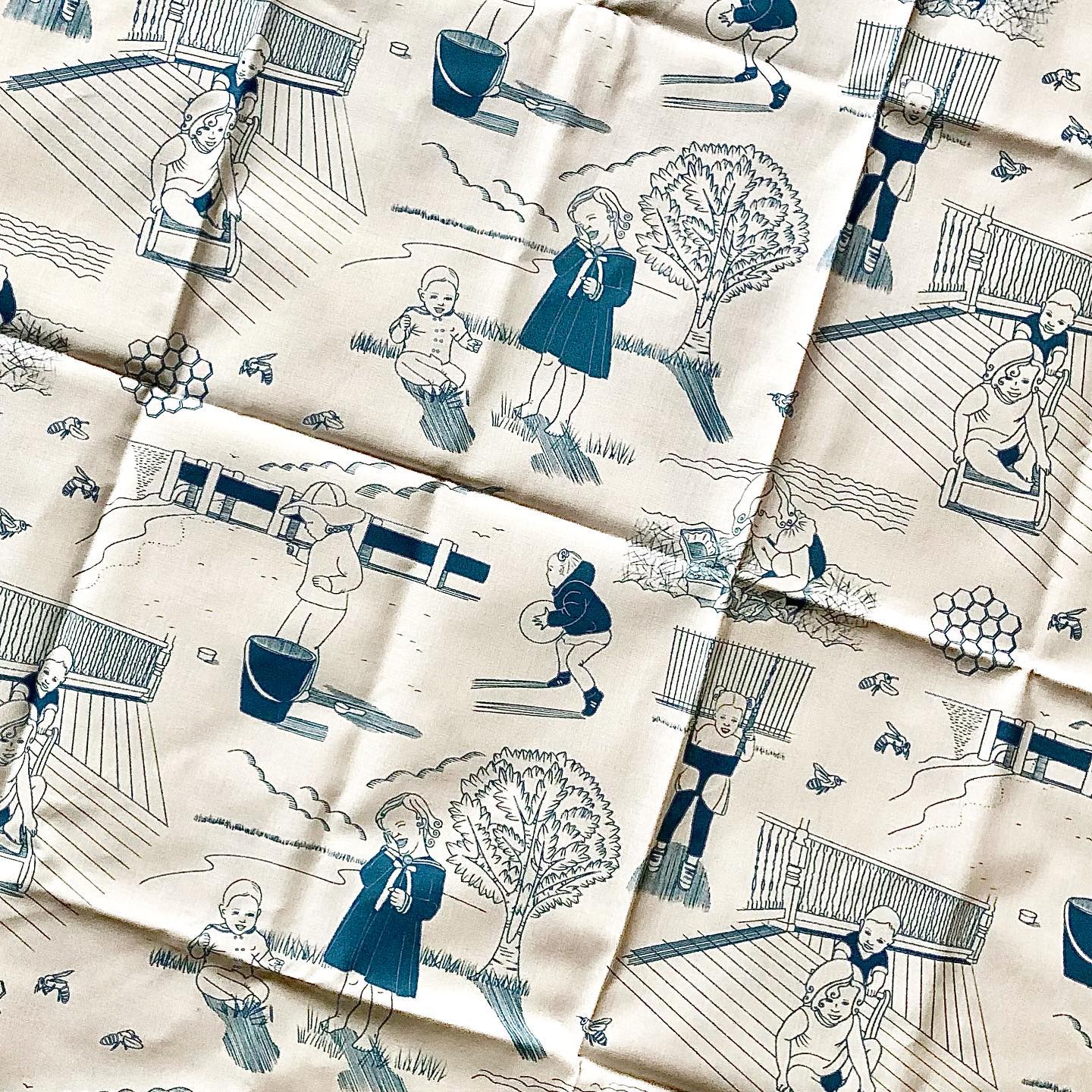
For Christmas, she pulled photos of my kids off Instagram and made this fabric:
Somehow, this pattern manages to maximize cuteness, tastefulness, and versatility. Fully personalized, just stuff she found on my Instagram.
I think people would pay for this (and she would want that). I’m curious if the price that feels fair to the consumer would be enough…
The reason I think it works as a product is that it’s one-of-a-kind but totally repeatable. Send photos, Liz makes the pattern, choose color and items—sheets, napkins, wallpaper—there’s an issue of proofing and “notes” which add to the cost—but this is a serious amount of work…
I have very few followers and I’ve never done a poll, but if you were going to pay for a custom designed pattern based on your photos, which pricing method feels best?
Flat rate for pattern design, items a la carte?
Minimum order size and 100% for design?
Here’s a side-by-side of a photo I took and how she treated it. It’s just so cool. If there are any people with business knowledge in this space that could help my sister evaluate the opportunity, I would be most grateful if you hit her up: https://www.elizabethand.co/.
Political “Games”
I can’t get away from games/sports analogies when discussing democracy and economics and friends have told me it leaves a bad taste in their mouths.
“This isn’t a game.”
Honestly, I think it IS a game, and that’s not a pejorative. Games are really, really important. Thread. 👇
What is a constitution or a set of laws if not rules for a game we can agree that we’re playing to cultivate or lose power and influence without resorting to brute force violence?
Even animals have games. Games are foundational.
Certainly, games can be terribly designed, like this current type of capitalism or like a government run completely by private campaign donations and a revolving door of hard regulatory capture and soft corruption, but that just means the rules need to be amended.
In a representative democracy, it’s critical that voters (the fans) are invested in the game. The rules can be dumb, the Yankees can have 10x the money as everyone else but when THE PLAYERS THEMSELVES (the representatives) can’t be trusted, the fans lose all interest in the game.
One of the reasons sports are so popular everywhere is because it’s the one place where everyone is playing by the same rules and where even underdogs can win. For too long our democracy has been an opaque box where popular things never pass and unpopular things pass unanimously.
There are some real opportunities ahead to reform this game (I really do believe that) but one thing we can start doing now, without any permission whatsoever, is simply play the game better. Draft better players, win more votes, meaningfully change lives, and then do it again.
There’s no way to win the game if we’re just distracted by our hatred of the other team’s fans. We need to remember that they’re not in the game and neither are we. They can do what they want to hold their team accountable. The only team we have any input on is our own.
https://twitter.com/zachphillips/status/1347299819677749250?s=21
Summary
Post Draft
Tweets
I can’t get away from games/sports analogies when discussing democracy and economics and friends have told me it leaves a bad taste in their mouths.
“This isn’t a game.”
Honestly, I think it IS a game, and that’s not a pejorative. Games are really, really important. Thread. 👇
What is a constitution or a set of laws if not rules for a game we can agree that we’re playing to cultivate or lose power and influence without resorting to brute force violence?
Even animals have games. Games are foundational.
Certainly, games can be terribly designed, like this current type of capitalism or like a government run completely by private campaign donations and a revolving door of hard regulatory capture and soft corruption, but that just means the rules need to be amended.
In a representative democracy, it’s critical that voters (the fans) are invested in the game. The rules can be dumb, the Yankees can have 10x the money as everyone else but when THE PLAYERS THEMSELVES (the representatives) can’t be trusted, the fans lose all interest in the game.
One of the reasons sports are so popular everywhere is because it’s the one place where everyone is playing by the same rules and where even underdogs can win. For too long our democracy has been an opaque box where popular things never pass and unpopular things pass unanimously.
There are some real opportunities ahead to reform this game (I really do believe that) but one thing we can start doing now, without any permission whatsoever, is simply play the game better. Draft better players, win more votes, meaningfully change lives, and then do it again.
There’s no way to win the game if we’re just distracted by our hatred of the other team’s fans. We need to remember that they’re not in the game and neither are we. They can do what they want to hold their team accountable. The only team we have any input on is our own.
The Cobbler’s Dilemma
“The cobbler’s children have no shoes” is a phrase that rings true for most businesses. My 8-year-old production house has no video about itself 🤦♂️.
The assumed reason is that we’re working on customer work so we don’t have time for our own. This assumption is wrong. 👇
The reason the cobbler’s children have no shoes isn’t because the cobbler is busy making shoes for customers. It’s because the cobbler is paralyzed by the impossible task of making shoes for her children.
This is The Cobbler’s Dilemma: “My children’s shoes must be THE BEST.”
“What will people think if my children’s shoes aren’t the very best shoes they’ve ever seen? I’m a cobbler! I better do a truly perfect job on these shoes and then I need to make sure my children wear them right and keep them clean and don’t pair them with the wrong outfit…”
This cobbler is totally screwed. There’s no way she’s ever going to make shoes for her children.
This type of perfectionist thinking is the surest way to never get a single thing done. Instead, she’ll shrug her shoulders and joke that “the cobbler’s children have no shoes.”
Meanwhile, the cobbler’s children have the best treehouse in town. She loves building treehouses almost as much as making shoes. She could’ve made 28 pairs of shoes in the time it took to build that treehouse.
But no pair of shoes could possibly be good enough for her children.
Summary
Post Draft
Tweets
“The cobbler’s children have no shoes” is a phrase that rings true for most businesses. My 8-year-old production house has no video about itself 🤦♂️.
The assumed reason is that we’re working on customer work so we don’t have time for our own. This assumption is wrong. 👇
The reason the cobbler’s children have no shoes isn’t because the cobbler is busy making shoes for customers. It’s because the cobbler is paralyzed by the impossible task of making shoes for her children.
This is The Cobbler’s Dilemma: “My children’s shoes must be THE BEST.”
“What will people think if my children’s shoes aren’t the very best shoes they’ve ever seen? I’m a cobbler! I better do a truly perfect job on these shoes and then I need to make sure my children wear them right and keep them clean and don’t pair them with the wrong outfit…”
This cobbler is totally screwed. There’s no way she’s ever going to make shoes for her children.
This type of perfectionist thinking is the surest way to never get a single thing done. Instead, she’ll shrug her shoulders and joke that “the cobbler’s children have no shoes.”
Meanwhile, the cobbler’s children have the best treehouse in town. She loves building treehouses almost as much as making shoes. She could’ve made 28 pairs of shoes in the time it took to build that treehouse.
But no pair of shoes could possibly be good enough for her children.
Social Media Monopolies as National Parks
It might be a fun few years for antitrust. The monopolies who control everything and who govern with absolute power might be the biggest reason we’re here.
I have one idea about what to do with a highly visible one like Twitter: Make it into a National Park. 👇
“Breaking up” a social media monopoly can only be accomplished in one way: By opening the protocol it runs on, returning ownership of the data to its users, and allowing them to portably take their data to any network that using the protocol. Anything less is tepid posturing.
This is why network-effect monopolies are so strong. The core value of the company is that so many people are on it (stuck using it). The product itself can objectively suck (Facebook) and it doesn’t matter. “Breaking it up” just creates a vacuum for another one.
In the case of most monopolies, the product being sold is a commodity but the company is proprietary. In the case of social media, the companies (and their shitty apps) are a commodity but their product (billions of entrapped users and their surveillance of them) is proprietary.
So as much as there are risks to nationalizing things, the government isn’t always great at stuff, etc., etc., the best way to deal with social media monopolies is to nationalize them, with strict regulatory oversight, privacy, and at least a chance of due process.
Twitter is perfect to use as a test case:
- It’s relatively small (<200m daily users) while still 100% a monopoly.
- Everything that makes Twitter great was built by its community: developers like @lorenbrichter and @iconfactory and users who invented @s, retweets, threads…
When Twitter becomes a National Park and the protocol is opened up for people to take their portable data to open communities (or stay on the main government one), Trump’s account can be cancelled because he broke 8,310 laws on it, not because Jack Dorsey is getting some heat.
If you’re as interested in monopolies and antitrust as I am, you should get on @MattStoller’s Substack (and follow him on here for strong shitposting). He would almost certainly think this thread is ridiculously dumb, but I posted it freely. Complain to @jack. He owns this shit.
Summary
Post Draft
Tweets
It might be a fun few years for antitrust. The monopolies who control everything and who govern with absolute power might be the biggest reason we’re here.
I have one idea about what to do with a highly visible one like Twitter: Make it into a National Park. 👇
“Breaking up” a social media monopoly can only be accomplished in one way: By opening the protocol it runs on, returning ownership of the data to its users, and allowing them to portably take their data to any network that using the protocol. Anything less is tepid posturing.
This is why network-effect monopolies are so strong. The core value of the company is that so many people are on it (stuck using it). The product itself can objectively suck (Facebook) and it doesn’t matter. “Breaking it up” just creates a vacuum for another one.
In the case of most monopolies, the product being sold is a commodity but the company is proprietary. In the case of social media, the companies (and their shitty apps) are a commodity but their product (billions of entrapped users and their surveillance of them) is proprietary.
So as much as there are risks to nationalizing things, the government isn’t always great at stuff, etc., etc., the best way to deal with social media monopolies is to nationalize them, with strict regulatory oversight, privacy, and at least a chance of due process.
Twitter is perfect to use as a test case:
- It’s relatively small (<200m daily users) while still 100% a monopoly.
- Everything that makes Twitter great was built by its community: developers like @lorenbrichter and @iconfactory and users who invented @s, retweets, threads…
When Twitter becomes a National Park and the protocol is opened up for people to take their portable data to open communities (or stay on the main government one), Trump’s account can be cancelled because he broke 8,310 laws on it, not because Jack Dorsey is getting some heat.
If you’re as interested in monopolies and antitrust as I am, you should get on @MattStoller’s Substack (and follow him on here for strong shitposting). He would almost certainly think this thread is ridiculously dumb, but I posted it freely. Complain to @jack. He owns this shit.
An Honest Reckoning
There is nothing interesting or helpful that I, a Blue team voter, can say that shames, insults, or belittles a Red team voter.
Not because I need to somehow cater to the Red team voter, but because Red team voters are 100% irrelevant, and so am I. A thread. 👇
Whether I like it or not (I don’t), in this ineptly designed two-party plutocracy, I vote for the Blue team.
Even though I hate 88% of what they do, they can rely on my vote no matter what… because I hate 99% of what the Red team does.
Also, culture and stuff. Good Reasons.
The problem on both sides (but especially mine) is that the people who VOTE for the team think they are ON the team.
I have news: That’s not how representative democracy works. If you aren’t running, elected, appointed, or working on it, you’re not on the team…
You’re a fan.
As a reliable voter for the Blue team, I am nothing more than a fan watching the game. I have no power other than to cheer, boo, and yell at the GM to fire the coach or draft a new star player.
I will reliably root (vote) for my team and so I am irrelevant to the game’s outcome.
Representatives are the players. Their job is to WIN. Winning means getting elected NO MATTER THE CONDITIONS, advancing popular and effective policy, and then getting reelected.
Representatives are 100% responsible for all of this because they are the ones with or seeking power.
The Red team’s reliable voters are in the stands too. If I punch one of them in the face, I get taken out by security and the game goes on.
Almost the entire discourse from my fellow Blue team fans is the equivalent of dumping a beer on a Red team fan. Useless. At best.
The only thing that matters is WINNING THE VOTES of the people who could go either way or who may not vote at all.
There are tens of millions of these people. Winning their votes is The Game. There is no other game.
When you understand that winning votes is The Game and that you don’t matter, Trump fans don’t matter, that you’re all irrelevant, everything becomes about having the right players, running the right strategy, winning the votes, and enacting policies that make sure you win again.
When you hear someone yelling about the other team’s voters, the absurdity becomes crystal clear: “If they weren’t cheering so loudly, we would have won! If you cheer for the other team, you are a BAD person and NOT MY FRIEND ANYMORE.”
What are we doing?
And then things get really crazy: People blame VOTERS for their team losing (something Democrats do to voters they think are “theirs”) 🤦♂️.
This is exactly equivalent to “We would have scored more points if the ball wasn’t so STUPID. The other team ran so FAST! It’s not FAIR!”
Any cowardly politician or apparatchik who blames a single thing on voters should never be allowed to participate in politics again.
Win the votes, make things better, and then win again. That’s your job, and if you don’t even understand your job, you shouldn’t have the job.
One question, reacting to the current clusterfuck: How might we repair trust in our institutions and even basic facts after decades of relentless lying and grifting by our leaders?
One answer: Maybe try being honest 🤷♂️.
That’s a play I’d run. But I’m just a fan.
Summary
Post Draft
Tweets
There is nothing interesting or helpful that I, a Blue team voter, can say that shames, insults, or belittles a Red team voter.
Not because I need to somehow cater to the Red team voter, but because Red team voters are 100% irrelevant, and so am I. A thread. 👇
Whether I like it or not (I don’t), in this ineptly designed two-party plutocracy, I vote for the Blue team.
Even though I hate 88% of what they do, they can rely on my vote no matter what… because I hate 99% of what the Red team does.
Also, culture and stuff. Good Reasons.
The problem on both sides (but especially mine) is that the people who VOTE for the team think they are ON the team.
I have news: That’s not how representative democracy works. If you aren’t running, elected, appointed, or working on it, you’re not on the team…
You’re a fan.
As a reliable voter for the Blue team, I am nothing more than a fan watching the game. I have no power other than to cheer, boo, and yell at the GM to fire the coach or draft a new star player.
I will reliably root (vote) for my team and so I am irrelevant to the game’s outcome.
Representatives are the players. Their job is to WIN. Winning means getting elected NO MATTER THE CONDITIONS, advancing popular and effective policy, and then getting reelected.
Representatives are 100% responsible for all of this because they are the ones with or seeking power.
The Red team’s reliable voters are in the stands too. If I punch one of them in the face, I get taken out by security and the game goes on.
Almost the entire discourse from my fellow Blue team fans is the equivalent of dumping a beer on a Red team fan. Useless. At best.
The only thing that matters is WINNING THE VOTES of the people who could go either way or who may not vote at all.
There are tens of millions of these people. Winning their votes is The Game. There is no other game.
When you understand that winning votes is The Game and that you don’t matter, Trump fans don’t matter, that you’re all irrelevant, everything becomes about having the right players, running the right strategy, winning the votes, and enacting policies that make sure you win again.
When you hear someone yelling about the other team’s voters, the absurdity becomes crystal clear: “If they weren’t cheering so loudly, we would have won! If you cheer for the other team, you are a BAD person and NOT MY FRIEND ANYMORE.”
What are we doing?
And then things get really crazy: People blame VOTERS for their team losing (something Democrats do to voters they think are “theirs”) 🤦♂️.
This is exactly equivalent to “We would have scored more points if the ball wasn’t so STUPID. The other team ran so FAST! It’s not FAIR!”
Any cowardly politician or apparatchik who blames a single thing on voters should never be allowed to participate in politics again.
Win the votes, make things better, and then win again. That’s your job, and if you don’t even understand your job, you shouldn’t have the job.
One question, reacting to the current clusterfuck: How might we repair trust in our institutions and even basic facts after decades of relentless lying and grifting by our leaders?
One answer: Maybe try being honest 🤷♂️.
That’s a play I’d run. But I’m just a fan.
Airtable’s Missed Opportunity
One of the things that bothers me most (I often can’t sleep at night thinking about it) is a missed opportunity. Not my missed opportunity, but someone else’s.
The one I’m thinking about right now is the missed opportunity of one of my favorite products of all time: @Airtable 👇
Before I go into what I think Airtable has missed, let me start by saying that I was/remain one of its earliest/biggest fans. At a 2015 hackathon (when I used to go to hackathons), I built a CMS backed by Airtable that I called Airguitar which I went on to build many things with.
(side note on Airguitar: it never became a commercial product or left my own company’s use, and surely it would have had some trademark issues 😃, but also, Airtable’s colors were so much cooler back then… that’s not the missed opportunity, sorry for the digression.)
I legitimately believe that @Airtable belongs in the Hall of Fame of user interface design. Using its database for the first time was like watching Michael Jordan play basketball. The only other experience I’ve had in the same league is using @figmadesign. Both web apps. Bananas.
I’ve created hundreds of workflows (and fully-functioning applications) hacked on top of Airtable, not because Airtable made them easier, but because Airtable made them POSSIBLE.
But, in my opinion, Airtable went on to repeatedly make decisions contrary to their mission.
Airtable’s stated mission is “to democratize software creation by enabling anyone to build the tools that meet their needs.”
Airtable, right now, COULD enable this, but over and over, they have needlessly blocked toolmaking functionality in the most frustrating ways imaginable.
To be fair, Airtable is now a unicorn “worth” billions of dollars and I’m just a toolmaking-obsessed chump who sees a tool for toolmaking that is intentionally impaired by its own toolmaker, shaking my fist at the void.
There are too many examples of Airtable’s anti-toolmaker decisions to name here, but I will go over a few:
This first one may in fact be an honest oversight, but it doesn’t make sense because the Airtable team is Michael Jordan:
- The inability to link between bases.
My God, the Zapier hacks we have had to build to get around this, yet Airtable Sync somehow manages to be worse.
-
After building a regular-person-readable alternative database view, perfect for a Normy Dashboard, they released it as a marketing tool called Airtable Universe and didn’t give it’s far-more-usable interface to the toolmakers and the users of the tools themselves. 🤦♂️
-
User/API pricing remain a kaleidoscopic nightmare for actual toolmaker use.
To be clear, I love paying for software. It’s kind of a hobby of mine. But pricing should MAKE SENSE. Our team can do everything for $25/month but add a user field and it’s $400/month… What? https://twitter.com/harper/status/1272549461391290370?s=21
I’ve moved on now to build my own tool which I hope will achieve Airtable’s mission. Who knows, maybe I’ll run into the same problems they had that forced them to torture and rip the guts out of their most fervent believers and fans.
I wish I could have just used Airtable.
(also maybe add a simple messy page model (there are already “comments”) to each record so people can write some stuff (humans need messy places to write stuff) and embed table views and Airtable is suddenly a better @NotionHQ for what Notion is used for… easy peasy)
Summary
Post Draft
Tweets
One of the things that bothers me most (I often can’t sleep at night thinking about it) is a missed opportunity. Not my missed opportunity, but someone else’s.
The one I’m thinking about right now is the missed opportunity of one of my favorite products of all time: @Airtable 👇
Before I go into what I think Airtable has missed, let me start by saying that I was/remain one of its earliest/biggest fans. At a 2015 hackathon (when I used to go to hackathons), I built a CMS backed by Airtable that I called Airguitar which I went on to build many things with. 
(side note on Airguitar: it never became a commercial product or left my own company’s use, and surely it would have had some trademark issues 😃, but also, Airtable’s colors were so much cooler back then… that’s not the missed opportunity, sorry for the digression.)
I legitimately believe that @Airtable belongs in the Hall of Fame of user interface design. Using its database for the first time was like watching Michael Jordan play basketball. The only other experience I’ve had in the same league is using @figmadesign. Both web apps. Bananas.
I’ve created hundreds of workflows (and fully-functioning applications) hacked on top of Airtable, not because Airtable made them easier, but because Airtable made them POSSIBLE.
But, in my opinion, Airtable went on to repeatedly make decisions contrary to their mission.
Airtable’s stated mission is “to democratize software creation by enabling anyone to build the tools that meet their needs.”
Airtable, right now, COULD enable this, but over and over, they have needlessly blocked toolmaking functionality in the most frustrating ways imaginable.
To be fair, Airtable is now a unicorn “worth” billions of dollars and I’m just a toolmaking-obsessed chump who sees a tool for toolmaking that is intentionally impaired by its own toolmaker, shaking my fist at the void.
There are too many examples of Airtable’s anti-toolmaker decisions to name here, but I will go over a few:
This first one may in fact be an honest oversight, but it doesn’t make sense because the Airtable team is Michael Jordan:
- The inability to link between bases.
My God, the Zapier hacks we have had to build to get around this, yet Airtable Sync somehow manages to be worse.
- After building a regular-person-readable alternative database view, perfect for a Normy Dashboard, they released it as a marketing tool called Airtable Universe and didn’t give it’s far-more-usable interface to the toolmakers and the users of the tools themselves. 🤦♂️
I’ve moved on now to build my own tool which I hope will achieve Airtable’s mission. Who knows, maybe I’ll run into the same problems they had that forced them to torture and rip the guts out of their most fervent believers and fans.
I wish I could have just used Airtable.
(also maybe add a simple messy page model (there are already “comments”) to each record so people can write some stuff (humans need messy places to write stuff) and embed table views and Airtable is suddenly a better @NotionHQ for what Notion is used for… easy peasy)
Unjustify Your Next Actions
I’ve been using todo lists/task management systems, in every form, for years. I’ve spent so much goddamned time learning methodologies that I could be a professor in them…
Yesterday, I had a breakthrough talking to @m_ashcroft. The truth is: I hate them all. Here’s why. 👇
Nothing will take the joy out of a task more than focusing on the success it could be a small part of. Project-based task management asks that we break the things we want to manifest into little bite-sized pieces that we can do in service of that Ultimate State of Completeness.
The mindset this creates is one of evaluating every activity in terms of its little tickbox that needs to be checked in order to contribute to the checking of a much bigger, badder tickbox.
In essence, it asks of every activity: Are you serving a Larger Goal? Are you JUSTIFIED?
Now we’ve successfully taken the experience of the present moment, the exploration of our activity, and all possible fun that might be, and transformed it into a square Unit of Productivity for The Future (a Future in which, presumably, we will be justified ourselves, worthy).
Obviously, for medium-to-large things to get done, it’s helpful to break them down into smaller steps, but to create a more humane system of project/task management, a missing step is to UNJUSTIFY each broken down action: How could this task be performed for its own sake?
Of course, we (sickos like me) can make any process into more Work, including this one. To avoid the temptation to go through a project and ▢ UNJUSTIFY EVERY ACTION, simply unjustify the next one. How does my next activity need nothing at all to be “worth it”? No outcome, even.
Both the simplest and the most difficult part of the trick is contained in the concept of “worth it” itself. There’s a LOT of culture and psychology and cultural psychology tied up in that concept.
Maybe the concept of “worth it” itself is the problem.
Anyway, this is actually how I’ve been treating some of my most “important work” for some time now without realizing it.
It turns out, doing things this way, I’ve never been 1/10th as productiv—THE DOOR TO ALL AWARENESS AND PLAY AND ENJOYMENT SLAMS CLOSED, ETERNALLY, ONCE MORE
Summary
Post Draft
Tweets
I’ve been using todo lists/task management systems, in every form, for years. I’ve spent so much goddamned time learning methodologies that I could be a professor in them…
Yesterday, I had a breakthrough talking to @m_ashcroft. The truth is: I hate them all. Here’s why. 👇
Nothing will take the joy out of a task more than focusing on the success it could be a small part of. Project-based task management asks that we break the things we want to manifest into little bite-sized pieces that we can do in service of that Ultimate State of Completeness.
The mindset this creates is one of evaluating every activity in terms of its little tickbox that needs to be checked in order to contribute to the checking of a much bigger, badder tickbox.
In essence, it asks of every activity: Are you serving a Larger Goal? Are you JUSTIFIED?
Now we’ve successfully taken the experience of the present moment, the exploration of our activity, and all possible fun that might be, and transformed it into a square Unit of Productivity for The Future (a Future in which, presumably, we will be justified ourselves, worthy).
Obviously, for medium-to-large things to get done, it’s helpful to break them down into smaller steps, but to create a more humane system of project/task management, a missing step is to UNJUSTIFY each broken down action: How could this task be performed for its own sake?
Of course, we (sickos like me) can make any process into more Work, including this one. To avoid the temptation to go through a project and ▢ UNJUSTIFY EVERY ACTION, simply unjustify the next one. How does my next activity need nothing at all to be “worth it”? No outcome, even.
Both the simplest and the most difficult part of the trick is contained in the concept of “worth it” itself. There’s a LOT of culture and psychology and cultural psychology tied up in that concept.
Maybe the concept of “worth it” itself is the problem.
Anyway, this is actually how I’ve been treating some of my most “important work” for some time now without realizing it.
It turns out, doing things this way, I’ve never been 1/10th as productiv—THE DOOR TO ALL AWARENESS AND PLAY AND ENJOYMENT SLAMS CLOSED, ETERNALLY, ONCE MORE
Bean Dad Defense
I’ve witnessed people I know get “cancelled” and we’ve all seen celebrities (strangers) get cancelled, but the case of @johnroderick is the first time it’s been someone I “know” (by way of 100s of hours of extremely personal podcasts). Something is very different about this. 👇
John Roderick is the guy who, both comically and tragically, is now known to most of Twitter as “bean dad” after he posted a thread of a parenting story that made a lot of people extremely angry. Then someone went word-searching through old tweets and, well, there were tweets.
On the parenting story: If you have kids and you’re trying… you try things and you get some wrong. All kids are different and you literally cannot avoid getting things wrong. Knowing John’s storytelling, I didn’t find controversy in the can opener story, but I see why many did.
On the old tweets, let’s take them category-by-category:
First, he used the F-word, clearly playfully because John is bisexual. Of course this is an offensive word, but as a queer person himself, John is afforded some agency over its use.
Second, there were “Jews rule the world” tweets. Without context, these look really bad. But if you take 11 seconds to look into it, you find out that this is a bit to CALL OUT antisemitism. John has aped conspiracy theorists and their ultimately ubiquitous antisemitism forever.
Third, he used the N-word in one tweet. He says in the tweet that he’s making a point about the elastic power of words/slurs.
This was really bad and he should apologize for it, but it’s hard to argue he intended it maliciously. It was a bad and wrong attempt at the opposite.
Fourth, he made jokes about rape in the form of “I’ll rape you.” This is obviously super offensive and bad and he should apologize.
Lastly, he used the R-word and said ableist shit. He should apologize and so should a lot of us (we’ve barely scratched the surface on ableism).
Here I am, seven tweets into a thread and trying to provide context for a guy who is now so radioactively demonic that his trending story almost beat out a recorded phone call where Donald Trump literally tried to shake down Georgia’s election.
This is a big problem.
John Roderick may be the best (spoken word) storyteller I’ve ever heard. He may be the most passionate about human capacities for good and evil and how those have created our history. He may also be the most earnestly generous person with his own feelings and experience.
He’s also a drug addict sober 20+ years. He’s bipolar. He seems to be bad at romantic relationships. Extremely self-loathing, never feels good enough. He seems to spend most of his waking moments thinking about what’s wrong with the world and progressive ways of fixing it.
On one hand, John did this to himself, which is an assessment that’s (somewhat surprisingly) easy to make with those you are close to.
On the other hand, there’s the matter of his deserved punishment/backlash, which is a very easy judgment to make about 1-dimensional strangers.
John Roderick is not someone I know, but he definitely isn’t a stranger either.
The one thing that’s somehow clearer in this in-between scenario: He is a LOT more than “bean dad.”
related to ((yzvtbWArI))
Post Draft
Tweets
I’ve witnessed people I know get “cancelled” and we’ve all seen celebrities (strangers) get cancelled, but the case of @johnroderick is the first time it’s been someone I “know” (by way of 100s of hours of extremely personal podcasts). Something is very different about this. 👇
John Roderick is the guy who, both comically and tragically, is now known to most of Twitter as “bean dad” after he posted a thread of a parenting story that made a lot of people extremely angry. Then someone went word-searching through old tweets and, well, there were tweets.
On the parenting story: If you have kids and you’re trying… you try things and you get some wrong. All kids are different and you literally cannot avoid getting things wrong. Knowing John’s storytelling, I didn’t find controversy in the can opener story, but I see why many did.
On the old tweets, let’s take them category-by-category:
First, he used the F-word, clearly playfully because John is bisexual. Of course this is an offensive word, but as a queer person himself, John is afforded some agency over its use.
Second, there were “Jews rule the world” tweets. Without context, these look really bad. But if you take 11 seconds to look into it, you find out that this is a bit to CALL OUT antisemitism. John has aped conspiracy theorists and their ultimately ubiquitous antisemitism forever.
Third, he used the N-word in one tweet. He says in the tweet that he’s making a point about the elastic power of words/slurs.
This was really bad and he should apologize for it, but it’s hard to argue he intended it maliciously. It was a bad and wrong attempt at the opposite.
Fourth, he made jokes about rape in the form of “I’ll rape you.” This is obviously super offensive and bad and he should apologize.
Lastly, he used the R-word and said ableist shit. He should apologize and so should a lot of us (we’ve barely scratched the surface on ableism).
Here I am, seven tweets into a thread and trying to provide context for a guy who is now so radioactively demonic that his trending story almost beat out a recorded phone call where Donald Trump literally tried to shake down Georgia’s election.
This is a big problem.
John Roderick may be the best (spoken word) storyteller I’ve ever heard. He may be the most passionate about human capacities for good and evil and how those have created our history. He may also be the most earnestly generous person with his own feelings and experience.
He’s also a drug addict sober 20+ years. He’s bipolar. He seems to be bad at romantic relationships. Extremely self-loathing, never feels good enough. He seems to spend most of his waking moments thinking about what’s wrong with the world and progressive ways of fixing it.
On one hand, John did this to himself, which is an assessment that’s (somewhat surprisingly) easy to make with those you are close to.
On the other hand, there’s the matter of his deserved punishment/backlash, which is a very easy judgment to make about 1-dimensional strangers.
John Roderick is not someone I know, but he definitely isn’t a stranger either.
The one thing that’s somehow clearer in this in-between scenario: He is a LOT more than “bean dad.”
How to Roll Your Rs
Are you an English-speaking grown-up who never learned to roll your Rs? Do you avoid speaking beautiful languages like Spanish and Italian?
Here’s a thread on how to achieve luscious Rs as an adult. The key is contained within the blooper reels of The Fresh Prince of Bel-Air. 👇
As a child, I had a great ear for languages. I loved them, and to this day, if I were offered one superpower by a Power Genie, it would be hard not to choose “Understand and speak every language.”
But at the age of 18, I still could not roll my Rs. And no one could describe how!
One of the cruelest phenomena in nature is that people who intuitively understand how to do a thing are the ABSOLUTE WORST at teaching it. Kids who can understand immediately how to roll their Rs (and make cool machine gun noises, too!) are infuriating to those of us who can’t.
I discovered the solution to the R-rolling problem completely by chance:
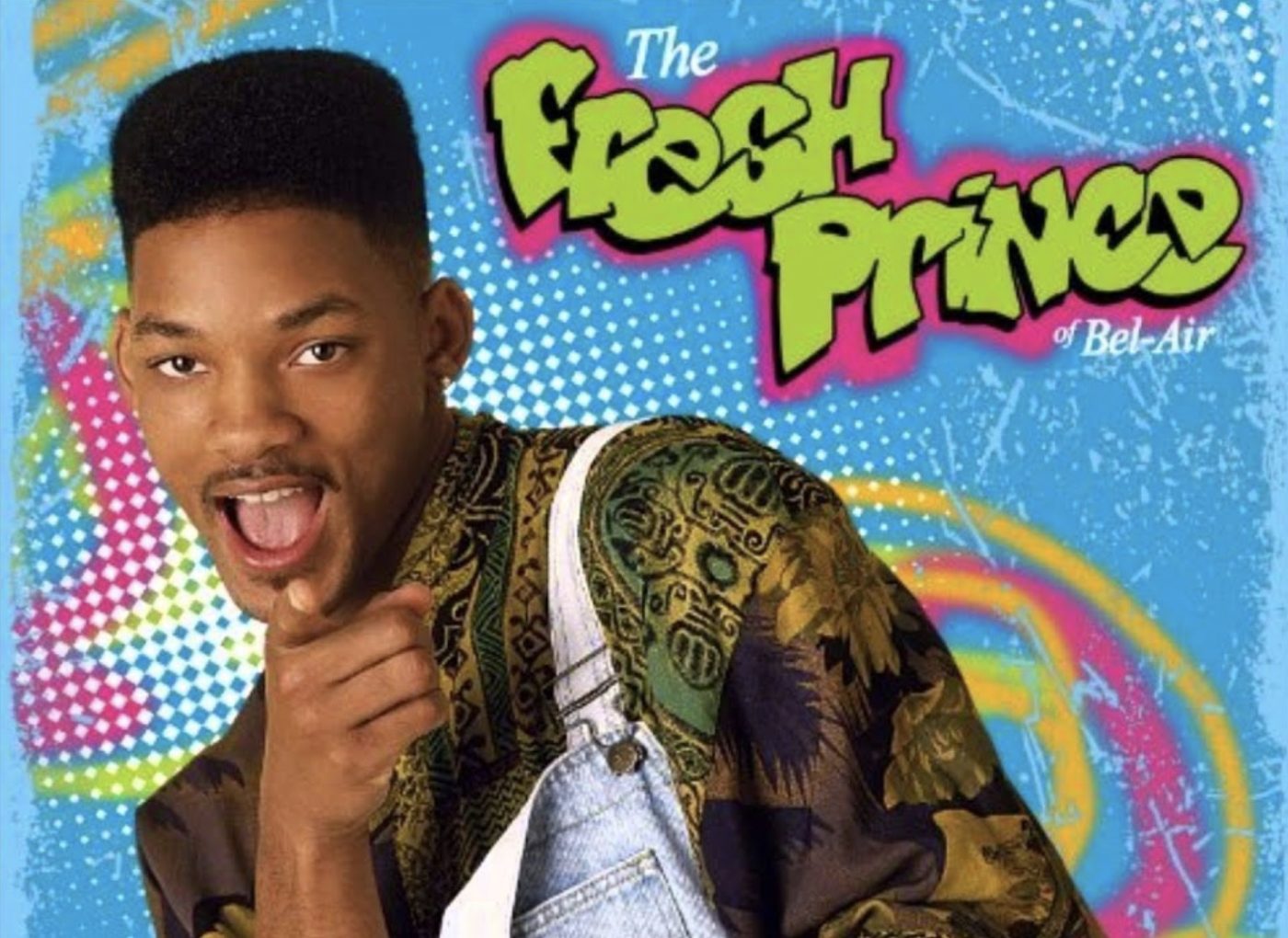
Watching Fresh Prince bloopers (as one does), I came across a scene in which Carlton, CANNOT get this line out without creating an R roll: “But it’ll cut into my trick-or-treating time.” Over and over… 💡
So I tried it. I repeated the line slowly, over and over again—
“But it’ll cut into my trick-or-treating time… But it’ll cut into my trick-or-treating time…”
You may want to do this alone. You may sound a little crazy.
Going faster and faster: “But it’ll cut into my trick-or-treating time… But it’ll cut into my trick-or-treating time…” and suddenly(!)—“BUT IT’LL” became buh-rRrRrRr. I was rolling my Rs! I was MAKING THE SOUND.
I still needed those first two words as a crutch for some time.
Within a few days I no longer needed the “Buh” sound to start. I could roll my Rs at will.
This is THE way to learn to roll your Rs no matter what age you are. It will work if you’re willing to put in just a few minutes for a few days, unlocking sound and capability forever.
(from ((14m39QpF1)))
Are you an English-speaking grown-up who never learned to roll your Rs? Do you avoid speaking beautiful languages like Spanish and Italian?
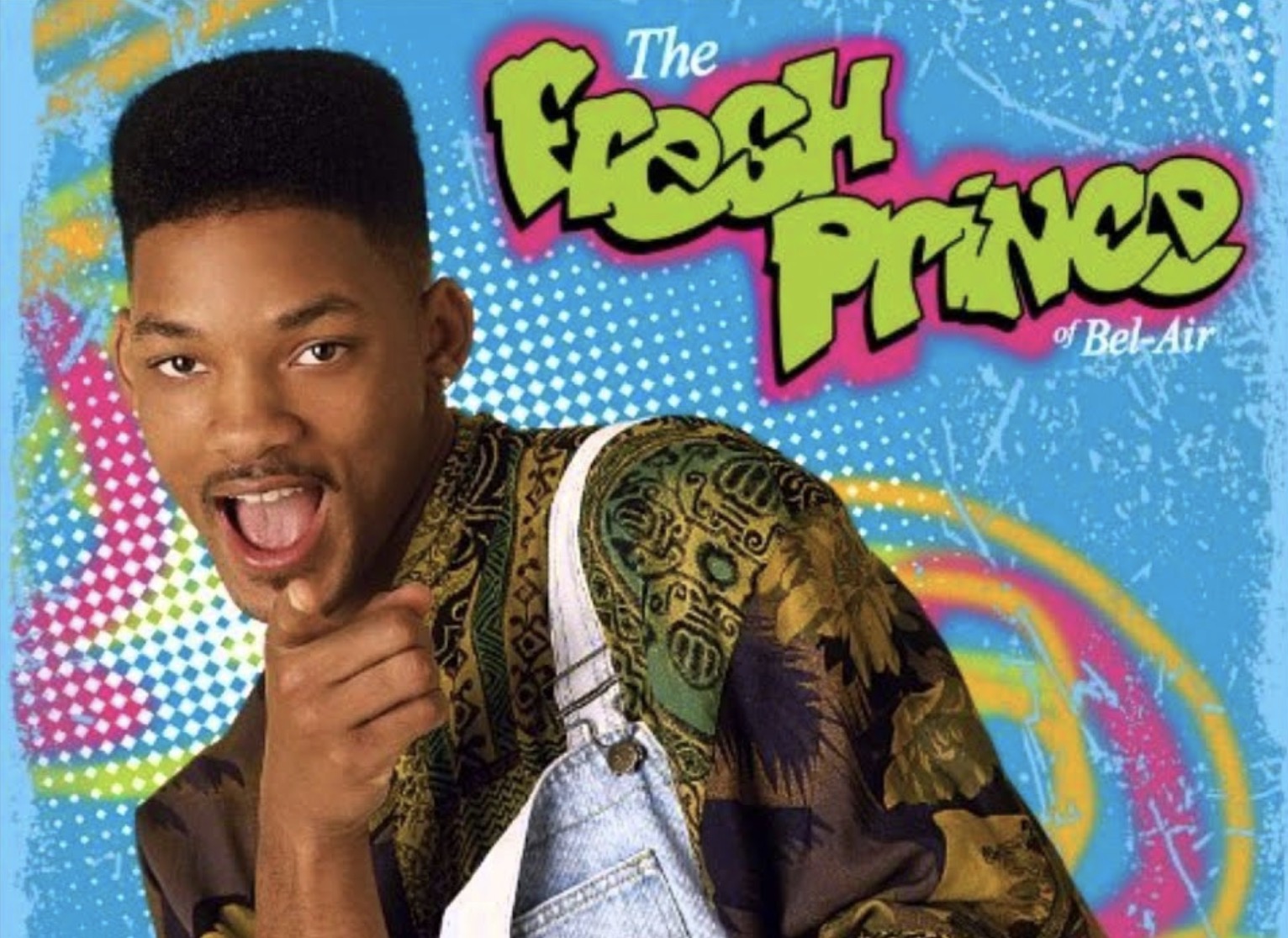
Here’s a thread on how to achieve luscious Rs as an adult. The key is contained within the blooper reels of The Fresh Prince of Bel-Air. 👇
As a child, I had a great ear for languages. I loved them, and to this day, if I were offered one superpower by a Power Genie, it would be hard not to choose “Understand and speak every language.”
But at the age of 18, I still could not roll my Rs. And no one could describe how!
One of the cruelest phenomena in nature is that people who intuitively understand how to do a thing are the ABSOLUTE WORST at teaching it. Kids who can understand immediately how to roll their Rs (and make cool machine gun noises, too!) are infuriating to those of us who can’t.
I discovered the solution to the R-rolling problem completely by chance:
Watching Fresh Prince bloopers (as one does), I came across a scene in which Carlton, CANNOT get this line out without creating an R roll: “But it’ll cut into my trick-or-treating time.” Over and over… 💡
So I tried it. I repeated the line slowly, over and over again—
“But it’ll cut into my trick-or-treating time… But it’ll cut into my trick-or-treating time…”
You may want to do this alone. You may sound a little crazy.
Going faster and faster: “But it’ll cut into my trick-or-treating time… But it’ll cut into my trick-or-treating time…” and suddenly(!)—“BUT IT’LL” became buh-rRrRrRr. I was rolling my Rs! I was MAKING THE SOUND.
I still needed those first two words as a crutch for some time.
Within a few days I no longer needed the “Buh” sound to start. I could roll my Rs at will.
This is THE way to learn to roll your Rs no matter what age you are. It will work if you’re willing to put in just a few minutes for a few days, unlocking sound and capability forever.
Media


Complete Photography Course in 5 Tweets
I’m going to attempt to deliver a complete photography course in 5 tweets.
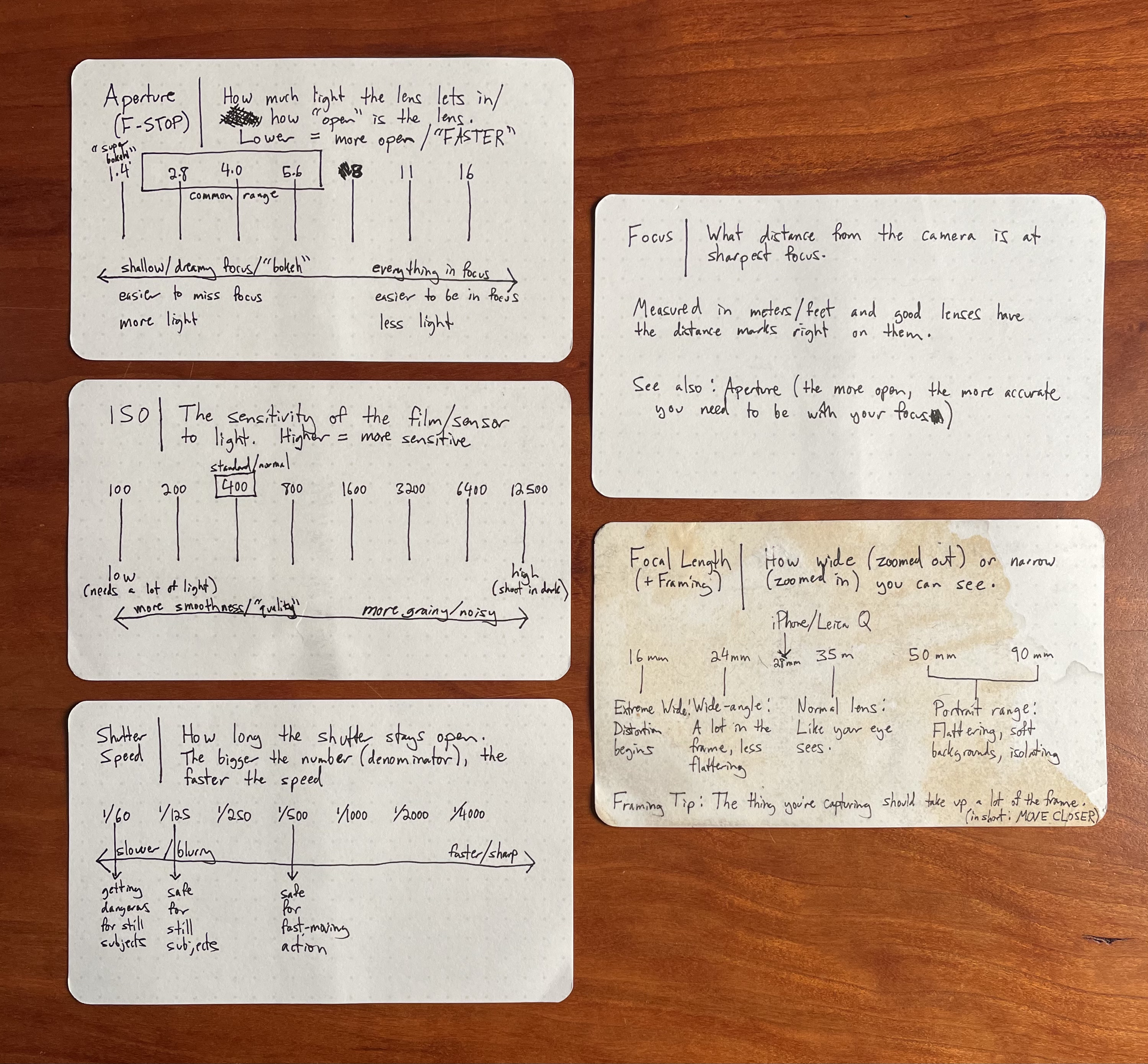
I originally made this on 5 index cards for my wife, corresponding to the 5 concepts you need to know.
In short: There isn’t much to it, and everyone should understand photography, particularly today. 👇
Concept 1: Aperture
Aperture is how much you open the lens to let light in. Common apertures run from 1.4 (open) to 22 (closed). Aperture works just like pupils. To see In the dark, open wider. In the sun, close down.
More open = blurry backgrounds (and harder to nail Focus).
Concept 2: ISO (or ASA)
The base light sensitivity of your film or camera. A higher ISO number means it’s more sensitive (needs less light) but also more grainy/“lower quality.” A lower ISO number means it’s less sensitive (needs more light) but is more smooth/“higher quality.”
Concept 3: Shutter Speed
How long the shutter is open. Big number (denominator) = faster speed. Small number = lets more light in, but movement blurs.
Correct Exposure (goldilocks point between totally dark and totally white) is a dance between ISO, Aperture, and Shutter Speed.
Concept 4: Focus
The distance from the camera (in feet/meters) that is the most in focus. You can think of this as a flat pane of glass exactly the Focus distance away from you. Everything closer to you, or further away, is less in focus than that pane. See also Aperture 👆.
Concept 5: Focal Length (and framing)
How wide (zoomed out) or how narrow your view is. We use 35mm film size as a basis for description. e.g. your iPhone’s lens is 28mm equivalent (slightly wide).
Basic Framing Tip: The subject should be prominent in the photo… MOVE CLOSER.
So that’s it: Everything you need to know about photography in 5 tweets. This applies equally to cinematography with one constraint/rule-of-thumb around shutter speed (it should generally be a 48th of a second, or double your frames per second). Here are the original index cards:

Summary
Post Draft
Tweets {{word-count}}
I’m going to attempt to deliver a complete photography course in 5 tweets.
I originally made this on 5 index cards for my wife, corresponding to the 5 concepts you need to know.
In short: There isn’t much to it, and everyone should understand photography, particularly today. 👇
Concept 1: Aperture
Aperture is how much you open the lens to let light in. Common apertures run from 1.4 (open) to 22 (closed). Aperture works just like pupils. To see In the dark, open wider. In the sun, close down.
More open = blurry backgrounds (and harder to nail Focus).
Concept 2: ISO (or ASA)
The base light sensitivity of your film or camera. A higher ISO number means it’s more sensitive (needs less light) but also more grainy/“lower quality.” A lower ISO number means it’s less sensitive (needs more light) but is more smooth/“higher quality.”
Concept 3: Shutter Speed
How long the shutter is open. Big number (denominator) = faster speed. Small number = lets more light in, but movement blurs.
Correct Exposure (goldilocks point between totally dark and totally white) is a dance between ISO, Aperture, and Shutter Speed.
Concept 4: Focus
The distance from the camera (in feet/meters) that is the most in focus. You can think of this as a flat pane of glass exactly the Focus distance away from you. Everything closer to you, or further away, is less in focus than that pane. See also Aperture 👆.
Concept 5: Focal Length (and framing)
How wide (zoomed out) or how narrow your view is. We use 35mm film size as a basis for description. e.g. your iPhone’s lens is 28mm equivalent (slightly wide).
Basic Framing Tip: The subject should be prominent in the photo… MOVE CLOSER.
So that’s it: Everything you need to know about photography in 5 tweets. This applies equally to cinematography with one constraint/rule-of-thumb around shutter speed (it should generally be a 48th of a second, or double your frames per second). Here are the original index cards: