One life, filed into five areas, kept on paper, published here.
Zach Phillips
Summary
I wrote about a word that was lost and ruined before it became useful: “multimedia”
There are many examples of words that are ruined long before they actually become useful to describe something.
Today, let’s talk about “Multimedia”!!! 📽️✍️🎙️🌈… 👇
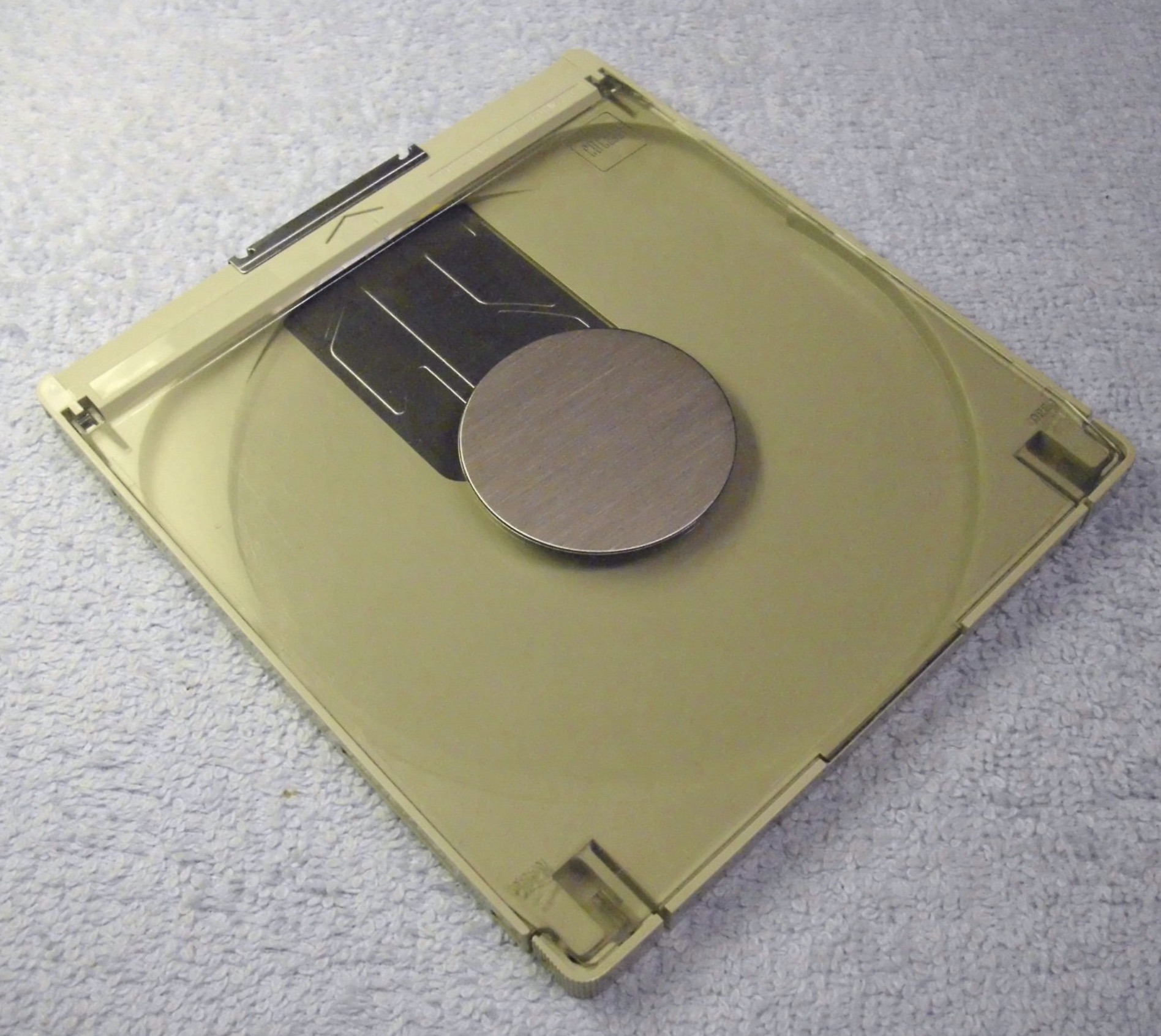
The word “multimedia” calls to mind a CD-ROM, the kind that you had to mount inside of a little beige plastic caddy before inserting it into your Macintosh Quadra.
At that time multimedia generally meant “words AAAAAND pictures and maybe SOUUUUUNDS all on ONE THING.”
Later on “multimedia” became a catch-all word for anything that someone might make (like the awful word “content” is used today).
Some tools (and words are just tools) need to sit around in a drawer for a few decades before we find a good use for them…
As the world becomes more conscious of accessibility and the fact that different people learn in different ways at different times, the word “multimedia” finally has a good use: Much of what we make is published across multiple media. Prose/Film/Radio is the most common combo.
A note on multimedia work: Translation between media shouldn’t be automatic. Some thought should go into how something is best presented in each medium, even if sometimes it’s as simple as a text-to-voice, voice-to-text, or just saving out an audio version of a video.
Many works are single-media-only and they must be. There’s no clear film version of most radio stories just as there’s no prose version of a great film.
This is multimedia.
But there can always be a radio version of prose or poetry. 98% of YouTube videos could just be audio.
But because the word is ruined, we’ll need to use a word like multiformat, which I don’t hate, but…
It shoulda been you, multimedia… It shoulda been you.
My next experiment on my little blog is to begin making these posts multiformat.
The Original Recipe: Purpose
Today I’ll be going into some more detail on the first ingredient of story we measure in the Original Recipe™ process: Purpose
You might be surprised how many marketing/video/storytelling endeavors begin without a clear Purpose. 👇
Purpose has two sides. One is “our” side: “Why are we telling this story? What are our objectives?” Answering these questions is a helpful exercise. Believe it or not, this is often glossed over.
The other side is your audience’s side: “What is this thing? What’s the point?”
All story ingredients have a dark side and Purpose is no exception. The “market” dark side of Purpose is why every movie is a sequel or reboot of something someone wrote more than 50 years ago.
The best predictor of a movie’s success is if the audience knows “what it is.” 🤷♂️
When the financial risks are as high as they are in filmmaking, of course all movies will default to Lego Batman Star Wars (but Frozen).
The non-dark side lesson we can take from this is that it’s super important that our story’s audience has a sense of what it’s “about.”
The Purpose ingredient is where I personally measure a statement like: “To convey our company’s serious investment in sustainability, we’re telling the personal stories of those most affected by environmental damage. By giving them a voice, we show (don’t tell) our commitment.”
For each story ingredient in the Original Recipe™, I’ll provide examples at the extremes: What happens if a story is only Purpose and what if a story has everything but Purpose?
A story that only has Purpose but not much of any other ingredient is a shitty infomercial: “We want you to buy this thing. This story is about buying this thing. We’ll use every tool (as long as it requires no effort or imagination) to get you to buy it. Buy it. Buy it. Buy it!”
A story that has Authenticity, Conflict, Spectacle, and Novelty but no Purpose is arthouse cinema material. It may be beautiful and nuanced and amazing, but it probably won’t be very useful for any marketing purpose.
Each story ingredient has at least one balancing ingredient that is most affected when it dominates the recipe.
Purpose’s most prominent balancing ingredient is Novelty. See Hollywood for the best example of an overemphasis on Purpose squeezing out all Novelty.
Purpose is the first ingredient of the Original Recipe™ for a reason: It’s the most helpful to think about first, it’s the easiest to take for granted/not spend enough attention on, and it’s the ingredient that most affects whether an audience entertains your story at all.
Summary
I wrote about the first ingredient we measure in the Original Recipe™ process, a way that we craft and measure story ideas at Short Order.
Microblog:: https://micro.zachphillips.blog/2021/02/16/the-original-recipe.html
Today I’ll be going into some more detail on the first ingredient of story we measure in the Original Recipe™ process: Purpose
You might be surprised how many marketing/video/storytelling endeavors begin without a clear Purpose. 👇
Purpose has two sides. One is “our” side: “Why are we telling this story? What are our objectives?” Answering these questions is a helpful exercise. Believe it or not, this is often glossed over.
The other side is your audience’s side: “What is this thing? What’s the point?”
All story ingredients have a dark side and Purpose is no exception. The “market” dark side of Purpose is why every movie is a sequel or reboot of something someone wrote more than 50 years ago.
The best predictor of a movie’s success is if the audience knows “what it is.” 🤷♂️
When the financial risks are as high as they are in filmmaking, of course all movies will default to Lego Batman Star Wars (but Frozen).
The non-dark side lesson we can take from this is that it’s super important that our story’s audience has a sense of what it’s “about.”
The Purpose ingredient is where I personally measure a statement like: “To convey our company’s serious investment in sustainability, we’re telling the personal stories of those most affected by environmental damage. By giving them a voice, we show (don’t tell) our commitment.”
For each story ingredient in the Original Recipe™, I’ll provide examples at the extremes: What happens if a story is only Purpose and what if a story has everything but Purpose?
A story that only has Purpose but not much of any other ingredient is a shitty infomercial: “We want you to buy this thing. This story is about buying this thing. We’ll use every tool (as long as it requires no effort or imagination) to get you to buy it. Buy it. Buy it. Buy it!”
A story that has Authenticity, Conflict, Spectacle, and Novelty but no Purpose is arthouse cinema material. It may be beautiful and nuanced and amazing, but it probably won’t be very useful for any marketing purpose.
Each story ingredient has at least one balancing ingredient that is most affected when it dominates the recipe.
Purpose’s most prominent balancing ingredient is Novelty. See Hollywood for the best example of an overemphasis on Purpose squeezing out all Novelty.
Purpose is the first ingredient of the Original Recipe™ for a reason: It’s the most helpful to think about first, it’s the easiest to take for granted/not spend enough attention on, and it’s the ingredient that most affects whether an audience entertains your story at all.
Being My Own Client
I’ve written thousands of pages of messaging for clients, fighting for what I think will be best for them and finding a place where we’re both happy in a reasonable amount of time.
Writing messaging for my own thing is so much harder, precisely because it’s less constrained. 👇
A great irony is that a common refrain from Creative Professionals Who Give A Shit™ is “if the client would only let me do what I think is right here, it would go so much better for them,” or put another way: “Give me a sword, I’ll win this war for you.”
In fact, constraints are the single most liberating factor of any creative endeavor. A client to make happy before a deadline is a perfect constraint. This may be why many people like me have so much trouble creating our own work but can be absolutely prolific for customers.
Today I’m consistently producing words/stuff for myself, just for its own sake. It’s working.
Now there’s an important bunch of writing to do “for work,” only “the customer” is me, more or less. This feels hard.
While it feels like I could just add a constraint like a deadline (which I have) or a promise to someone else (which I have made), the problem is that the constraints need to be “real” and not purely coercive.
The curiosity prompt: How might I do this for its own sake?
Summary
I wrote about the problematic lack of constraints that come with being your own client.
Microblog:: https://micro.zachphillips.blog/2021/02/15/being-my-own.html
I’ve written thousands of pages of messaging for clients, fighting for what I think will be best for them and finding a place where we’re both happy in a reasonable amount of time.
Writing messaging for my own thing is so much harder, precisely because it’s less constrained. 👇
A great irony is that a common refrain from Creative Professionals Who Give A Shit™ is “if the client would only let me do what I think is right here, it would go so much better for them,” or put another way: “Give me a sword, I’ll win this war for you.”
In fact, constraints are the single most liberating factor of any creative endeavor. A client to make happy before a deadline is a perfect constraint. This may be why many people like me have so much trouble creating our own work but can be absolutely prolific for customers.
Today I’m consistently producing words/stuff for myself, just for its own sake. It’s working.
Now there’s an important bunch of writing to do “for work,” only “the customer” is me, more or less. This feels hard.
While it feels like I could just add a constraint like a deadline (which I have) or a promise to someone else (which I have made), the problem is that the constraints need to be “real” and not purely coercive.
The curiosity prompt: How might I do this for its own sake?
Poems and Flowers
I don’t do enough special things for my wife. I know this isn’t a rare problem, particularly when children are small, but now that I’ve proven to myself that I can write lots of words every day, I can surely at the very least write a poem for her on Valentine’s Day. 👇
I wrote the poem, a short poem, and I most definitely won’t be sharing it with anyone but her. I think she liked it.
Here’s the thing: I should probably have gotten flowers too, but I’ve always felt weird about doing standard, expected things. Sincerity is important to me.
I’m not what you would call a Christian, but my wife is, and when we got our daughter baptized, there were certain rites/prayers to say. I made sure to meet with the priest because I needed an explanation of what each of the things I was saying meant.
This isn’t because I feel like being insufferable about my religious beliefs and non-beliefs. It’s because I see something like a baptism as a very important ritual, and I don’t want to taint the ritual by doing something phony in the middle of it.
When I was in college, I attended more than 100 weddings (as a photographer/cinematographer), and most of them were Catholic for some reason. Probably 80% of these couples either lied to the priest or during their vows, and I’m being conservative with this estimate.
I’m all for a harmless lie to smooth things over or avoid a needless confrontation with a religious grandmother or somesuch, but to lie during the vows? It’s crazy to me: This moment that’s designed to be an earnest declaration of lifelong devotion, we slip a lie in there?
Anyway, maybe I’ll get her flowers next year, but I doubt I’ll ever feel a fraction as good about the flowers as even a five line poem that took 25 minutes.
I like rituals. A lot. I care about them too much, in fact. That’s why I experience so much resistance to rote ones.
Summary
I wrote about writing a poem for Allison instead of flowers and why I have difficulty with rote rituals (even though I love rituals).
Microblog:: https://micro.zachphillips.blog/2021/02/14/poems-and-flowers.html
I don’t do enough special things for my wife. I know this isn’t a rare problem, particularly when children are small, but now that I’ve proven to myself that I can write lots of words every day, I can surely at the very least write a poem for her on Valentine’s Day. 👇
I wrote the poem, a short poem, and I most definitely won’t be sharing it with anyone but her. I think she liked it.
Here’s the thing: I should probably have gotten flowers too, but I’ve always felt weird about doing standard, expected things. Sincerity is important to me.
I’m not what you would call a Christian, but my wife is, and when we got our daughter baptized, there were certain rites/prayers to say. I made sure to meet with the priest because I needed an explanation of what each of the things I was saying meant.
This isn’t because I feel like being insufferable about my religious beliefs and non-beliefs. It’s because I see something like a baptism as a very important ritual, and I don’t want to taint the ritual by doing something phony in the middle of it.
When I was in college, I attended more than 100 weddings (as a photographer/cinematographer), and most of them were Catholic for some reason. Probably 80% of these couples either lied to the priest or during their vows, and I’m being conservative with this estimate.
I’m all for a harmless lie to smooth things over or avoid a needless confrontation with a religious grandmother or somesuch, but to lie during the vows? It’s crazy to me: This moment that’s designed to be an earnest declaration of lifelong devotion, we slip a lie in there?
Anyway, maybe I’ll get her flowers next year, but I doubt I’ll ever feel a fraction as good about the flowers as even a five line poem that took 25 minutes.
I like rituals. A lot. I care about them too much, in fact. That’s why I experience so much resistance to rote ones.
The Lonesome Valley of Change
Yesterday, a day “off,” I elected to reorganize my office. REALLY reorganize it. I should be able to reach out and have precisely the right tool to do whatever I want with zero friction.
So I emptied every drawer and shelf.
I am in the in-between now: The Lonesome Valley 👇
This is the problem with changes/improvements to calcified layers of standard operating procedure: Even if what you’re currently doing is really not working, once you enter The Lonesome Valley, everything you know is thrown out and you’re overwhelmed.
In The Lonesome Valley, you don’t know where anything goes. Every item you come across raises a hundred questions you aren’t prepared to answer yet. Everything is out of context, familiar but starting from scratch.
It doesn’t help that every single step I get stuck on one thing that I just know I have but seem to be missing. This could be an attention deficit thing but more likely it’s just a way of clinging to something/anything solid, known, decided upon.
The way I’m dealing with this reorganization right now is by writing down what I intend to do on paper. This drawer is for this kind of item. This area is for this kind of activity.
Really hoping I can feel some progress in the next couple of hours.
While others can be supportive, The Lonesome Valley is something you will need to walk alone.
No one can tell you how much you’ll need to give up in order for your current patterns to achieve escape velocity and be free to reorient themselves to a new gravitational alignment.
Related: No one can tell you just how much you’ll need to slow down the guitar notes to where YOU can’t even recognize them as part of that song you play (with bad habits) anymore.
I leave you with some of the only known footage of a true legend:
Summary
I wrote about The Lonesome Valley you experience whenever you want to make any changes. I wrote this while stuck in a feedback loop, overwhelmed by my office which I had just turned upside down to reorganize.
Microblog:: https://micro.zachphillips.blog/2021/02/13/the-lonesome-valley.html
Yesterday, a day “off,” I elected to reorganize my office. REALLY reorganize it. I should be able to reach out and have precisely the right tool to do whatever I want with zero friction.
So I emptied every drawer and shelf.
I am in the in-between now: The Lonesome Valley 👇
This is the problem with changes/improvements to calcified layers of standard operating procedure: Even if what you’re currently doing is really not working, once you enter The Lonesome Valley, everything you know is thrown out and you’re overwhelmed.
In The Lonesome Valley, you don’t know where anything goes. Every item you come across raises a hundred questions you aren’t prepared to answer yet. Everything is out of context, familiar but starting from scratch.
It doesn’t help that every single step I get stuck on one thing that I just know I have but seem to be missing. This could be an attention deficit thing but more likely it’s just a way of clinging to something/anything solid, known, decided upon.
The way I’m dealing with this reorganization right now is by writing down what I intend to do on paper. This drawer is for this kind of item. This area is for this kind of activity.
Really hoping I can feel some progress in the next couple of hours.
While others can be supportive, The Lonesome Valley is something you will need to walk alone.
No one can tell you how much you’ll need to give up in order for your current patterns to achieve escape velocity and be free to reorient themselves to a new gravitational alignment.
Related: No one can tell you just how much you’ll need to slow down the guitar notes to where YOU can’t even recognize them as part of that song you play (with bad habits) anymore.
I leave you with some of the only known footage of a true legend:
Teach a Man to Fish
The “teach a man to fish” thing has been claimed more often by a conservative “helping people is actually bad for them” ideology than by any other. The irony is that “teaching a man to fish,” in any form, is incredibly expensive. Conservatives aren’t willing to pay for it. 👇
Let’s first remove any condescension from “teach a man to fish,” because this is very important to understand: Literal fishing is actually pretty tricky business. If you were trying to learn to fish from scratch, with no resources, you very well might die before eating any fish.
Fun fact interlude: Fishing is arguably the most popular “complicated thing” besides cooking that Americans do.
Surprising stat of the day:
— Ian Sigalow (@Sigalow) August 24, 2020
49 million people in the US go fishing each year.
More people go fishing than go biking (47.5 million bikers)
Fishing is more than twice as popular as golf (24 million golfers)
To understand this is to understand America.
https://twitter.com/Sigalow/status/1297733413642932224?s=20
And “teaching a man to fish” is far more profitable if you teach him to fish for you so that you can sell the fish to everyone else. Fish interests within our economic system (Big Fish, as opposed to Big Fishing) actually benefit from fewer people knowing how to fish.
Let’s extrapolate “teaching a man to fish” out to something far more complicated than fishing: Navigating our economic system without familial wealth, class status, or education opportunities.
This requires serious investment of time (which we’ll need to pay someone for).
Faced with the reality of the investment required, the first people who opt to throw fish at the masses are conservative-minded “government is bad” folks. It’s far less expensive in the short term to just give people fish, especially when there’s so much fish lying around.
Again, I want to be really sensitive to precise flavor of condescension here. In fact, the true condescension contained in the usual presentation of “teach a man to fish” is the baked-in assumption that teaching fishing is easy, not that fishing itself is easy.
When you’re born with a resource, you certainly devalue it, but you devalue the work necessary to acquire it even more:
“How hard could it be to teach someone to fish? I was fishing when I was 7.”
Better question: “How many hours of focused attention did my grandfather spend teaching me to fish? How much was the pole? The ride to the lake?”
How much harder is it to teach a man to fish than to give him a fish? Depends on the price of a fish. Potentially a million % harder.
Until we’re willing to spend the time (money) to teach people, really teach them, how to navigate the incredibly complicated challenges that our powerful classes assume are no big deal, we’ll just keep fighting until the endtimes over how much fish to hand out.
Summary
I wrote about “Teach a man to fish” and why the people who most espouse this are usually the least willing to pay for it, or even consider what it might cost.
Microblog:: https://micro.zachphillips.blog/2021/02/12/teach-a-man.html
The “teach a man to fish” thing has been claimed more often by a conservative “helping people is actually bad for them” ideology than by any other. The irony is that “teaching a man to fish,” in any form, is incredibly expensive. Conservatives aren’t willing to pay for it. 👇
Let’s first remove any condescension from “teach a man to fish,” because this is very important to understand: Literal fishing is actually pretty tricky business. If you were trying to learn to fish from scratch, with no resources, you very well might die before eating any fish.
Fun fact interlude: Fishing is arguably the most popular “complicated thing” besides cooking that Americans do.
And “teaching a man to fish” is far more profitable if you teach him to fish for you so that you can sell the fish to everyone else. Fish interests within our economic system (Big Fish, as opposed to Big Fishing) actually benefit from fewer people knowing how to fish.
Let’s extrapolate “teaching a man to fish” out to something far more complicated than fishing: Navigating our economic system without familial wealth, class status, or education opportunities.
This requires serious investment of time (which we’ll need to pay someone for).
Faced with the reality of the investment required, the first people who opt to throw fish at the masses are conservative-minded “government is bad” folks. It’s far less expensive in the short term to just give people fish, especially when there’s so much fish lying around.
Again, I want to be really sensitive to precise flavor of condescension here. In fact, the true condescension contained in the usual presentation of “teach a man to fish” is the baked-in assumption that teaching fishing is easy, not that fishing itself is easy.
When you’re born with a resource, you certainly devalue it, but you devalue the work necessary to acquire it even more:
“How hard could it be to teach someone to fish? I was fishing when I was 7.”
Better question: “How many hours of focused attention did my grandfather spend teaching me to fish? How much was the pole? The ride to the lake?”
How much harder is it to teach a man to fish than to give him a fish? Depends on the price of a fish. Potentially a million % harder.
Until we’re willing to spend the time (money) to teach people, really teach them, how to navigate the incredibly complicated challenges that our powerful classes assume are no big deal, we’ll just keep fighting until the endtimes over how much fish to hand out.
How Will I Know?
I’ve spent my life incredulous of people who can state “how they feel” with confidence. I realize now it’s because I never learned to trust, or even pay attention to, my own sensations: physical, emotional, otherwise.
MOST PEOPLE
I’m feeling XXXXX
ME
But how do you KNOW? 👇
Just as every grade-schooler ponders whether “you see green the way I see green, what if green is actually purple to you?” I always had a similar reaction to feelings… Is this sadness? And how much?
“Can you rate the pain from 1 to 10?”
But what if I’m a wimp? Or what if I’m super tough? How do I know if this is really bad pain or just whatever pain?
This is one of the reasons in the past I’ve been skeptical of some mental illness. Like, is this Depression? How depressed? Depressed enough to miss work? Depressed enough to get medicated?
I can see how talk like this can be offensive to sufferers but I’m legitimately BAFFLED.
If I’m the only one who can experience my own experience, how can I measure how it compares to others’, much less to some shared standard?
Two things have helped me begin to get over this (unhelpful) frame…
The first thing that’s helped me is accepting that every decision is made with incomplete information.
Example: “Do I know if this is real pain I’m feeling and is it a lot? I don’t KNOW but it’s wicked uncomfortable and it FEELS like lot.”
Proceed like it’s a lot of real pain.
The second (very important) thing that has helped me is accepting that NO JUDGMENT OF FEELINGS HAS EVER BEEN HELPFUL TO ME IN ANY WAY.
Example: “This feels like a lot of pain, but it’s probably not, because this shouldn’t hurt that bad because—“ PEACE.
I also realize that on some level these reflexive judgments of my feelings weren’t much more than a strategy to suppress them. A deeply ingrained, problematic suppression strategy, but a suppression strategy nonetheless.
It definitely doesn’t work, by the way, suppressing them.
Microblog:: https://micro.zachphillips.blog/2021/02/11/how-do-you.html
Summary
I wrote about why I’ve second-guessed my feelings throughout my life and what helped me begin to get over that.
I’ve spent my life incredulous of people who can state “how they feel” with confidence. I realize now it’s because I never learned to trust, or even pay attention to, my own sensations: physical, emotional, otherwise.
MOST PEOPLE
I’m feeling XXXXX
ME
But how do you KNOW? 👇
Just as every grade-schooler ponders whether “you see green the way I see green, what if green is actually purple to you?” I always had a similar reaction to feelings… Is this sadness? And how much?
“Can you rate the pain from 1 to 10?”
But what if I’m a wimp? Or what if I’m super tough? How do I know if this is really bad pain or just whatever pain?
This is one of the reasons in the past I’ve been skeptical of some mental illness. Like, is this Depression? How depressed? Depressed enough to miss work? Depressed enough to get medicated?
I can see how talk like this can be offensive to sufferers but I’m legitimately BAFFLED.
If I’m the only one who can experience my own experience, how can I measure how it compares to others’, much less to some shared standard?
Two things have helped me begin to get over this (unhelpful) frame…
The first thing that’s helped me is accepting that every decision is made with incomplete information.
Example: “Do I know if this is real pain I’m feeling and is it a lot? I don’t KNOW but it’s wicked uncomfortable and it FEELS like lot.”
Proceed like it’s a lot of real pain.
The second (very important) thing that has helped me is accepting that NO JUDGMENT OF FEELINGS HAS EVER BEEN HELPFUL TO ME IN ANY WAY.
Example: “This feels like a lot of pain, but it’s probably not, because this shouldn’t hurt that bad because—“ PEACE.
I also realize that on some level these reflexive judgments of my feelings weren’t much more than a strategy to suppress them. A deeply ingrained, problematic suppression strategy, but a suppression strategy nonetheless.
It definitely doesn’t work, by the way, suppressing them.
Introducing the Yaklog
Yak shaving has a presumed negative connotation, but most in the Eternal Order of Yak Shavers truly enjoy shaving yaks.
But not all Yaks have that luxurious, sumptuous hair that truly satisfies a Yak Shaver. These should be immediately relegated to the Yaklog. 👇
The problem with yak shaving isn’t any particular yak or even that we put yaks between ourselves and our deepest desires. The real problem is when a yak just isn’t a good enough yak and we still allow it to stand in our way.
Before I “completed” my blog, I suddenly realized I needed to have footnotes. Beautiful, luxurious footnotes that were clickable inline, could be typed inline in MultiMarkdown, could contain rich media… And of course, I needed to finish this before I could publish on my blog.
Those footnotes are goddamned delicious, like a fresh ear of Silver Queen sweet corn rolled in salted butter 7 1/2 minutes out of the boiling pot and less than an hour from being picked off the stalk. I mean just CLICK these footnotes: https://zachphillips.blog/2020/08/the-communal-pomodoro-is-the-solution-to-all-focused-work
Those footnotes are the kind of yak that a Yak Shaver can shave with deep pride and self-assurance. Once you realize they are possible, they become necessary, you see?
Then I decided that, before I could post on my blog, I wanted it to have a native Dark Mode…
Now, the native Dark Mode on my blog is cool (it’s in the hamburger menu), but this was not a yak that needed to stand in the way of posting to my blog. Dark Mode was definitely a yak for the Yaklog.
The absolute worst thing you can do is put Yaklog-worthy yaks into your Backlog. Filling your Real Tasks with mediocre yaks is a surefire path to total breakdown. I have burned many carefully scaffolded task systems to the ground when they became lousy with middling yaks.
When do you get to the yaks in the Yaklog?
Whenever you want! Now this can be tricky, as Yak Shavers rarely know what they want. They’re too stuck on what they need.
The only time you can’t work from the Yaklog is to unblock you from doing something you want to do.
Remember, the fact that the yak was moved to the Yaklog means that it was never really a very good yak in the first place. Yaks like these aren’t worth holding up anything to shave. They can be shaved for fun, for an experiment, for curiosity. But not for any other task.
If you’re currently shaving a yak, no matter how luxurious, of course you must finish. Leaving a yak half-shaved is disrespectful. This as a “Yak In Progress” or YIP.
If you’re stuck on a yak, you’ve “got the yips.” We understand.
Finish shaving. Then you can start your Yaklog.
Summary
I wrote about the Yaklog. If you need a primer on Yak Shaving, this scene from Malcolm in the Middle (which I’ve never watched) is decent, though it doesn’t full capture how deep the connoisseurship of yaks can go: https://youtu.be/AbSehcT19u0
Microblog:: https://micro.zachphillips.blog/2021/02/11/introducing-the-yaklog.html
Yak shaving has a presumed negative connotation, but most in the Eternal Order of Yak Shavers truly enjoy shaving yaks.
But not all Yaks have that luxurious, sumptuous hair that truly satisfies a Yak Shaver. These should be immediately relegated to the Yaklog. 👇
The problem with yak shaving isn’t any particular yak or even that we put yaks between ourselves and our deepest desires. The real problem is when a yak just isn’t a good enough yak and we still allow it to stand in our way.
Before I “completed” my blog, I suddenly realized I needed to have footnotes. Beautiful, luxurious footnotes that were clickable inline, could be typed inline in MultiMarkdown, could contain rich media… And of course, I needed to finish this before I could publish on my blog.
Those footnotes are goddamned delicious, like a fresh ear of Silver Queen sweet corn rolled in salted butter 7 1/2 minutes out of the boiling pot and less than an hour from being picked off the stalk. I mean just CLICK these footnotes: https://zachphillips.blog/2020/08/the-communal-pomodoro-is-the-solution-to-all-focused-work
Those footnotes are the kind of yak that a Yak Shaver can shave with deep pride and self-assurance. Once you realize they are possible, they become necessary, you see?
Then I decided that, before I could post on my blog, I wanted it to have a native Dark Mode…
Now, the native Dark Mode on my blog is cool (it’s in the hamburger menu), but this was not a yak that needed to stand in the way of posting to my blog. Dark Mode was definitely a yak for the Yaklog.
The absolute worst thing you can do is put Yaklog-worthy yaks into your Backlog. Filling your Real Tasks with mediocre yaks is a surefire path to total breakdown. I have burned many carefully scaffolded task systems to the ground when they became lousy with middling yaks.
When do you get to the yaks in the Yaklog?
Whenever you want! Now this can be tricky, as Yak Shavers rarely know what they want. They’re too stuck on what they need.
The only time you can’t work from the Yaklog is to unblock you from doing something you want to do.
Remember, the fact that the yak was moved to the Yaklog means that it was never really a very good yak in the first place. Yaks like these aren’t worth holding up anything to shave. They can be shaved for fun, for an experiment, for curiosity. But not for any other task.
If you’re currently shaving a yak, no matter how luxurious, of course you must finish. Leaving a yak half-shaved is disrespectful. This as a “Yak In Progress” or YIP.
If you’re stuck on a yak, you’ve “got the yips.” We understand.
Finish shaving. Then you can start your Yaklog.
Security Theatre and Evidence People Are Good
Warning: This thread is intended to make you feel better about humanity, but it could have a different effect: It could make you feel scared. So if you’re someone who obsesses about danger, maybe don’t read this thread. 👇
I also want to acknowledge there are so many people who have been physically hurt by other people. It’s not my intention to minimize that, particularly because I’ve had only a few experiences being physically attacked.
I’m talking about specific obsessive fears in the culture.
Airports have a lot of “security.” Lots of buildings have “security.” Your door has a “lock” on it.
Here’s the truth: If someone wants to hurt you enough, they’ll figure out how to do it. Absent a bodyguard (hell, even with a bodyguard), you’re dead.
This is good news!
Think about it: Even with every terrifyingly tragic mass-shooting event in recent history, the fact that almost all of the 7.5 billion people in the world aren’t planning ways to hurt others is a really positive sign for humanity.
Either that or the violent ones are super dumb.
You’d have to be stupid if you couldn’t figure out how to commit a really upsetting atrocity, particularly with all the tools available (especially in America AKA the Ocean of Guns between the Atlantic Ocean and the Pacific Ocean).
Looks like people just don’t want to hurt us!
The perpetrators of mass atrocities sometimes get called “masterminds” and it’s just dumb. Pretty much every sick violent thing that people have done outside of war has been really damned simple.
It doesn’t take a mastermind. It takes a particulary kind of sociopath. A rare one.
Anyway, I’ll keep locking my door and having means to defend myself and my family (not comfortable with guns…), but I’m not going to kid myself that I’m defending against capable people who want to hurt us.
At best, I’m defending against idiots who might randomly crash into us.
I’m not saying there aren’t really dangerous people out there. But the fact that it would be SO EASY for anyone to do something terrible, yet hundreds and hundreds of millions of them aren’t doing it, is more hopeful than if they weren’t doing it because of some security theatre.
There seems to be an extremely small number of people who mean us harm. The more we take care of each other, the fewer there will be.
People are basically good. Even our fear of them is evidence of goodness (we mean to protect one another from harm).
This is a hopeful thing.
Microblog:: https://micro.zachphillips.blog/2021/02/09/security-theatre-and.html
Summary
I wrote about Security Theatre and a reason why we should maybe feel good about humanity.
Warning: This thread is intended to make you feel better about humanity, but it could have a different effect: It could make you feel scared. So if you’re someone who obsesses about danger, maybe don’t read this thread. 👇
I also want to acknowledge there are so many people who have been physically hurt by other people. It’s not my intention to minimize that, particularly because I’ve had only a few experiences being physically attacked.
I’m talking about specific obsessive fears in the culture.
Airports have a lot of “security.” Lots of buildings have “security.” Your door has a “lock” on it.
Here’s the truth: If someone wants to hurt you enough, they’ll figure out how to do it. Absent a bodyguard (hell, even with a bodyguard), you’re dead.
This is good news!
Think about it: Even with every terrifyingly tragic mass-shooting event in recent history, the fact that almost all of the 7.5 billion people in the world aren’t planning ways to hurt others is a really positive sign for humanity.
Either that or the violent ones are super dumb.
You’d have to be stupid if you couldn’t figure out how to commit a really upsetting atrocity, particularly with all the tools available (especially in America AKA the Ocean of Guns between the Atlantic Ocean and the Pacific Ocean).
Looks like people just don’t want to hurt us!
The perpetrators of mass atrocities sometimes get called “masterminds” and it’s just dumb. Pretty much every sick violent thing that people have done outside of war has been really damned simple.
It doesn’t take a mastermind. It takes a particulary kind of sociopath. A rare one.
Anyway, I’ll keep locking my door and having means to defend myself and my family (not comfortable with guns…), but I’m not going to kid myself that I’m defending against capable people who want to hurt us.
At best, I’m defending against idiots who might randomly crash into us.
I’m not saying there aren’t really dangerous people out there. But the fact that it would be SO EASY for anyone to do something terrible, yet hundreds and hundreds of millions of them aren’t doing it, is more hopeful than if they weren’t doing it because of some security theatre.
There seems to be an extremely small number of people who mean us harm. The more we take care of each other, the fewer there will be.
People are basically good. Even our fear of them is evidence of goodness (we mean to protect one another from harm).
This is a hopeful thing.
Talk for James H. Gilliam Fellows
Tomorrow I’m speaking to the current cohort of James H. Gilliam Jr. Fellows.
Presumably I’ve been asked to speak because I’m an expert at something, but experts usually aren’t the best teachers, so I’ll speak on something I’m a novice at: A commitment to publishing and why.
I’ve only been at this publishing stuff for less than a year, but it’s the best thing I have to offer. And because it’s fresh for me, I’ll be better at transmitting the experience. I’ll also be proving the metapoint: YOU have something to offer, new as you are (as I am).
One of the things I wish I’d been taught when I was much younger, though I probably wouldn’t have listened (in fact I was certainly taught this and said “I’m good”) is that publishing Quantity, for its own sake, as much as it hurts me to admit, is the One True Path.
Now I don’t mean just any old Quantity. It needs to be Sincere Quantity. But, critically, it does not need to be Good™.
Aim for Good™ and you’ll ironically get less quality because you’ll produce less.
Aim for perfection and you’ll get NOTHING AND ALSO MAYBE DIE.
What is Sincere Quantity? Basically, it just needs to be genuine, authentic, from you. That’s all.
This is tricky in a culture that is pathologically incapable of sincerity, but it isn’t hard. Just publish what you are thinking about as your earnest self (or pseudonym).
One video that’s gone around in the last week is Marques Brownlee’s 100th YouTube video from 2009. He had 74 subscribers.
Today, he has 13.6 million.
But even if today he had 74 subscribers, publishing would STILL be worth it!
https://twitter.com/david_perell/status/1357733877092143107/video/1
One of the great ironies of this digital world is that while we’re very much “in contact” with each other, and through TEXT no less, we don’t actually write to each other.
A lot of our historical record is made up of letters written between people. That’s lost for most of us.
Write a couple of letters to people you care about and you’ll immediately see how it helps you discover what you actually think, what you actually want, and pathways to new/better ideas.
If you’re publishing to only a handful of people (or even one), you get these incredible benefits. Journaling is also important and great, but there’s something about pressing Publish that’s different. It’s saying “this one’s done, on to the next one.”
You kill a LOT of birds with one stone by publishing: You create something that might be useful to others, sparking their own ideas. You relieve your mind, soul, even your body, of tension. You open avenues to new relationships and opportunities.
Concerning yourself with “success” through publishing (in the form of money or fame) is a sure way to publish nothing (and certainly nothing sincere). But just publishing your work somewhere, in a place that you own, for its own sake, regularly, will probably transform your life.
As someone so concerned about quality for so long that I made bits and pieces of hundreds of things that I never shared with anyone, I regret that my mindset wasn’t Just Press Publish from the start.
Summary
I prepared for my presentation for the James H. Gilliam Jr. Fellows by writing a series of arguments for committing to publishing.
Microblog:: https://micro.zachphillips.blog/2021/02/08/a-commitment-to.html
Tomorrow I’m speaking to the current cohort of James H. Gilliam Jr. Fellows.
Presumably I’ve been asked to speak because I’m an expert at something, but experts usually aren’t the best teachers, so I’ll speak on something I’m a novice at: A commitment to publishing and why.
I’ve only been at this publishing stuff for less than a year, but it’s the best thing I have to offer. And because it’s fresh for me, I’ll be better at transmitting the experience. I’ll also be proving the metapoint: YOU have something to offer, new as you are (as I am).
One of the things I wish I’d been taught when I was much younger, though I probably wouldn’t have listened (in fact I was certainly taught this and said “I’m good”) is that publishing Quantity, for its own sake, as much as it hurts me to admit, is the One True Path.
Now I don’t mean just any old Quantity. It needs to be Sincere Quantity. But, critically, it does not need to be Good™.
Aim for Good™ and you’ll ironically get less quality because you’ll produce less.
Aim for perfection and you’ll get NOTHING AND ALSO MAYBE DIE.
What is Sincere Quantity? Basically, it just needs to be genuine, authentic, from you. That’s all.
This is tricky in a culture that is pathologically incapable of sincerity, but it isn’t hard. Just publish what you are thinking about as your earnest self (or pseudonym).
One video that’s gone around in the last week is Marques Brownlee’s 100th YouTube video from 2009. He had 74 subscribers.
Today, he has 13.6 million.
But even if today he had 74 subscribers, publishing would STILL be worth it!
One of the great ironies of this digital world is that while we’re very much “in contact” with each other, and through TEXT no less, we don’t actually write to each other.
A lot of our historical record is made up of letters written between people. That’s lost for most of us.
Write a couple of letters to people you care about and you’ll immediately see how it helps you discover what you actually think, what you actually want, and pathways to new/better ideas.
If you’re publishing to only a handful of people (or even one), you get these incredible benefits. Journaling is also important and great, but there’s something about pressing Publish that’s different. It’s saying “this one’s done, on to the next one.”
You kill a LOT of birds with one stone by publishing: You create something that might be useful to others, sparking their own ideas. You relieve your mind, soul, even your body, of tension. You open avenues to new relationships and opportunities.
Concerning yourself with “success” through publishing (in the form of money or fame) is a sure way to publish nothing (and certainly nothing sincere). But just publishing your work somewhere, in a place that you own, for its own sake, regularly, will probably transform your life.
As someone so concerned about quality for so long that I made bits and pieces of hundreds of things that I never shared with anyone, I regret that my mindset wasn’t Just Press Publish from the start.
Want/Must Matrix
Today I had this perfect set of tasks that fit neatly into all four quadrants of what I’ll call the Want/Must Matrix.
The most counterintuitive thing is that the tasks that create the most resistance for me are those I both really must do and really want to do. 👇
Common productivity advice when you want to do something but have resistance: “Find a way to force yourself through public accountability, promises to others, etc..”
Softly/playfully, this can help, but when taken seriously, it’s the perfect recipe for procrastination.
When we procrastinate, we’re usually avoiding something that we must do in favor of something we want to do. Right?
This is exactly wrong.
We’re often avoiding the things we most want to do in favor of things we neither want nor must do. 🤦♂️ Why do we do this?
The most common procrastination activities are usually no more than tics disguised as Wanty or Musty or some combination. We spin artificial webs of want/must/must-want to distract ourselves from the discomfort of the friction between obligations and our true desires.
We check email ten times, organize stuff. If we play a game, we do so with a sense of duty (“just need to finish this level”). We aren’t “playing” at all. This isn’t the romantic procrastination we were promised!
Why would we do these things in lieu of what we most want?
If our obligations and true desires are perfectly in line, why wouldn’t that be advantageous? If we get to do “what we love” for “our job,” isn’t that ideal?
Ask someone who has made their “passion” into their “job” and see how smoothly it’s gone for them.
The most common explanation for this incongruity is that we’re somehow afraid of failure and so we don’t start. Sure we’re afraid of failure, but fear of failure is insignificant next to the true cause of the really bad resistance.
The big cause is adding more Must to our Wants.
The great paradox is that, if you Want to do something, adding Must to it adds resistance. The part of us that Wants (and always knows how to do the things we want, needing no help) is completely gummed up by the part of us that tries to coerce and control it.
If you think I’m talking only about work, I’m not. This applies as much to reading or playing with your kids. We have an incredible knack for making anything into an obligation, and when we do, even the thing we want most in the world becomes a massive struggle.
Our coercive/extractive cultural discourse says human behavior is “lazy” or “not lazy”. “Good” people do what they must, and “bad” people do what they want.
This doesn’t hold up. People who do the most are people who have figured out how to do what they want to do with ease.
Learning to do what we want to do is less a process of learning as it is a process of unlearning. We already naturally know how to do what we want. My 3-year-old never needs to ask herself what she wants to do or try to motivate herself to do it.
“But your 3-year-old doesn’t have real work to do.”
Irrelevant. She begs to help with everything: dishes, cooking, picking up. She’s just not good at these things yet.
Some of the most satisfying work I ever did was cleaning a restaurant kitchen at 1AM or shoveling stone.
There’s nothing precious about the work it takes to write your book or app. It’s no different from stacking firewood or doing dishes.
All Must isn’t bad. A bit of Must can appetize Want/Play. But the Must can’t have judgment attached. “I must post a thread today” = ok. “I must post a GOOD thread today” = dead.
“This better be good.” “You’re in trouble if you miss this deadline.” Not helpful. Not once. Ever.
And the Musty voice needs to fade into background noise if you’re going to actually do/enjoy doing the thing.
The only way for that to happen reliably (Flow) is to actually stop believing that you need the Musty voice. To believe that, you’ll need evidence.
This is proving to be a pretty wide-ranging topic and I’m not going to be able to encapsulate it in one post/thread nicely the way I want to. But that’s okay, because I don’t have to do anything, and this was fun.