The Little Rebellion
The social feed — little posts written here and everything syndicated elsewhere, in one stream.
-
Another one of these situations where @alymakintosh “will never see them in these outfits again” so here are the pictures. It seems like every time one of these outfits disappears, another one comes out the woodwork.





-
Gently Ignoring The Rules
The drive from Center City to Chestnut Hill in Philadelphia is one of the prettiest drives in any city in America, up the Schuylkill River (pronounced “skookle”) down Kelly Drive to Lincoln Drive…
I want to talk about Lincoln Drive. 👇
Lincoln Drive is a four lane road that’s only wide enough for two lanes. It winds through a wooded valley along streams under beautiful old bridges. It has ~748 sharp curves. The speed limit, amply marked, is 25mph.
Literally everyone on Lincoln Drive is doing 55 miles per hour.
And there’s no real reason to go 55 on a winding, incredibly dangerous road like this except that a) it’s fun, b) everyone else is doing it, and c) because we’ll probably be fine.
Many people, my wife among them, are not having as much fun as I am on Lincoln Drive because they’re terrified. And I’m sure bad things do sometimes happen on Lincoln Drive but I don’t read the local news and the truth is I don’t really want to know—because I love Lincoln Drive.
Lincoln Drive, and other places like it, represent to me a kind of gentleness. A place where rules are gently, communally ignored.
As much as we Americans pride ourselves on being freedom-loving renegades, our society is largely differentiated by how much we follow the rules. We have lots of rules, many of them very complicated, and we dutifully follow them.
For one, we pay our taxes more diligently than almost any population in the world (unless we’re really rich and therefore exempt from paying any meaningful taxes).
In a culture that worships competition, consumption, fame, fortune, and most of all, WORK, the added pressure of all these rules can be deadly claustrophobic. Some are fortunate enough to find healthy release valves but I’m sad to say most of us resort to pretty unhealthy copes.
But then there are these small, gentle moments in community when, innately, intuitively, everyone agrees that we’re not following these rules right now and there’s nothing whatsoever wrong with that.
If you look closely, you can find this gentleness all around you. Just staying on the subject of speed limits: We all know the speed limit is actually ten miles per hour faster than the number on the signs. Why is that? Because gentleness.
Philadelphia can be an absolute wonderland of lawlessness and “25 on Lincoln Drive” is just one example.
Another example: In large sections of South Philly, the community has decided that it’s okay to just park in the middle of the street.
There’s an etiquette to it, and the cops do sometimes participate in upholding that etiquette, but if there are no spots along the side of the road (there aren’t) you just pull into the median of the main, biggest drag in the city and leave your car there. It’s glorious.
And my absolute favorite example: We have these huge convoys of kids who ride bikes (sometimes powered) around the city. At any given moment, 41-55% of them are doing wheelies or standing on their seats. They’re often riding against traffic, weaving in and out of cars and buses.
My friend Jason Aviles, who owns an incredible social venture vegan restaurant in Wilmington, rode with them recently (video credit to Jason).
Even my wife, forever afraid that someone is going to get hurt, has to love these kids. She smiles and gets excited every time they go by. And to be clear… Someone is definitely going to get hurt. But just look at them. That’s America right there.
And the fact this goes on every day all across Philly speaks to a deep warm gentleness at the heart of this otherwise cold, hard, cruel, cynical country.
Speaking of gentleness, they graciously let Jason, a grown-ass man, ride with them.
Some laws, even those that make sense, can leave the world colder and harder, but this can be mitigated with just a little gentleness. The tricky part is that the gentleness cannot be forced. It arises peacefully, naturally, like Lincoln Drive and these spontaneous bike swarms.
Smoking indoors is now illegal everywhere. That’s definitely a good thing: for worker health, for further stigmatizing something that kills so many Americans every year while enriching a couple of cartoonishly evil companies, etc.. And smoking rates have come down as a result.
But—and hear me out—You can’t smoke in a bowling alley? A billiard hall? This is a bridge too far.
Tobacco was a negative presence in my life for 15 years and I haven’t smoked in 9, but if I went into a bowling alley and somebody lit up a cigarette, I wouldn’t say a goddamned thing.
In this culture of fully-internalized structures of coercion and rules and graft and power and domination, sometimes the most refreshing smell is a stale cigarette in a bowling alley.
There’s room for gentleness here.
-
Gently Ignoring The Rules
I wrote about a few very Philadelphia examples of where we all communally agree to ignore the rules.
The drive from Center City to Chestnut Hill in Philadelphia is one of the prettiest drives in any city in America, up the Schuylkill River (pronounced "skookle") down Kelly Drive to Lincoln Drive…
I want to talk about Lincoln Drive. 👇
Lincoln Drive is a four lane road that’s only wide enough for two lanes. It winds through a wooded valley along streams under beautiful old bridges. It has ~748 sharp curves. The speed limit, amply marked, is 25mph.
Literally everyone on Lincoln Drive is doing 55 miles per hour.
And there’s no real reason to go 55 on a winding, incredibly dangerous road like this except that a) it’s fun, b) everyone else is doing it, and c) because we’ll probably be fine.
Many people, my wife among them, are not having as much fun as I am on Lincoln Drive because they’re terrified. And I’m sure bad things do sometimes happen on Lincoln Drive but I don’t read the local news and the truth is I don’t really want to know—because I love Lincoln Drive.
Lincoln Drive, and other places like it, represent to me a kind of gentleness. A place where rules are gently, communally ignored.
As much as we Americans pride ourselves on being freedom-loving renegades, our society is largely differentiated by how much we follow the rules. We have lots of rules, many of them very complicated, and we dutifully follow them.
For one, we pay our taxes more diligently than almost any population in the world (unless we’re really rich and therefore exempt from paying any meaningful taxes).
In a culture that worships competition, consumption, fame, fortune, and most of all, WORK, the added pressure of all these rules can be deadly claustrophobic. Some are fortunate enough to find healthy release valves but I’m sad to say most of us resort to pretty unhealthy copes.
But then there are these small, gentle moments in community when, innately, intuitively, everyone agrees that we’re not following these rules right now and there’s nothing whatsoever wrong with that.
If you look closely, you can find this gentleness all around you. Just staying on the subject of speed limits: We all know the speed limit is actually ten miles per hour faster than the number on the signs. Why is that? Because gentleness.
Philadelphia can be an absolute wonderland of lawlessness and "25 on Lincoln Drive" is just one example.
Another example: In large sections of South Philly, the community has decided that it’s okay to just park in the middle of the street.
There’s an etiquette to it, and the cops do sometimes participate in upholding that etiquette, but if there are no spots along the side of the road (there aren’t) you just pull into the median of the main, biggest drag in the city and leave your car there. It’s glorious.
And my absolute favorite example: We have these huge convoys of kids who ride bikes (sometimes powered) around the city. At any given moment, 41-55% of them are doing wheelies or standing on their seats. They’re often riding against traffic, weaving in and out of cars and buses.

My friend Jason Aviles, who owns an incredible social venture vegan restaurant in Wilmington, rode with them recently (video credit to Jason).
Even my wife, forever afraid that someone is going to get hurt, has to love these kids. She smiles and gets excited every time they go by. And to be clear… Someone is definitely going to get hurt. But just look at them. That’s America right there.
And the fact this goes on every day all across Philly speaks to a deep warm gentleness at the heart of this otherwise cold, hard, cruel, cynical country.
Speaking of gentleness, they graciously let Jason, a grown-ass man, ride with them.
Some laws, even those that make sense, can leave the world colder and harder, but this can be mitigated with just a little gentleness. The tricky part is that the gentleness cannot be forced. It arises peacefully, naturally, like Lincoln Drive and these spontaneous bike swarms.
Smoking indoors is now illegal everywhere. That's definitely a good thing: for worker health, for further stigmatizing something that kills so many Americans every year while enriching a couple of cartoonishly evil companies, etc.. And smoking rates have come down as a result.
But—and hear me out—You can’t smoke in a bowling alley? A billiard hall? This is a bridge too far.
Tobacco was a negative presence in my life for 15 years and I haven’t smoked in 9, but if I went into a bowling alley and somebody lit up a cigarette, I wouldn’t say a goddamned thing.
In this culture of fully-internalized structures of coercion and rules and graft and power and domination, sometimes the most refreshing smell is a stale cigarette in a bowling alley.
There’s room for gentleness here.
-
Workflow Second
Building a system before you have the stuff to go into the system can be fun but it’s not an efficient way to design.
I love an optimal workflow but it’s much better to first make a bunch of stuff with a sub-optimal workflow than to design an optimal one without any stuff. 👇
A common experience I have as an unbearable software nerd: I get a peek at a system that a prolific person uses to create their prolific output and think “God, Microsoft Word? Are you an animal?”
I then go back to tinkering with my Grand System which has generated nothing yet.
While I do think it’s a tragedy that any person is still using Microsoft Word, I’m looking in exactly the wrong direction.
The purpose of a writing workflow is presumably to create writing. The purpose of writing is not to have the best writing workflow. That doesn’t make sense.
If you have nothing, no knowledge of any of the brilliant work software developers have done to make writing delightful, convenient, and extensible, and you use Microsoft Word to compose an essay every week, your workflow is technically more effective than my Dream Workflow™.
I’m comfortable with my current workflow for daily publishing and weekly newsletter-sending, but what’s really exciting is that I now have a lot of real writing that came from it. If and (let’s be honest) when I do want to tinker with this, I’ll be doing it in the right order.
-
Workflow Second
I wrote about the trap of designing workflows before you have any output from them.
Building a system before you have the stuff to go into the system can be fun but it's not an efficient way to design.
I love an optimal workflow but it's much better to first make a bunch of stuff with a sub-optimal workflow than to design an optimal one without any stuff. 👇
A common experience I have as an unbearable software nerd: I get a peek at a system that a prolific person uses to create their prolific output and think "God, Microsoft Word? Are you an animal?"
I then go back to tinkering with my Grand System which has generated nothing yet.
While I do think it's a tragedy that any person is still using Microsoft Word, I'm looking in exactly the wrong direction.
The purpose of a writing workflow is presumably to create writing. The purpose of writing is not to have the best writing workflow. That doesn't make sense.
If you have nothing, no knowledge of any of the brilliant work software developers have done to make writing delightful, convenient, and extensible, and you use Microsoft Word to compose an essay every week, your workflow is technically more effective than my Dream Workflow™.
I'm comfortable with my current workflow for daily publishing and weekly newsletter-sending, but what's really exciting is that I now have a lot of real writing that came from it. If and (let's be honest) when I do want to tinker with this, I'll be doing it in the right order.
-
101 Days, 101 Posts
This is my 101st post in as many days. I started on December 22nd, 2020 and have not missed a day.
If you knew anything about me, you would know that this outcome is terribly unlikely. In fact, it would be impossible under any previous framework I might use to attempt it. 👇
Quick background: I’ve been a professional writer/filmmaker since I entered college. Every day of the past 20 years I’ve thought about/noodled on/agonized over the creative work I wish to make. In that time I can count on one hand how many things I’ve made that I wasn’t paid for.
And yet, in 100 days, I have published 100 things (114 if you count my newsletter).
My usual tendency would be to approach this as an Extreme Goal™ but that’s the opposite of what I did. I now know that I can do this continuously forever, and most importantly, that it’s EASY.
I’ve treated this largely as an experiment in sustainability. I’m beyond a point in my life where I believe in explosions of work followed by exhaustion and tepid rest. I’m only interested in keeping a continuous pace and I am now convinced that this approach compromises nothing.
Keeping a continuous pace is the best way to do all of the following:
- Grow in capacity
- Improve in quality
- Enjoy the process
…and it isn’t even close.
Speaking of capacity, I can add a lot more to this, and I will, a little bit at a time.
I believe that the single most important hypothesis I allowed myself to test was this: Things don’t have to be hard. In fact, the fetishization of Great Difficulty™ has been deeply counterproductive to all of my creative desires.
Difficulty is neither productive nor desirable.
I want to make feature films (just one of the things I want to do) and that is Hard™. Except no action I could take in this moment toward making a feature film is “hard”. Thinking it should be hard simply orients my Am-I-Doing-It-Right Meter to use pain as its key marker.
Most living organisms will tell you: “Pain is to be avoided. Maybe eat something. Check your email.”
Our broken work culture tells us it’s supposed to be painful. DOUBLE DOWN on the difficulty. PUSH through. MAKE YOURSELF do it.
I’m happy to report that this can be unlearned.
Interestingly, to add an additional stress test on this sustainability experiment, I also exercised (specifically I rode the spinbike) every day for these hundred days.
This is also terribly unlikely if you know anything about me, but I approached it in much the same way. Easy.
Here’s to the next 101 days of doing what’s easy. I’m seriously excited about what might come from it.
-
101 Days, 101 Posts
My experiment of publishing 100 posts in 100 days was successful, so I wrote about why I've decided to continue indefinitely.
This is my 101st post in as many days. I started on December 22nd, 2020 and have not missed a day.
If you knew anything about me, you would know that this outcome is terribly unlikely. In fact, it would be impossible under any previous framework I might use to attempt it. 👇
Quick background: I've been a professional writer/filmmaker since I entered college. Every day of the past 20 years I've thought about/noodled on/agonized over the creative work I wish to make. In that time I can count on one hand how many things I've made that I wasn't paid for.
And yet, in 100 days, I have published 100 things (114 if you count my newsletter).
My usual tendency would be to approach this as an Extreme Goal™ but that's the opposite of what I did. I now know that I can do this continuously forever, and most importantly, that it's EASY.
I've treated this largely as an experiment in sustainability. I'm beyond a point in my life where I believe in explosions of work followed by exhaustion and tepid rest. I'm only interested in keeping a continuous pace and I am now convinced that this approach compromises nothing.
Keeping a continuous pace is the best way to do all of the following:
1. Grow in capacity 2. Improve in quality 3. Enjoy the process
...and it isn't even close.
Speaking of capacity, I can add a lot more to this, and I will, a little bit at a time.
I believe that the single most important hypothesis I allowed myself to test was this: Things don't have to be hard. In fact, the fetishization of Great Difficulty™ has been deeply counterproductive to all of my creative desires.
Difficulty is neither productive nor desirable.
I want to make feature films (just one of the things I want to do) and that is Hard™. Except no action I could take in this moment toward making a feature film is "hard". Thinking it should be hard simply orients my Am-I-Doing-It-Right Meter to use pain as its key marker.
Most living organisms will tell you: "Pain is to be avoided. Maybe eat something. Check your email."
Our broken work culture tells us it's supposed to be painful. DOUBLE DOWN on the difficulty. PUSH through. MAKE YOURSELF do it.
I'm happy to report that this can be unlearned.
Interestingly, to add an additional stress test on this sustainability experiment, I also exercised (specifically I rode the spinbike) every day for these hundred days.
This is also terribly unlikely if you know anything about me, but I approached it in much the same way. Easy.
Here's to the next 101 days of doing what's easy. I'm seriously excited about what might come from it.
-
When I Know I’m Doing Well
I’ve spent most of my life with an extreme attitude toward myself: Either I’m the greatest or I’m the worst, and since I’m very rarely the greatest, I’ve mostly been pretty mean to myself.
When I’m at my best is when I don’t have an opinion about myself one way or another. 👇
The most reliable way I’ve found to get out of this vortex of self-judgment is simply to do something for someone else. The next best way is just to get up and move for an extended period of time in an easy way.
Anything, but the easier the better.
Self-centeredness is attached to a moral judgment. Being self-centered is akin to being “bad.” But intentionally focusing on oneself is encouraged everywhere.
It’s easy to see why a thirsty person in a boat in the middle of the ocean would think about drinking sea water.
“Am I doing okay?” “Am I good enough?” “Am I bad?” All these questions go away when I’m fully present to my life, and I become present to my life when I do things, especially things for others.
“But am I bad if I don’t do things for othe—” shut up, please.
I’m tempted to go full woowoo on this, but I’ll try and hold back. The reality is that when I’m really here, engaged with the life I’ve been given, I have moments where I realize I haven’t thought about myself in quite a while.
And those moments are great.
-
When I Know I'm Doing Well
I wrote about self-centeredness and how it relates to my well-being.
I've spent most of my life with an extreme attitude toward myself: Either I'm the greatest or I'm the worst, and since I'm very rarely the greatest, I've mostly been pretty mean to myself.
When I'm at my best is when I don't have an opinion about myself one way or another. 👇
The most reliable way I've found to get out of this vortex of self-judgment is simply to do something for someone else. The next best way is just to get up and move for an extended period of time in an easy way.
Anything, but the easier the better.
Self-centeredness is attached to a moral judgment. Being self-centered is akin to being "bad." But intentionally focusing on oneself is encouraged everywhere.
It's easy to see why a thirsty person in a boat in the middle of the ocean would think about drinking sea water.
"Am I doing okay?" "Am I good enough?" "Am I bad?" All these questions go away when I'm fully present to my life, and I become present to my life when I do things, especially things for others.
"But am I bad if I don't do things for othe—" shut up, please.
I'm tempted to go full woowoo on this, but I'll try and hold back. The reality is that when I'm really here, engaged with the life I've been given, I have moments where I realize I haven't thought about myself in quite a while.
And those moments are great.
-
Children’s Medicine
I got my second vaccine this morning. There’s a part of me that still thinks of medicine the way I did as a child.
When I was little and sick, I would visualize medicine I took as elven armies rushing into my body unleashing hails of arrows on the pathogenic orc hordes. 👇
I still secretly think that these visualizations help the medicine work better.
The immune system is an astonishing thing and it’s sad how much science has been used for evil and faith in institutions so damaged that the entire narrative isn’t solely how amazing vaccines are.
It was the Moderna second shot so I’m going to become unbearable to my wife shortly. Maybe I’ll watch the Lord of the Rings films even though they are terribly disappointing.
Devastatingly, they told me no ibuprofen and acetaminophen is just Bitter Smarties.
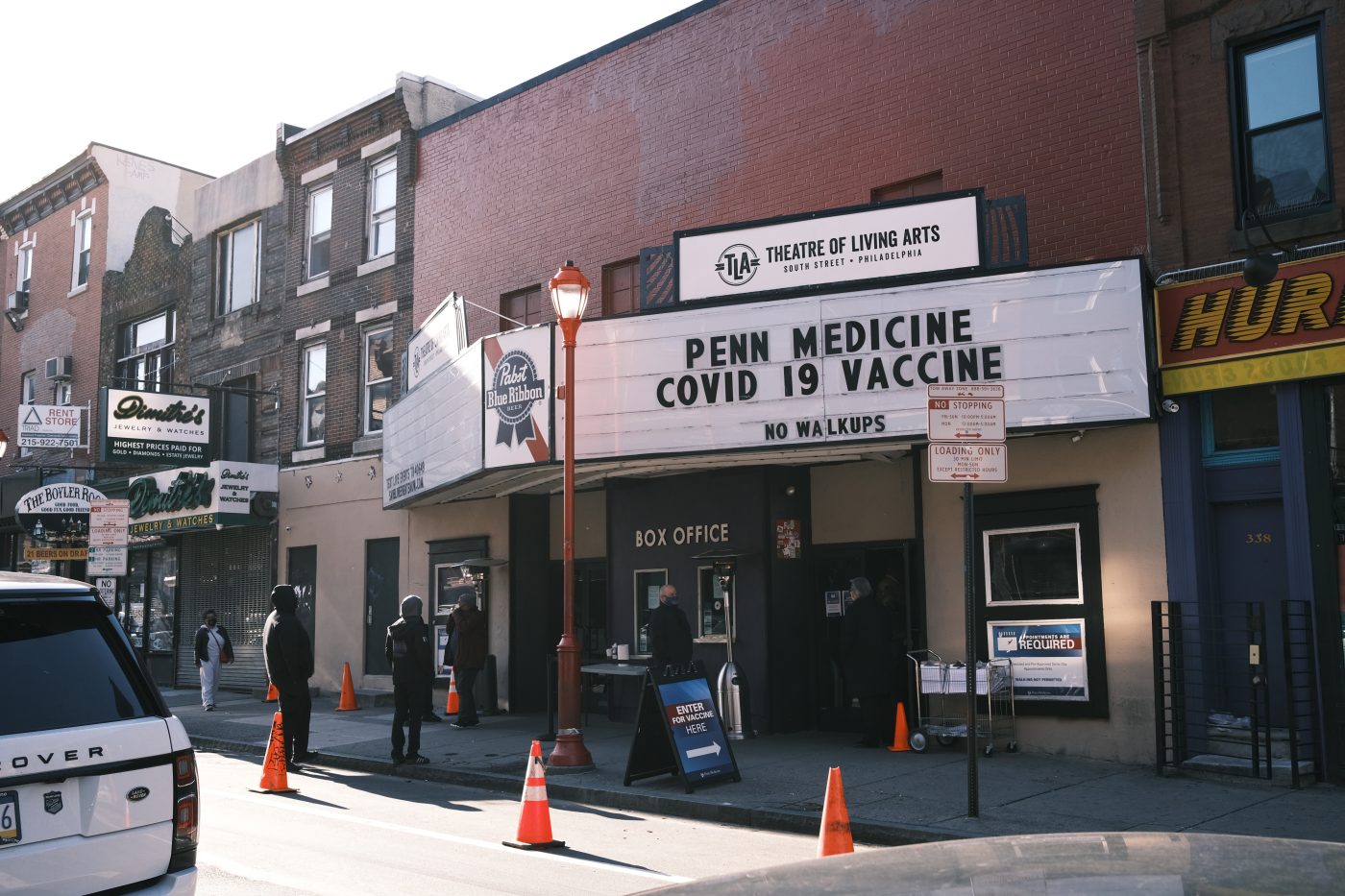
The first shot felt a lot like this, but I want to mention how much of a feeling of civic pride there was being in this shuttered theatre in Philadelphia receiving this life-saving medicine from fellow Philadelphians (in fairness, some of them may be from New Jersey).
Now I hope the president does the only sane and moral thing and puts this intellectual property in the public domain so that our fellow humans can get vaccinated everywhere, protecting us all. We guaranteed pharma companies billions (thanks companies) and they’ll be fine.

-
Children's Medicine
After getting my second vaccine today, I wrote about the way I conceptualized medicine working as a child.

I got my second vaccine this morning. There's a part of me that still thinks of medicine the way I did as a child.
When I was little and sick, I would visualize medicine I took as elven armies rushing into my body unleashing hails of arrows on the pathogenic orc hordes. 👇
I still secretly think that these visualizations help the medicine work better.
The immune system is an astonishing thing and it's sad how much science has been used for evil and faith in institutions so damaged that the entire narrative isn't solely how amazing vaccines are.
It was the Moderna second shot so I'm going to become unbearable to my wife shortly. Maybe I'll watch the Lord of the Rings films even though they are terribly disappointing.
Devastatingly, they told me no ibuprofen and acetaminophen is just Bitter Smarties.
The first shot felt a lot like this, but I want to mention how much of a feeling of civic pride there was being in this shuttered theatre in Philadelphia receiving this life-saving medicine from fellow Philadelphians (in fairness, some of them may be from New Jersey).

Now I hope the president does the only sane and moral thing and puts this intellectual property in the public domain so that our fellow humans can get vaccinated everywhere, protecting us all. We guaranteed pharma companies billions (thanks companies) and they'll be fine.
-
Ping-Pong
I could play ping-pong for a whole day, and with some opponents the game gets straight-up physical and sweaty, with shouts of triumph and anguish…
But the thing I like most about ping-pong is how sharply it exposes the thinking mind in all its ineffectiveness. 👇
If you look close enough, the thinking mind’s uselessness can be noticed in any game, activity, or endeavor, but it’s easier for it to hide some places than in others. It makes us think it’s doing something helpful.
Not so in ping-pong. The game is just too relentlessly fast.
Just as when driving a familiar route your mind can totally disengage and then “wake up” when you’ve arrived at your destination wondering how you did all the steps to get there… in ping-pong you wake up after every point.
“How did I do that?”
The answer is that “you” didn’t do it. The ego, the part of you that thinks about itself and considers itself to be “you” needed to be completely taken out of the equation for you to get that last return on the table.
Again, every time you do anything well, your thinking mind (that thinks it’s so smart and helpful) had to get out of the way, but it usually swoops in right afterward to say “Look what I just did! Now here’s how you should do it this next time… So, errrrrrrrrrrm.”
Ping-pong forces you out of your head. There’s no time to think. The next point is coming RIGHT NOW. Every point is a two-point swing. There’s no time to get stuck thinking.
Ping-pong zaps you into the present moment like a thunderclap.
I highly recommend getting decent enough at ping-pong to be able to enjoy watching yourself play it.
-
Ping-Pong
I wrote about how much I love ping-pong and one of the reasons why.
I could play ping-pong for a whole day, and with some opponents the game gets straight-up physical and sweaty, with shouts of triumph and anguish...
But the thing I like most about ping-pong is how sharply it exposes the thinking mind in all its ineffectiveness. 👇
If you look close enough, the thinking mind's uselessness can be noticed in any game, activity, or endeavor, but it's easier for it to hide some places than in others. It makes us think it's doing something helpful.
Not so in ping-pong. The game is just too relentlessly fast.
Just as when driving a familiar route your mind can totally disengage and then "wake up" when you've arrived at your destination wondering how you did all the steps to get there… in ping-pong you wake up after every point.
"How did I do that?"
The answer is that "you" didn't do it. The ego, the part of you that thinks about itself and considers itself to be "you" needed to be completely taken out of the equation for you to get that last return on the table.
Again, every time you do anything well, your thinking mind (that thinks it's so smart and helpful) had to get out of the way, but it usually swoops in right afterward to say "Look what I just did! Now here's how you should do it this next time... So, errrrrrrrrrrm."
Ping-pong forces you out of your head. There's no time to think. The next point is coming RIGHT NOW. Every point is a two-point swing. There's no time to get stuck thinking.
Ping-pong zaps you into the present moment like a thunderclap.
I highly recommend getting decent enough at ping-pong to be able to enjoy watching yourself play it.
-
Baby Wendell’s First Haircut
Today was like a lot of recent days when I’ve been preoccupied with BIG DEAL things that cause me anxiety but are probably fine and will totally be fine.
Also today: My son got his first haircut. I stumbled out the door in pajamas already ten minutes late to the appointment. 👇
One of the problems with being a parent is that everything feels like both a big deal and nothing at all. I mean, everything this little Wendell does is his first experience of it. This was the first time he smelled a barber shop and felt clippers buzzing against his head.
Looked at one way, Wendell’s first haircut is a really big deal, but also, his hair was getting in his eyes so we got his hair cut before feeding him hotdogs and apples and washing his butt and putting him in bed.
I struggle with switching between being way too precious about every moment and wanting to make a 16mm film (literally) of my kid’s first time on the beach and totally phoning it in, stumbling unconscious from milestone to very special milestone.
The truth is: neither is great.
When I’m hung up on everything being special, I miss the moment just as much as when I’m preoccupied with a work thing. Also, if everything is special, nothing is special. It isn’t sustainable. It’s like people who give everyone hugs.
What does this hug even mean? What are we?
There’s no holding on to these moments. Yes, we saved some hair to throw in a scrapbook. Yes, we got at least the picture above where he’s looking real proud like “Lookin’ sharp.”
If I can be present for 3 seconds at a time, that’s better than running to either extreme for me.
At least right now, right this minute, I’m here for this critically unimportant moment in my little son’s little life.

-
Baby Wendell's First Haircut
I wrote about Wendell's first haircut.
Today was like a lot of recent days when I've been preoccupied with BIG DEAL things that cause me anxiety but are probably fine and will totally be fine.
Also today: My son got his first haircut. I stumbled out the door in pajamas already ten minutes late to the appointment. 👇

One of the problems with being a parent is that everything feels like both a big deal and nothing at all. I mean, everything this little Wendell does is his first experience of it. This was the first time he smelled a barber shop and felt clippers buzzing against his head.
Looked at one way, Wendell's first haircut is a really big deal, but also, his hair was getting in his eyes so we got his hair cut before feeding him hotdogs and apples and washing his butt and putting him in bed.
I struggle with switching between being way too precious about every moment and wanting to make a 16mm film (literally) of my kid's first time on the beach and totally phoning it in, stumbling unconscious from milestone to very special milestone.
The truth is: neither is great.
When I'm hung up on everything being special, I miss the moment just as much as when I'm preoccupied with a work thing. Also, if everything is special, nothing is special. It isn't sustainable. It's like people who give everyone hugs.
What does this hug even mean? What are we?
There's no holding on to these moments. Yes, we saved some hair to throw in a scrapbook. Yes, we got at least the picture above where he's looking real proud like "Lookin' sharp."
If I can be present for 3 seconds at a time, that's better than running to either extreme for me.
At least right now, right this minute, I'm here for this critically unimportant moment in my little son's little life.
-
Good omen sunset for Syracuse this evening?

-
My Daily Posting Method
I’ll probably change how I’m doing this soon, but here’s a thread/post on the method I’ve used to write a thread/post every day for the past 95 days.
A weekly newsletter became too much pressure, and I hypothesized that a daily post might relieve that pressure. I was right. 👇
The key thing about a daily post is that it needs to take as little time as possible. I experience great difficulty providing constraints for myself, so “I post every day” is a pretty blunt weapon to deal with that.
The second constraint I added to this daily post was my own platonic ideal of a Twitter thread, which is 5-12 tweets in length with each tweet able to stand on its own or preserve some meaning outside the context of the thread.
One of the nice things about Twitter is that I don’t really care about Twitter. It’s not mine. I don’t own it or anything I post on it. I’m just a shivering denizen of this hell’s garden labyrinth. So my perfectionism is somewhat tamed.
But I realized early that for my own internal sense of integrity, I also need to post them in a place that isn’t Twitter. So I have a microblog at little.zachphillips.blog, and with “little” right there in the title, I figured that’s also enough to tame my useless perfectionism.
While I usually write the post first thing, I’m not precious about it. There’s nothing precious about it. If I need to throw the post together in 15 minutes before bed, I will. It’s important to me that I do it simultaneously for NO GOOD REASON and EVERY REASON.
I have a bunch of little snippets and slips of ideas in Roam Research and I just grab one or whatever is top of mind and see what happens when I write the first line. Often, this is enough to break open a bunch of doors in my brain and I discover a bunch of stuff I want to write.
Using @dvargas92495’s RoamJS Twitter extension, I type the whole thread/post in Roam, watching my character counts, which keep me constrained, but they also take a lot of time wordsmithing and character-cutting. I’ll probably drop the thread crutch eventually.
Then I post.
I also post it to little.zachphillips.blog via MarsEdit, copy the links to everything back into Roam, and post a link on Facebook to my friends and family. I then add it to my newsletter which builds up through out the week.
I haven’t read through these first 95 posts but I imagine they will become fodder for more daily posts.
This practice might eclipse meditation and exercise (which I’ve also done 96 days in a row) as the best thing I’ve ever done for my mental health.
It’s done other things too.
-
My Daily Posting Method
I wrote about what technologies and thought technologies™ I've been using to write a daily post for the last 95 (now 96) days straight.
I'll probably change how I'm doing this soon, but here's a thread/post on the method I've used to write a thread/post every day for the past 95 days.
A weekly newsletter became too much pressure, and I hypothesized that a daily post might relieve that pressure. I was right. 👇
The key thing about a daily post is that it needs to take as little time as possible. I experience great difficulty providing constraints for myself, so "I post every day" is a pretty blunt weapon to deal with that.
The second constraint I added to this daily post was my own platonic ideal of a Twitter thread, which is 5-12 tweets in length with each tweet able to stand on its own or preserve some meaning outside the context of the thread.
One of the nice things about Twitter is that I don't really care about Twitter. It's not mine. I don't own it or anything I post on it. I'm just a shivering denizen of this hell's garden labyrinth. So my perfectionism is somewhat tamed.
While I usually write the post first thing, I'm not precious about it. There's nothing precious about it. If I need to throw the post together in 15 minutes before bed, I will. It's important to me that I do it simultaneously for NO GOOD REASON and EVERY REASON.
I have a bunch of little snippets and slips of ideas in Roam Research and I just grab one or whatever is top of mind and see what happens when I write the first line. Often, this is enough to break open a bunch of doors in my brain and I discover a bunch of stuff I want to write.
Using @dvargas92495's RoamJS Twitter extension, I type the whole thread/post in Roam, watching my character counts, which keep me constrained, but they also take a lot of time wordsmithing and character-cutting. I'll probably drop the thread crutch eventually.
Then I post.
I haven't read through these first 95 posts but I imagine they will become fodder for more daily posts.
This practice might eclipse meditation and exercise (which I've also done 96 days in a row) as the best thing I've ever done for my mental health.
It's done other things too.
-
Practice and Self-Judgment
I’m pretty sure that 100% of what makes practice seem hard is self-judgment. Get rid of “I’m bad at this—that was stupid—why can’t I—I should be better at this” and practice is not only easy, but delightfully fun and satisfying. 👇
If you won’t or can’t figure out how to remove self-judgment from practice, it will sabotage the whole purpose of the activity, turning it into an excruciating slog.
When meditating or learning a new skill or song, if you let yourself practice, it’s like all the heavy, solid bricks of your brain loosen and transform into a massive murmuration of starlings. As soon as self-judgment takes, THUMP, it all collapses into immovable bricks again.
By definition, if you’re practicing something, you’re exploring the edges of your competence. There’s some pretty deep irony in thinking you should be better at the thing you’re practicing.
Recognizing self-judgment so it doesn’t take hold is itself something that can be practiced, and no, you’re not supposed to be better at it than you are.
-
Practice and Self-Judgment
I wrote about the barrier to practice.
I’m pretty sure that 100% of what makes practice seem hard is self-judgment. Get rid of “I’m bad at this—that was stupid—why can’t I—I should be better at this” and practice is not only easy, but delightfully fun and satisfying. 👇
If you won’t or can’t figure out how to remove self-judgment from practice, it will sabotage the whole purpose of the activity, turning it into an excruciating slog.
When meditating or learning a new skill or song, if you let yourself practice, it’s like all the heavy, solid bricks of your brain loosen and transform into a massive murmuration of starlings. As soon as self-judgment takes, THUMP, it all collapses into immovable bricks again.
By definition, if you’re practicing something, you’re exploring the edges of your competence. There’s some pretty deep irony in thinking you should be better at the thing you’re practicing.
Recognizing self-judgment so it doesn’t take hold is itself something that can be practiced, and no, you’re not supposed to be better at it than you are.