Elsewhere
Everything I ever posted to other people's platforms, brought home. 461 posts and counting.
-
“Content”
Here’s a thread in which I will attempt to destroy the word “content.” First, I acknowledge that this war has already been lost. Most of us who write, filmmake, shoot photos, teach courses, make radio, or do anything creative have already surrendered.
I will not.
I’m not so selfish to demand anyone else die on this hill with me. I judge no one. We all have to do what’s best for ourselves and our loved ones. Our culture makes it hard to treat the work of writers, podcasters, journalists, teachers, etc. with the minimum respect it deserves.
The first reason this usage of the word “content” is so bad is that it was created by advertisers to refer to “you know, that stuff that’s between our ads?” As a person who crafts advertising for a living, the irony that I’m bringing this complaint is not lost on me, but…
…it’s particularly devastating because, for 15 years in commercial production, I’ve been trying to spread the gospel to every customer that, actually, their money would be better spent making something good, you know, like the stuff their usual ads run before and after.
Advertisers, like everyone else in this economic system, have an incentive to commoditize every part of their value chain that isn’t them, so they deployed the most demeaning word they could: “Content.” You know, like “filler” or “noise.”
The dictionary definition of “content”: *n. That which is contained; the thing or things held, included, or comprehended within a limit or limits. *You know, THAT WHICH, the THING OR THINGS, GUYS. We may as well just use the word “garbage.”
The second reason I hate this use of the word “content” is that its actual meaning has great utility in the creation of what the world is calling content 🤦♂️. Works of art and media are often discussed in terms of their “form and content.”
When writing a script, discussing a concept or idea, etc., it’s helpful to be able to refer to the “content” of the thing as separate from the form of that thing. But now the word just means everything created across all forms, all media, and all values of quality and intention.
The last reason I hate “content”: Creating good stories and artwork requires putting yourself into it. I promise I’m not being precious about this. I don’t think you need work really hard or take things really seriously to make something good. But you do need to give of yourself.
You, your point of view, your unique mix of interests, experiences, conflicts, talents, skills, DNA, intersections of weird-ass stuff—that cannot be commodified. Ever. When you internalize “content” as the objective, you orient yourself to creative work in the worst possible way.
We’re entering a golden age for artists, storytellers, and teachers of all kinds. They are inventing new media and genres and the very means of creation and expression. As easy as it is to take that whole rich landscape and call it “content creators,” I’m not going to do that.
-
Volunteer Creative Work
Creative workers are, for some reason, the one class of workers that lots of people think it’s totally cool to solicit volunteer work from. Here’s a thread about when and how to offer volunteer work as a creative person.
First Rule: If anyone but you initiates, immediate NO. 👇
Here are the conditions under which you might consider volunteer creative work:
- You dictate the terms of engagement
- You control the creative work itself
- You believe in the people and/or the cause
Before I elaborate… more on solicitations of volunteer creative work.
When was the last time you saw “I’m going to have a competition to see which cleaning company can clean my house the most thoroughly. Winner gets recognized as winning.”
“Hey, you guys got mops, right?”
But people do this to creative workers all the time.
There’s an assumption that creative work isn’t really work, that it’s just fun and you’re lucky to be doing it.
While it may be fun and we may be lucky to be doing it, it’s work, and as a matter of fact, it’s usually really time- and focus-intensive work.
Making matters worse, the time and attention needed to complete a creative task is always somewhat unclear (unless you’re a caricature artist at a carnival with a definite start and end time, or comparable).
This is why the first rule is so important: You dictate the terms.
“1. You dictate the terms” means you decide exactly how much time you’re going to spend on the volunteer work, when, how, and what you need from them. All of it.
And because you are the creative person being asked for free work, you MUST absolutely control the creative choices.
“2. You control the creative work” is NOT OPTIONAL. If they want to tell you how to best do your job, they’re welcome to pay you. A bit of irony here: Keeping creative ownership will get better results for them anyway (you know it). And you want results, because of the last rule—
“3. You believe in the people and/or the cause.” This is how you start. Find the coolest, most bad-ass nonprofit in town (or in the world) that needs their story told better (this is most of them). Find what inspires YOU and go to them and say “Here’s what I want to do for you.”
This is what I did 10 years back when I moved to Wilmington, Delaware with no clients, no contacts, no prospects. I sought out the coolest nonprofit in town. I called them. After their initial shock, they said “Well… actually we need a new website, and a video sounds nice too.”
Now, not only was I suddenly connected to some great, interesting people with whom I’ve made longterm friendships, but it turns out they were already connected to other cool, interesting people.
I found myself working on a website with the coolest kids in town, @houseindustries.
I made videos I was proud of, with full creative control, about a workforce development nonprofit whose model is the most successful in the nation, and now I’m on the board. http://cpfurniture.org/
(and yes, the relationships I built there have also led to lots of paid work)
So, to sum up: Creative volunteer work CAN be a really good thing to do, but make sure 1. You are the one who sets the clear terms of the commitment, 2. You control the creative (COMPLETELY), and 3. You’re helping great people and/or a great cause.
Anything else is exploitation.
And giant, unlimitedly-capitalized brands (like Doritos) who hold “contests” to solicit people to make free ads for them are reprehensible scum, and this is not debatable.
-
The Year of Just Ring The Bell Again
My Theme for 2021 (per the Theme System from @imyke and @cgpgrey) is The Year of Just Ring The Bell Again. It’s a mouthful, but it doubles as a mantra and an answer to every question, doubt, or jam.
It is a simple repudiation of the patterns that have kept me stuck. 👇
I’ve spent my adult life agonizing over making good things. This has caused me to not make lots of things. And since making lots of things is strongly correlated with making good things, this focus on making good things has ironically caused me to not make good things.
When COVID hit and my production company got sidelined for a few months, I fell into my old systems-obsessed patterns and started searching for the RIGHT WAY to FINALLY put all the stuff into the world that I’ve been holding on to for years.
Avoiding the vague, sickly feeling that I was treading familiar ground (going all in on systems/tools for doing great work as opposed to just doing it), I stumbled upon @fortelabs’s course via my honeymoon with @RoamResearch and my rekindled obsession with the Zettelkasten.
I recoiled from Building a Second Brain as from a hot flame. My answer could not be another course, another system. And I hate this marketing. And I hate Evernote. And I already know all this stuff. I’ve read/thought about it more than anyone, maybe more than Tiago—and yet…
So I read a bunch of Tiago’s writing. And it gave me pause. There was something undeniably different about his approach. It had all the trappings of the systems I was accustomed to getting buried in but it seemed to very intentionally not include any Cleanly Satisfaction™️.
Cleanly Satisfaction™️ is the cocaine drip included with every book/course/system in the Productivity Porn Industrial Complex. It’s a numbing, syrupy tincture that provides temporary satisfaction from the maintenance of a system even when one is getting nothing from that system.
Tiago’s non-stop focus appeared to be on designing systems that take as little effort as possible to maintain and that work especially well when you do nothing to maintain them. The point is simply to Press Publish as soon and as often as possible. Anything else is a distraction.
Since taking #BASB (and @david_perell’s sister course), I’ve sent a newsletter for 20 weeks in a row. It isn’t always good, but good isn’t the focus. It’s not that good doesn’t matter. Of course quality matters. But focusing on good produces the only thing worse than bad: nothing
To paraphrase @JamesClear, if there’s no regularity, no habit, no routine in place, then there’s nothing to optimize. I’ve been focused on the optimization of optimization for too long. It’s been fun. I’ve learned a lot. But I haven’t honored my innate desire to create and share.
And to quote someone very prolific (and very cancelled): 90% of life is just showing up.
Just Ring The Bell Again is a really simple idea. It turns a question like “Is this good enough yet?” into “What will it take to press publish in the next twenty minutes?”
The Year of Just Ring The Bell Again doesn’t only apply to work (focusing so much on Work is another of my unskillful tendencies). “Shoot, I don’t have an hour to do my full workout” becomes “Hit the bike for 20 minutes.” Just. Ring. The. Bell. Again.
I’ve already started The Year of Just Ring The Bell Again because waiting for an arbitrary date to Just Ring The Bell Again is not living in the spirit of Just Ring The Bell Again. I’m ringing the bell every day, gaining momentum…..
Followup: The most pleasant surprise: It’s not hard.
-
24 Frames Per Second
Here’s a why 24 is the best number of frames per second for everything but sports and gaming. It has to do with a fundamentally broken default assumption about the motion picture medium.
Many of us weren’t home for the holidays to help loved ones turn off motion smoothing. SlippySmoothSparkleMotion+ is still on by default (even as @RianJohnson and others keep up the good fight). There’s a debate about why motion smoothing is so offensive. I’m here to settle it.
Before we get to the answer… No, the “soap opera effect” isn’t a result of historical conditioning. 24 frames per second isn’t better because “that’s just what we’re used to in movies.” It’s not about some arbitrary association.
A few movies who shall not be named have come out in recent years at 48 frames per second. The crowd response was universal hatred, thank god, but Hollywood will probably keep trying… I mean, it seems like MORE frames per second should be BETTER, right? More REALISTIC… right?
This is the broken assumption that most people have about movies: That the reproduction quality is supposed to be like reality—that the closer it gets to reality, the better. Under this assumption, 120fps would be best, as it’s close to the resolvable limit of our eyes/brains.
But when people watch a movie at just 48fps (2x the magical 24) they ask “Why do I hate this? Why do I feel so yucky and uncomfortable. And why is that actor wearing so much weird makeup?” The whole movie viewing experience is broken. Why is this?
It’s because motion pictures are nothing like reality. The medium is simply not designed that way. You sit in a chair and look at a rectangle cut out of a view through a lens at a focal length different from your eye. Then, every 2-5 seconds, IT CUTS TO A TOTALLY DIFFERENT VIEW.
Optimally experiencing a movie requires that the viewer be in a dream-like state, able to suspend disbelief with regard to the drama of the characters and the the dangers in the world of the film WHILE rapidly parsing this wildly complex visual language of cutting.
24 frames per second is the perfect framerate because it’s JUST at the cadence where every kind of motion can be adequately represented while staying as far away as possible from our eyes’ true ability to perceive motion. This allows us to experience the medium as intended.
The Uncanny Valley doesn’t just apply to a robot. It applies to the experience of a medium as well. The closer a motion picture’s framerate approaches our perceptual capability, the more dominant the subtle details of our visual systems become, taking us OUT of the movie.
In terms of resolution, there’s a limit to what our eyes can resolve on a rectangle some distance from our face and we more or less reached that limit the moment film was invented (we still haven’t done better than film, an argument for another thread). But not so with motion.
SlideySmoothPuddingMotion+ TV-makers and movie studios trying to come up with justifications for the digital theatres (their own coffins) that they designed will persist in their attempts to break the film medium with higher frame rates, but in the end, they will be defeated.
-
99 cents
Pricing everything at $19.99 or $149.95 or $1,999.99 is just one of many blaring markers that our cynical cultural illness is late-stage, but for some reason, it’s particularly egregious in its obvious contempt for human beings. 👇
It’s one thing to use a marketing tactic shown to convince XX% more people to purchase your product. It’s another to put a tactic that exploits one of our dumbest vulnerabilities right in front of our faces.
Pricing a condo at $299,000 is saying exactly this: “We both know this condo costs $300k but studies have shown that you are a pitifully dumb animal, and that even with this lie right in front of your face, you’ll still think this is a better price.”
I’m not judging anyone. This tendency is built in to me too. Every time I’m pricing a proposal, I want to round just below the nearest Big Number. But calling someone a dumb animal to their face isn’t the basis for a respectful relationship.
I’d love it if deceptive pricing and other cynical tactics could be seen for what they are: very uncool, contemptuous, abusive, and not worth the marginal gains that come from their use.
-
Quoteblock: A spec for the open web
The most exciting implication of @RoamResearch block references is the design of a protocol for the open web built on the blockification of original sources, allowing clean/easy block attribution, connection, and translation into different formats. We could call it Quoteblock. 👇
You can think of Quoteblock as “super advanced retweeting, but not for tweets.” No permission is needed to build this. The spec could be as simple as somedomain.org/blog/some-post’’p3-p5 (the ‘’ is actually consecutive apostrophes, allowed in URLs but rare to find in the wild).
Since Quoteblock is based on document permalinks and the semantic block structure of those documents, somedomain.org/blog/some-post’’p3-p5 is already a unique identifier with its ownership/provenance built in. So how would it render? This is where Quoteblock gets fun…
Using tweet embeds as reference, Quoteblock renders a blockquote of the specified block or blocks, also pulling basic styles and an attribution logo from the origin, maybe some page context. Quoteblock is about to get crazy powerful with the Quoteblock Graph and Formats.
The Quoteblock Graph is where the #roamcult comes in, because honestly they are the ones most qualified to design how the Graph should work. You could design it without them, but that would be an unforgivable mistake.
Quoteblock Formats is where we introduce something that doesn’t exist currently: The ability to translate blocks, not just to other languages but also to other MEDIA. The simplest example, what is an image’s alt-text other than a “translation” of that image into writing? More 👇
What is a transcript of a video but an alternative format of that video? Why shouldn’t I be able to explore available formats/translations at the block level? And if they don’t exist, why shouldn’t I be able to PROVIDE THEM? The value of Quoteblock Formats grows exponentially.
I first introduced the Quoteblock concept to @Bardia on a call when he reached out to talk about how I was using Roam for screenwriting. The team at @RoamResearch is THE model toolmaker when it comes to engagement with the people using the tool. There’s a reason for the #roamcult beyond the power of the tool itself.
The other reason the #roamcult in particular will want Quoteblock to exist is that, when the Great Roam Unification occurs someday in the not-too-distant future, our references won’t need to be based on a million copy-pasted duplicates.
By the way, there’s no reason that Quoteblock needs to be limited only to the web, it’s just the easiest place to start. You can just as easily imagine referencing scenes from a movie or sections of a podcast by timecode, or a paragraph from a book by chapter and paragraph.
On the open web with Quoteblock, source material is truly source material, originating at its own permalink/owner, creating a referenceable “shadow graph” for every block/primary source on the web. I can’t build this. I hope someone in the #roamcult can and will. I can help.
I was inspired to put this out by @malcolmocean’s thinking. I can help design if #roamcult takes it and runs with it, but I’m not the one to actually do it, nor is my company at the moment. I do have the @QuoteblockSpec Twitter and quoteblock.io domain for the community.
-
-
Obsolete Christmas Gifts
Since the 80s, the most expensive Christmas gifts are usually the ones that get to the landfill the soonest.
Now that Moore’s Law has run its course, it’s time to banish Instant Obsolescence as a feature of all digital tech (software too). 👇
First, there’s absolutely nothing intrinsic to digital products that they need to have the shelf stability of an avocado, but because tech has moved so quickly and we got in the habit of knowing we’d get the next one soon anyway, we’ve accepted some badly designed products.
Dieter Rams is one of the chief inspirations to Jony Ive. It’s sort of crazy to think that not one of the products that Ive designed (the most successful commercial products ever made) would pass Rams’s Principles of Good Design (#7: Good design is long-lasting). Can’t blame him.
Just a few years ago, we could still see the pixels on our screens. Processors struggled enough for us to notice latency. For an ordinary person interacting with technology, practical, noticeable progress stopped around the iPhone X. When did you last think “This phone is slow.”
Unless you’re a video editor/3D animator/game designer/developer, you’re unlikely to see a noticeable difference on desktop ever again either. Latency is gone. Resolution is beyond our ability to visually resolve it.
The resolution of the screen in many living rooms is now higher than it is in most movie theatres (and if the people are honest, most of them can’t tell the difference from when it was only 1080HD).
(Related note: There’s never been a better time to buy a TV)
These diminishing digital returns would appear to be bad news for an economy that relies on people buying a new $1,000 phone every two years and throwing the previous one away, but the products that now need to emerge are truly exciting.
We’re (finally) seeing meaningful increases in battery life (and maybe soon, we’ll even be able to replace a battery, imagine that). How would you build a phone to last 50 years? And how would you build software knowing that devices could last that long?
What if people working in manufacturing could be building things that would be handed down a generation or two? What would that do to the economy? To culture? What about all mending/repairing that would be needed as hardy devices wear over the years?
What about single-purpose devices that do one thing (writing, for example) really really well (and last 100 years) instead of trying to jam every single human activity into a one-size-fits-all glass slab?
And then (I know we’re not here yet) what if we could get computing power needs down so far that devices could be mechanically powered like the watch I’m wearing, powered only by a spring and an escapement? This is the opposite of steampunk, by the way, because there’s no steam.
One of my Christmas wishes for the world is that designers internalize (and rejoice in) their new freedom from creating throwaway things.
These chips and screens are finally ready. We did it. It’s time to make the next generation of digital tools: Talismans that last a lifetime.
-
Non-Coercive Pomodoro
For people who’ve tried the Pomodoro (decide on task, set timer, work on
for length of timer, take break) but haven’t stuck with it because their BorgBrain adapted: I have two tweaks that make it work flawlessly for me, one from @kouroshdini and one from @complicegoals. 👇 He doesn’t call it this, but @kouroshdini’s approach to the Pomodoro is revolutionary in its simplicity, but it makes all the difference, especially if you’re interested in non-coercive methods of encouraging your best work. We’ll call it the Non-Coercive Pomodoro.
The Non-Coercive Pomodoro goes like this:
Rather than “I MUST work on (or worse, finish) this task during this pomodoro” … it’s “I CAN work on this task I’ve decided is important to me during this pomodoro OR I can sit in silence and do nothing.”
This Non-Coercive/Non-Drill Sergeant approach to the pomodoro opens a secret door to flow.
In the traditional method, there’s an internal battle, C’MON DO THE THING, and the part of you that is a good judge of character is like HOW ABOUT YOU SUCK I’M GONNA GO CHECK MY EMAIL.
In the Non-Coercive Pomodoro, you are allowed, in fact encouraged, to sit in silence. For the full length of the timer. Or do the task. There’s nothing to rebel against, no mean Drill Sergeant to hide from. And the best part is that silence is often exactly what your task needs.
The Non-Coercive Pomodoro builds an awareness practice into work, because when you’re not busy digging a spur into your ribs or numbing the sting with diminishing dopamine hits, your surroundings and internal voices become really vivid (“turning up the gain” per @m_ashcroft).
The other Pomodoro tweak is the Communal Pomodoro: Doing pomodoros with a partner. Both friends and strangers have advantages and disadvantages here, by the way. Best off-the-shelf virtual ways to do this are with @CompliceGoals or @focusmate.
https://twitter.com/zachphillips/status/1292917241617485825?s=20
-
Conversational Compression
I agree with Nat but want to acknowledge one paradox and one caveat.
Paradox: Conversational radio is by far the lowest time/cost medium to produce, yet, for some of us, it’s the densest in value.
Caveat: “Some of us” might be the 8%-24% who learn best by listening/arguing. 👇
https://twitter.com/nateliason/status/1341742638383456256?s=21
Expanding on the radio/podcast paradox: Conversational “compression” (compressing a person’s point of view/expertise into a timebound conversation) takes less creation effort/time than any other summarization technique. We naturally do it when we speak to one another.
Editing conversational radio/podcasts is nicely constrained: Take out the parts that are redundant or slow things down. You lose almost nothing.
Editing writing, on the other hand, can be hours of focused effort, reworking over and over, often losing quite a lot…
Conversation (with a curious partner) has built-in advantages: followup questions, emphasis, clarity checks, and specific emotional tones that require more talent and intention (time) to convey in writing.
Expanding on the the radio/podcast caveat: Most people (yes, most) get very little from listening to conversation. They are different from Nat and me. My wife is one of them.
On the other hand, my wife can glance at/smell a book for 11 seconds and explain everything it says…
Books require a lot of effort for me, because my cognitive style is a conversation between warring factions in my head, and they frequently get louder than the voice narrating the book I’m reading to them.
On the other hand, listening to a conversation is effortless and natural for me. The voices on the radio lead the conversation in my head, which I engage with naturally, reacting/thinking of my own responses and immediately being brought back by the next beat in the conversation.
-
Teleprompter Prototype
In his newsletter, @david_perell asked for “the Sonos for home audio-video setups—without the wires and complexity—with the ease and quality of an iPhone camera,” and offered to help/invest in such a company.
-
His assumptions are dangerously wrong.
-
I built a prototype. 👇
The two biggest problems with virtual conversation, EQUALLY catastrophic to human communication, are Poor Audio Quality and Lack of Eye Contact.
Poor Camera Quality and Bad Lighting, while problematic, barely affect communication, so they aren’t problems unless you’re recording.
Audio is a solved problem (more on that later), but any home a/v product that doesn’t FIRST address Lack of Eye Contact is useless. You may as well buy a garbage Logitech webcam.
But there’s good news: Eye Contact is also a solved problem. All you need is a teleprompter.
While Apple tries to solve the Lack of Eye Contact problem with (creepy) software that shifts pixels to move your eyeline, teleprompters already solve this 100% perfectly.
@errolmorris, the best talking-head documentary filmmaker ever, used them to build his famous Interrotron.
Okay, so every desk needs a teleprompter. Obviously. But we have a bigness problem: Teleprompters are giant and unwieldy with sharp edges and too many parts and people don’t understand them. There are approximately 12 people in the world who are going to put them on their desks.
What we need first is a really compact teleprompter. What, you say? That already exists? No it doesn’t. Teleprompters built for phones are useless, because a) phones can’t be second monitors for computers, and b) who wants to set up their phone on a thing for every video call?
But iPad prompters do exist and iPads can be used as second monitors… This is true! I spoke with @lonelysandwich and @charlesforman about this in the summer, but at the time you couldn’t reverse the image (necessary because mirrors), even with hacky utilities like SwitchResX.
Of course, @lonelysandwich knows all the nerds, so he was able to get LunaDisplay to make an AstroPad feature for flipping/reversing the iPad-as-a-second-monitor, which is awesome, but…
Non-nerds are still never going to do this. Too many components/wires/questions.
The actual solution to desktop audio/video must have:
- A small footprint (less that 6 to 8 inches), or even better, sit on top of an existing monitor or iMac.
- A dedicated teleprompter screen.
- A dedicated camera (16mm sensor or better) with mic input.
- A single cable.
I built this prototype because I need it for me and colleagues. It solves everything, but your mission (should you choose to accept it) is to:
- Get this mess into one beautiful 6-inch box
- Get image/audio to and power/monitor from the computer on one USB-C
- Make it <$1,000
I’ll follow up with a list of parts and a video I shot of building this thing. For the record: I’m not saying I used the best parts for this prototype. I just used what was lying around my office and some extra bits I got from Amazon. A hacksaw was involved. You can do better.
I didn’t address audio, so here’s the entire secret to unlock all the magic of good audio in your life forever: 1) Put (pretty much any) microphone 2) close to your mouth and 3) set the level so it sounds good. 4) If you can’t do 3), Google “adjust audio levels for
”. I also didn’t address lighting. We know this product will have an integrated ringlight but the cool kids will not use it (because it is uncool). There’s no one lighting secret. It’s a nuanced thing. But you can’t go wrong with a large, soft light (window or softbox) 45° off axis.
I also never really covered the camera. That’s because as long as it has a sensor 16mm or larger, it’s not that important. In my opinion, the optimal camera would have a Super-16 sensor (like the Blackmagic Micro Cinema Camera I’m using) with a fixed, wide open 16mm lens.
I have little desire to build a company making a baby teleprompter/camera combo (which you could call the Eyeliner™️ if you wanted to). If you’re looking for an idea that needs to exist, I hope this thread correcting for @david_perell’s forgivable but grievous errors is helpful.
There are already companies trying to build solutions in the home audio/video space.
If there’s no integrated teleprompter, they blew it.
If the camera sensor is less than 16mm, they blew it (less so, but they still blew it). And this includes any magic inside-the-screen tech.


-
-
Good morning, beautiful Philadelphia. It’s a great day to knock a motherfucker out (politically, electorally).
Today’s high will be 70 degrees with a strong chance of bitchass whining.

-
A good a night as any for one of these.

-
-
-
-
-
First time making huevos rancheros in the new kitchen. About to roast the salsa.

-
Allison’s been asking for pictures of Louisa and Wendell together in these “sailor suits” since, well, since Wendell was born. I think I finally got them. Sailor suits, retired.

-
I never post anything of this guy, Wendell. So here’s him right now. You can’t really tell from this picture, but he is an enemy combatant.

-
-
From last week when the babies were sick.

-
This is more about the sound…
-
Reposting from my wife because

-
-
-
-
Post 3 of 3: A big thing that happened this year is I started shooting film again. I can’t believe it took me this long… Turns out film is still a) better looking, b) immeasurably more enjoyable, and yes, c) less costly (I can prove it, fight me) than digital. I like photography, not quite “again,” but in a way I never really have before, as I only got serious around the time of the 5DmkII.


-
Post 2 of 3: A big thing that happened this year is I started shooting film again. I can’t believe it took me this long… Turns out film is still a) better looking, b) immeasurably more enjoyable, and yes, c) less costly (I can prove it, fight me) than digital. I like photography, not quite “again,” but in a way I never really have before, as I only got serious around the time of the 5DmkII.









-
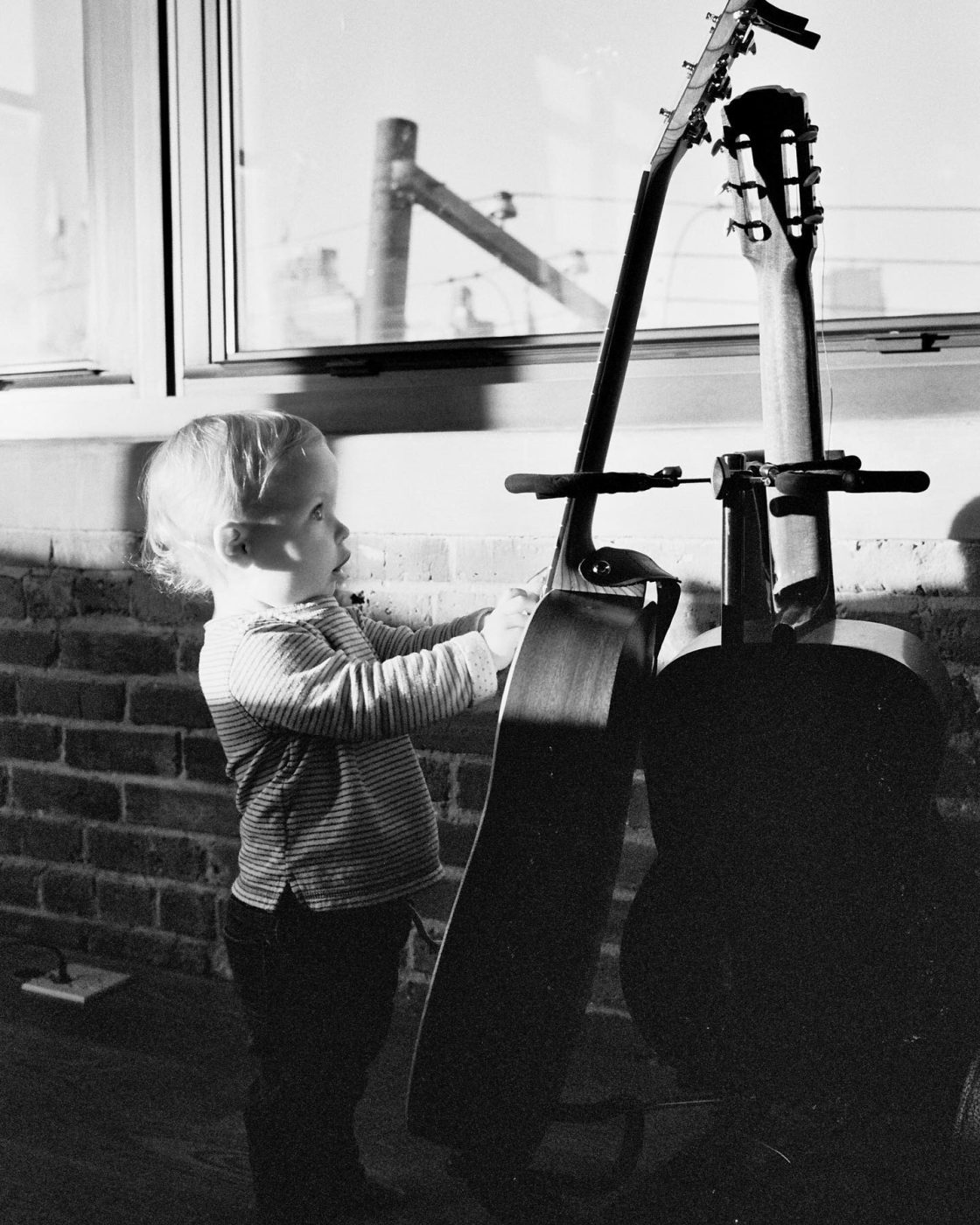
Post 1 of 3: A big thing that happened this year is I started shooting film again. I can’t believe it took me this long… Turns out film is still a) better looking, b) immeasurably more enjoyable, and yes, c) less costly (I can prove it, fight me) than digital. I like photography, not quite “again,” but in a way I never really have before, as I only got serious around the time of the 5DmkII.