Elsewhere
Everything I ever posted to other people's platforms, brought home. 461 posts and counting.
-
The Freedom to Work
Some results from the universal basic income study in Stockton: Those who received unconditional monthly payments were MORE likely to work than those who did not.
Turns out that the foundation of our economic thought, that humans are basically lazy and no-good, is wrong. 👇
There are way better reasons to explore UBI and other means of repairing our dangerous levels of inequality than increasing productivity, but since that’s what social safety net naysayers lean on, and they’ve been shown to be exactly wrong, why not talk about productivity too?
It’s intuitively obvious to anyone who has ever been stressed out with financial insecurity: Stress hurts productivity. The idea that it benefits productivity is absurd. Stress leads to avoidance, exhaustion, mistakes, self-soothing behaviors.
Extreme stress leads to paralysis.
Economic insecurity might be the #1 generator of productivity-destroying stress, and yet the establishment ruling class of the country thinks it’s a tool to be used to increase productivity.
And let’s eliminate stress from the conversation altogether. Having some money makes it possible to do things like:
- Hire a babysitter while you take a shift or look for a job
- Take care of health and family emergencies
- Take classes/training
I’ve never met a lazy human. I’ve met disempowered, self-doubting, stressed out, or otherwise paralyzed humans, but never a lazy one. Laziness is a concept invented by a disembodied, coercive culture with no interest in what humans are really like, only what it can get from them.
I don’t know what the right recipe is, if it’s UBI or something else, but I do know that opposition to a social safety net rests entirely on a foundation of dumb ideas created by self-hating people.
To have any chance of solving our problems, these ideas need to die forever.
-
The Outliner: Where The Human and the Computer Meet
I’ve been in love with the outliner since I first met OmniOutliner (later Workflowy, Dynalist, and now @RoamResearch). Here’s why I think it’s so fundamentally important.
The outliner is the closest-to-sweetspot interface we have between a human brain and a computer brain. 👇
Humans are embodied spatial navigators. Even those of us who think we aren’t spatially gifted have the ability to instantly generate a mental map of everything in a room that we just walked into. We’re constantly measuring distances, tracking movement, triangulating.
Computers are disembodied rows of switches that grow in capability as they abstract and normalize increasingly complex patterns of rows of switches.
Computers need valid, consistent data. Their rock-solid reliability is tied completely to how inflexible they are.
Humans are flexible enough to take in any kind of data at any time, but they are inconsistent, unstructured, and the only workable systems they have for organizing are based on spatial, real-world paradigms like “files” and “folders.”
To illustrate: People who win memory contests don’t win them by building databases in their minds with rows and columns. They win by imagining a “Mind Palace” that they walk through and know where all the items are.
We know where things are by where we reliably find them.
This is why the vast majority will always be more comfortable with files and folders than with tagging, relational databases, other abstract computer organization paradigms, even if those interfaces are Better™.
Enter the outliner: The perfect blend between space and structure.
The outliner is both highly structured (rigidly so) and totally freeform, simultaneously. Its primary characteristic is its infinitely-nestable hierarchy.
On the human side, this hierarchy works a lot like files and folders where the “files” behave as “folders” themselves.
On the computer side, every block has one parent and unlimited children and grandchildren, forever.
Roam’s page and block reference behavior/interface has managed to not affect the compromise between human and computer at all. These features have managed to make Roam somehow better both for the human brain and the computer brain.
A yet-unexplored frontier in outliners is the sibling relationship and inheritance up, down, and laterally in the hierarchy. I think OmniOutliner made a pretty big mistake by adding rigid spreadsheet columns.
I’m very curious what @RoamResearch has planned for its Attributes.
To sum up: Files and folders are too human-y and miss out on most of the advantages of a computer. Tagging, databases, and all the varying representations of both are too computer-y and are unnatural and fatiguing for humans to grapple with.
Outliners strike the perfect balance.
-
The Awkward Age of The 35mm Adapter
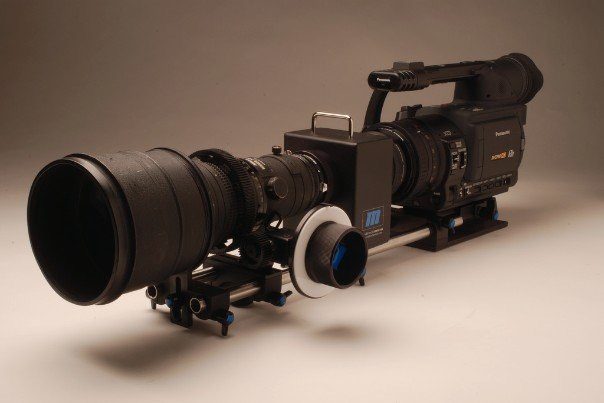
I love awkward little in-between moments in technology. One of the funniest was a two-year period (about 2006-2008) when all filmmakers used these things called “35mm adapters” mounted on camcorders. Here’s a picture of one setup that I used to use. 👇
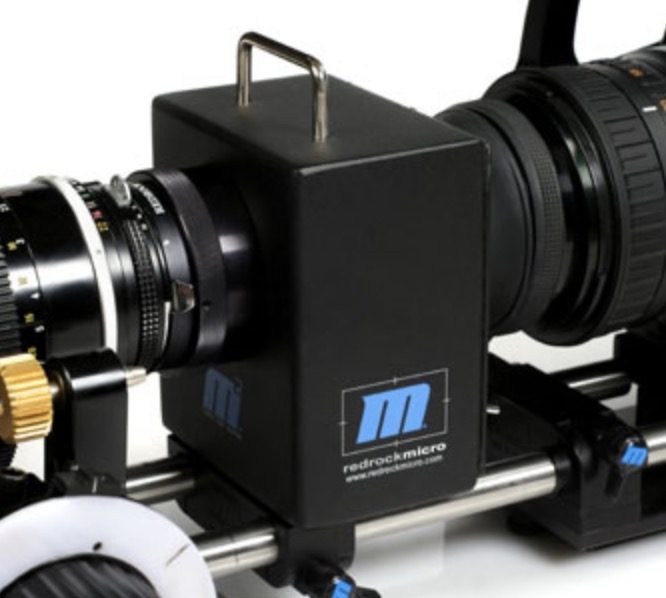
That little metal monstrosity in the middle with the M on it has a 9 volt battery spinning a piece of ground glass inside. You can attach old Nikon lenses to it. The back of it is a macro adapter that screws on to the camcorder.
This let us actually get larger image circles into our tiny-sensor camcorders literally by making a tiny movie theatre inside a black metal box and filming it with the camcorder. The results were beautiful though.
Every filmmaker was screaming for a large sensor digital cinema camera, and then the 5D Mark II came but it didn’t shoot 24 frames per second 🤦♂️. https://twitter.com/zachphillips/status/1343560660555329536?s=21
So we kept using these goofy adapters until Canon stopped being idiots and this brief awkward moment in history was over.
Still, there’s something I like about the 35mm adapter over the 5D. Something analog about that ground glass (but losing 3 stops of light was a bit much 🙂).
-
I’m a Software Fan
I’m currently on a team making software and I spent four years as a middling-designer/not-good-developer, but my whole life I’ve been a software FAN. I follow designers/developers like celebrities/sportsgame players.
This is a thread celebrating a few of my favorites. 👇
First, the OG… The @OmniGroup. OmniOutliner might be the software that has had the greatest impact on my life. When you combine the unparalleled utility of an outliner with everything it has inspired and led to, it’s hard to think of a more important app (for me).
And to think at one point OmniOutliner shipped with MacOS! Imagine how different the world would be if more people discovered the value of the outliner…
We’ll find out soon: They’re finally discovering it with @RoamResearch.
The original @dropbox team changed the world forever, adding a feature that we always expected from our computers. While it’s difficult to figure out exactly what they’re doing now, it can’t be overstated just how important, and how perfect, Dropbox once was.
This is not a favorite at all but I’ll give credit where due. While I’ve mostly hated everything this company has ever stood for, Microsoft Excel was and will always be the app that enabled the ascendency of personal computing. It’s crazy how much of the world still runs on it.
The team at @culturedcode is, to me, the Michael Jordan of interface design. What they’ve done is nothing short of magic: simple, delightful to manipulate with a finger, mouse, or keyboard… impossibly good.
I’ve felt for years that Things should have been acquired by Apple and used as the basis for the future of all Apple operating systems. It is Leica-level interface design: perfect, timeless, the apotheosis of the medium in my opinion.
Then there’s the team behind @UlyssesApp. My goodness, what a beautiful and incredible writing app. While I still can’t use it for my work because they won’t support Fountain syntax (👎), I sure hope I can one day.
Things, Ulysses, Leica… What’s with Germans and tool design?
Then there are the lone wolves like Greg Pierce at @agiletortoise who created what is simply a perfect (and perfectly necessary) app in @draftsapp, the best text capture tool to date. Once you realize you can start in Drafts, it removes an unnecessary step from so many decisions.
Another lone wolf who can’t go without mentioning is @marcoarment. Both his original Instapaper and @overcastfm have been reliable, daily companions for years.
Then there’s @lorenb, the designer/developer whose history/portfolio is the most likely to encourage those of us who probably shouldn’t become designer/developers to just move on and do something else with our time.
As much as I’ve been disappointed by @airtable, it’s only because I truly feel they’ve achieved the best web interface that has ever existed. The first time I converted a field to a linked record to a table that didn’t yet exist, I knew that this team was the best in the world.
And @figmadesign… What sorcery is this? No one was even expecting we’d have 10% of this functionality in a web app and now it’s replaced Illustrator (!) for many of us. Not only does it have the functionality but it feels more intuitive, more native(!), and FASTER(?!)…
And even though @gruber still hasn’t added three lines of CSS so you can read his site on the mobile devices he blogs about (at this point it’s a Bit™ 🙂), his creation of Markdown has changed my life and inspired so many of us to make our own tools to scratch our own itches.
Inspired by Markdown, I began tinkering with a screenwriting variant only to discover @johnaugust had already done it with what became Fountain.
John and his team then provided the world with the best screenwriting app and even gave us a Courier that doesn’t suck (🙏🙏🙏).
Lastly, @RoamResearch, who I mentioned at the beginning of this thread. It’s the most friendly, flexible, and powerful tool I’ve ever used, but what excites me most about Roam is the next generation of software fans (like me) it has created.
They’re the ones I’m following now.
-
1Yes = ∞No
Saying yes to a thing is exactly equivalent to saying no to everything else.
1 YES equals INFINITE (ETERNAL) NO. Also, 1 NO is much less than INFINITE NO.
So if you’re the type of person who doesn’t like saying no, the best thing you can possibly do is say no. 👇
Do you have lots of things you want to do? Say no as much as possible.
Not sure what you want to do? You might consider saying yes.
When considering saying yes, it’s important to know what you’re saying yes to.
What is this thing? Who’s expecting this thing? Is everything covered? Do the people covering everything know what they’re saying yes to?
Is this thing worth saying no to literally everything else?
And of course, if you don’t mind saying no, then by all means, say yes.
-
Keep Moving
Me, a pedestrian, approaching a street corner.
You, a single car, approaching the same intersection at 90 degrees.
ME (internal dialogue, narrated) Go go just go GO GOOOO!
YOU, A SINGLE CAR (driver politely waves me across) Go ahead little walking person!
This has to stop. 👇
A car can keep moving and get out of the way without a pedestrian breaking her stride. It’s so much more comfortable to slow down a half-step than it is to awkwardly speed up while a menacing, throbbing car spitting noxious steam and putrescence waits.
Lest you think my position is somehow on the side of the cars, let me be perfectly clear: We pedestrians and bicyclists allow big scary aluminum whales to share our streets. Unless it’s putting out a fire or transporting someone with disabilities, it’s lucky to be here.
Keep moving and stay out of the way.
Obviously this doesn’t apply when the number of cars is greater than one. If a car has another car behind it, it must stop and wait for all pedestrians, until the heat death of the universe if necessary.
Every motor vehicle’s job is to keep moving and stay out of the way. A car is a wickedly dangerous filthy nuisance and we shouldn’t have to suffer its heaving, sputtering sighs or trust the brake-foot of its driver who is typing an email with his meat-thumbs.
Sadly, my car is guilty too. Because a not-insignificant percentage of society thinks it’s good and proper when a single car deigns to permit a pedestrian to cross as it waits, we live in a bizarro world where many pedestrians think it’s rude for a car to stay out of their way.
While we’re on the subject, can we get rid of cars in cities yet? Once you notice them, it’s like HOLY SHIT THERE ARE GIANT UNATTRACTIVE METAL WHALE CARCASSES SITTING IN LITERALLY EVERY PLACE THERE AREN’T SIGNS EXPLICITLY BANNING THEM WHO APPROVED THIS DESIGN?
-
Walking Philadelphia
I’ve gotten very consistent with exercise but I’ve never liked doing it for its own sake. The healthiest I’ve ever been was walking/biking 7 miles to work for a year.
I’m thinking about doing something a little crazy: Walking every single street in the city of Philadelphia. 👇
There are 2,215 miles of roads in Philadelphia, minus a few highways. So if I do a 4-5 mile walk 3 days a week for 3 years, I can easily walk every street. I plan to shoot one roll of film on each of the walks (that’s a lot of rolls of film but I can develop and scan myself).
The tricky part will be getting to the outskirts from Center City where I live. I can pretty easily bike to most of them, but later on I may take the train or bus.
I can use some of that walking time to call people I love on the phone, something I don’t do enough.
This isn’t the first time I’ve done something extreme involving walking. My dad decided to walk around all of the Finger Lakes and I walked two of them with him. One of them was Skaneateles Lake (the best lake ever). It was a 12 hour day of walking. We walked 44 miles.
When I tell people my plan, the first thing most of them say is “You don’t want to walk every street in Philadelphia!” It makes me sad. I’ve lived on a lot of streets. There are safe ways to go anywhere (as a man anyway). I wish people could feel less scared of their neighbors.
At first I looked for a real map, but I’m sad to say that it appears the map people who make attractive maps that include every street in Philadelphia and a nice solid outline of the city are all dead and gone. If you know who the Map People are today, please tell me.
Good news, though: There’s an app called StreetFerret that was made for precisely my purpose, walking (or running or biking) every street in a city, satisfyingly filling it all in, the whole map. It syncs with Strava data. I’d still like an analog map if you know of one.
It’s kind of a perfect little project for me:
- The best exercise for humans is walking.
- I get to see all of Philadelphia (the best city in America).
- Photography is great awareness practice for me.
- I can make calls.
- I can make something from it? Maybe? If it’s fun?
-
The Girl Squirrel
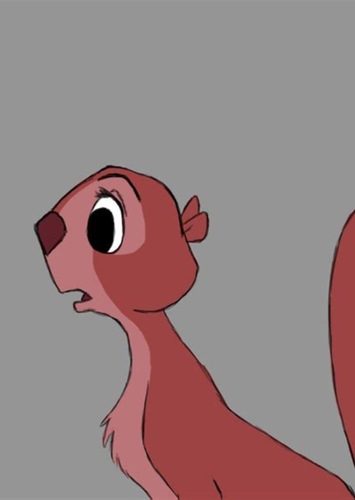
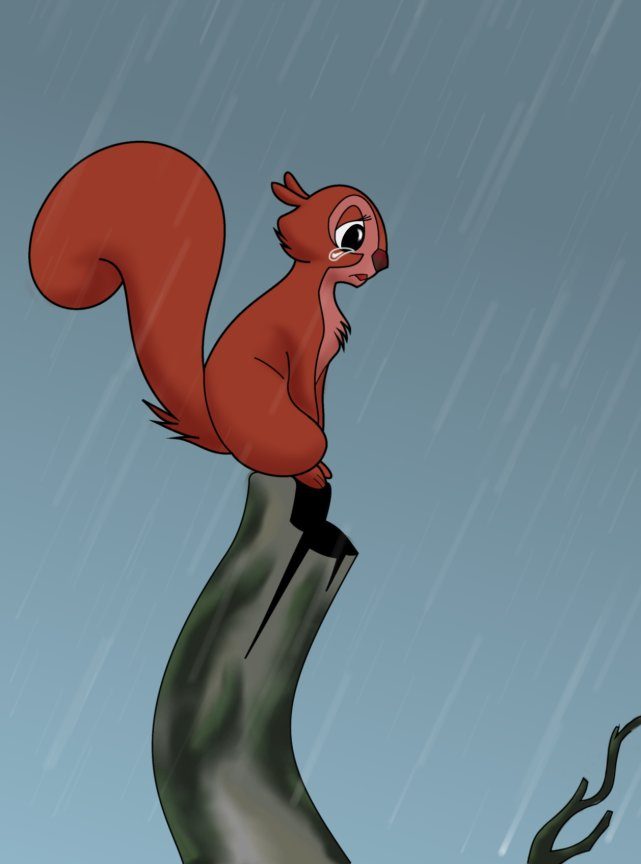
I’ve been showing favorite childhood movies to my kids (as you do). Man, they sure are violent. It doesn’t seem to bother my kids (didn’t bother me either, I don’t think…) but this sadistic, monstrous scene from Sword in the Stone has forever scarred us all:
I have to warn you before you watch this scene again (don’t watch it for the first time, just don’t)—I feel like when it ended, a part of me was lost forever. I can never be fully myself again: https://www.youtube.com/watch?v=Vas-TTFyi6M
There’s no resolution. We don’t pick up the story later. It’s just pure sadness, loss, a death deeper than death.
77.4% of these movies begin with one of the protagonist’s parents dying but nothing touches the sadness of this girl squirrel. Nothing.
Perhaps the innate defenses we have to protect us from serious trauma (like the death of a parent) don’t get triggered by this girl squirrel scene, so we’re open to the full spectrum of excruciating pain.
As someone who lost his mom at 5 years old, I can tell you, there are some complicated (if crude) protective mechanisms in place, kind of like a safety valve that shuts off when the flow of negative emotions is too great.
I wonder if the Disney scientists discovered the optimal, maximum pain they could deliver without triggering the safety valve, forever altering all children with the true pain of loss.
One thing is clear: Ratings boards don’t know what’s going to have the biggest effect on kids.

-
Thermostatic Unintuitiveness
My friend @Mikey_Two texted me: “My wife doesn’t understand thermostats. Maybe my biggest pet peeve.”
This got me thinking about how the design decisions of one interface can completely throw off the intuitiveness of other interfaces. 👇
Home thermostats start with a pretty big intuitiveness problem: When you set them to a temperature, air starts blowing or radiators start radiating at a different temperature than the current air. The perceived and actual temperature of the new air can vary widely.
Because you’ve set the temperature to a specific number immediately prior to the variable-feeling air that comes into the space, it’s totally reasonable to assume that the temperature you’ve set is relevant to the temperature of this new air.
It isn’t.
Allowing for some ramp up/down, HVAC systems are either distributing the hottest or coldest air they can until the temperature reaches the number on the thermostat. Then they stop.
But when it’s “really hot,” a not-small percentage of people set it “really cold” to compensate.
What ultimately ruined people’s understanding of how thermostats work is the car thermostat. Car thermostats have the same controls as a home thermostat, but the blowing air, from inches away, is dialable to the just-right-goldilocks temperature. It’s intuitive. It “makes sense.”
I don’t claim to have the solution to thermostat interface design, but I think it might look a lot more like a progress bar than the current ambient temperature ticking up or down.
70 [🟧🟧🟧——————]
That might help.
-
Open Closed Source
The assumption is that the way to monetize is by locking everyone into your walled garden “for free” and then feeding them as chum to your fellow aspiring monopolists.
- This is supposed to be illegal, 2. It’s a fool’s game longterm, and 3. It ignores the power of software. 👇
The true power of software is in its costless replication. The ability to “stand on the shoulders of giants” has never been more stark than it is in software. Once a thing has been built, someone else can start, immediately, right from where the last person left off.
There’s a huge middleground between open source programming tools and the monolithic applications that have sucked up the attention market. “No-code” platforms have sprung up to let “non-programmers” build tools, but most are ultimately aiming to become further walled gardens.
The sad irony (and “lost value” if that’s how you think) is that those in the best position to help new companies prototype and solve new problems (and spur Growth™ and Innovation™), are the walled garden kingpins themselves.
And they can make lots of money doing it.
I’m not talking about anything revolutionary or even novel. A simplistic example is white labeling.
If we can all benefit from (and pay for) access to Amazon’s cloud infrastructure, why can’t we benefit from (and pay for) Twitter’s microposting infrastructure, for example?
Twitter’s a pretty good example because it behaves like a simple protocol and it’s very easy to imagine hundreds of businesses that could use it. If Twitter opened up white label access, they could have a piece of the revenue of every one of those hundreds of businesses.
I’m not talking about Twitter becoming Twilio and providing some kind of metered API for programmers to use. I’m talking about Twitter saying “Here’s your own Twitter and an ever-growing set of customizations, here’s a license, and here’s what it costs to use.”
Instead of needing to weigh every feature or development decision against “will this work for literally everyone in the world?” 100 new social networks could test, say, 100 ways to create safe communities online.
There are gobs of money to be made here and the only barrier to that is lack of imagination. Anyone who thinks the most optimal web is one where five advertising companies own the whole thing is just a sad sad person waiting for the inevitable heat death of the universe.
-
Giving a Fuck
Over my first 5 years as a creative director I closed 95% of the jobs I wrote a proposal for. While it may have had something to do with price (I tried to price “high” which turned out to be “just enough to stay in business”), I think most of it had to do with giving a fuck.
I’m not the one writing proposals at my production house anymore but, needless to say, my percentage had dropped off significantly before I stopped being the one primarily responsible. I’d like to explore why and share some experience about what has worked the best for me.
Lest you assume that after years of giving a fuck I became jaded and gave less of a fuck: This is not the case. I give as much of a fuck now as I ever did. But, at some point, how much of a fuck I truly give stopped making it on to the proposal page.
There’s a dreaded compromise in a creative company between the creative energy it takes to do great work and the (very similar if not more intense) creative energy it takes to write great proposals.
Adequately managing creativebrain burnout and replenishment is mission critical in a creative company. For very sound reasons, we usually decide to favor real work we’ve been hired for over proposal work. We try to “streamline” as much of proposal-writing as possible.
The more a proposal is “streamlined,” the less care it conveys.
There are as many ways to demonstrate care through a proposal as there are people writing proposals but I believe that this demonstration of authentically giving a fuck is pretty much the whole game.
Beyond demonstrating competence and fitting the budget, the message of every good proposal I’ve written is “I understand your creative challenge and am thinking about it deeply. I’m genuinely excited to find solutions and I give even more of a fuck about the outcome than you do.”
This can’t be faked. This person is coming to you with something very important to them, something that connects many parts of their work and objectives, their hopes and dreams. The only way to convince them it’s important to you is by finding the genuine fuck you give.
And the only way to find that is by being honestly curious and empathetic, digging in and allowing their problem to become your problem.
When you know you’re the one who should have the job, they will too.
-
The Economics of “Free”
It’s Basic Economics™.
For The System™ to be sustainable, when you buy a thing, you must receive less value than you paid.
value /ˈvalyo͞o/ benefit, usefulness, importance
When you pay $0 (Twitter/Facebook), the only way that’s sustainable is if they make your life worse. 👇
I’m not making the claim here that “free” products always make everyone’s life worse (I’ll save that argument for another day). I’m just saying that the companies are actively trying to make everyone’s life worse.
It’s their only path to profitability.
“All profit-seeking businesses have incentive to provide as little as possible relative to cost. How is this different?”
If you pay $10 and get $5 in value, at least that’s $5. If you pay $0 all the company can do is rob you or inflict cruelty on you and charge others to watch.
The way this is usually discussed is “You are the product.”
While this is true, it isn’t specific enough. “You are the product” means that you are subhuman, beneath contempt. Any thought of benefitting you can only be in service of tricking you into less benefit and more pain.
This isn’t just bad for the customer, by the way. This is bad for the company, for the humanity of the people working there, for culture, war and peace, and the world at large.
“Free” products are simply the apotheosis of a purely extractive attitude in business.
The way out of this is clear: Charge the people who use your products for your products, and give them value: Make their lives better.
If you have a “free” tier, be sure it’s only ever in service of attracting customers to an honest exchange of value.
When evaluating any product, the first thing you should look for is where and how you can give the company money in exchange for the value they offer. If you can’t find that, run screaming into the night.*
*as I hypocritically post this as a Twitter thread, for “free”
-
How They Getcha
“They don’t build them like they used to.”
The idea that materials used to be expensive and labor cheap (or free/enslaved) tries to explain this, but it’s much better explained by the fact that maximization of profit has no interest in building something that lasts. 👇
The past few years of my collecting creative tools has been focused on those things that just “can’t” be built anymore, not because there aren’t the people with the skills and desire to build excellent tools, but because the economic system won’t support those who build them.
Let’s take the example of mechanical film cameras. Because no one will build them anymore, there’s a limited supply. These tools last forever, until you break them (and even then you can fix them, more on that later).
This means that prices will just go up and up.
My assumption has been validated. Since I started collecting film cameras a few years ago, most of the cameras I’ve bought have doubled in street value. I didn’t buy them as investments, but can you imagine if digital cameras increased in, or even held, their value?
Funny enough, my fascination with this subject started with a 1971 Seiko watch. Once I learned about how it worked (no one had ever taught me about mechanical watches with no power or battery), the fact it was still working (and cool) ~50 years later got me thinking about a lot.
Our profit-maximizing culture (fully codified in publicly-traded markets) is designed to eliminate as many expenses as possible and then try to hide all the cheap plasticky bits under the hood. Not only does this devalue everything we buy, but it destroys pride in craftsmanship.
Not only does profit maximization make it so we can’t have nice things, it writes off all damage to the natural human creative spirit and to the environment. The saddest part of all is that it doesn’t even accomplish the one benefit it claims to provide (cheaper goods).
The only reason a modern tool seems cheaper is because of the price on the label, which doesn’t account for all the hidden costs and the fact that it’ll be thrown away in 3 years or sold at an 80% loss.
Let’s take an extreme example from the film camera world. I believe that Leica is the only company still producing a mechanical film camera (they and Nikon are the only companies producing a film stills camera at all).
A Leica MP costs ~$5,000 and will still work exactly as well 200 years later (maybe much longer). It can be left to great-great-grandchildren or sold at a high price at any point in its lifetime.
A Canon DSLR costs ~$3,000 and will be in a landfill in fewer than 10 years.
What’s counterintuitive is that more expensive things are usually ultimately less expensive to the owner, not to mention to the environment and to human happiness.
We have this idea about companies selling things—that “how they getcha” is by charging more. That’s an antiquated concept of how they getcha. How they getcha is by giving you less, exploiting labor, and destroying the world.
The lower the price, the more suspicious we should be.
-
Looking for Horse Movie Recommendations
A question for horse people who like horse movies (I would not presume that all horse people like horse movies): Where does The Man From Snowy River rank among horse movies?
I have no frame of reference, but the franchise really seems like a premium horse cinema experience. 👇
My 3-year-old is really into horses (unicorns, but horses can sometimes scratch the unicorn itch). I want to make sure that, as she grows up and ventures out into this world, I am providing her with a strong foundation of taste in horse cinema.
When I watch The Man From Snowy River and particularly Return to Snowy River (in which Brian Dennehy has been casually swapped for Kirk Douglas without acknowledgment), my immediate reaction is: This seems like a LOT of impressive horse depictions.
I would estimate that 80%+ of shots in this these films include horses, and some of the shots include (no exaggeration) HUNDREDS of horses. The horse-to-shot ratio is extremely high.
The acting and acrobatics performed by these horses exceeds what I understood to be possible.
I’m no horse expert and have not done a comprehensive survey of horse cinema, but it’s hard for me to imagine there are other films with this many horses of this quality.
The films also have what should be an iconic score.
https://www.youtube.com/watch?v=AyRb2_g7gQw
I approach this judgment with caution, however, because I don’t want my daughter to one day be rejected by a horseclique because of her father’s pedestrian understanding of horse cinema culture.
In addition to amazement at its pure feats of coordinated horse athletics, Return To Snowy River makes me also question whether there could be a story more rich in horse drama.
Spoilers ahead.
The death of Danny the Horse as he demonstrates a second time his ability to run down a steep hill is more devastating than the death of Artax in The Neverending Story, and to say that Jim’s relationship with The Stallion is dramatically complicated would be an understatement.
The Stallion “kills” Jim’s father. Jim’s “taming” of The Stallion marks the moment he becomes a man (The Man). In the end, not only does Jim befriend The Stallion and ride him to victory, but The Stallion saves Jim’s life thanks to his wild instinct. Jim then sets him free.
If there are any horse cinema connoisseurs out there who can give me any recommendations to vary my daughter’s horse cinema palate, I welcome recommendations.
And thank you.
-
Relentfulness
In the past I have celebrated “relentlessness.” Here is the first-listed definition of “relent”:
re·lent /rəˈlent/ abandon or mitigate a harsh intention or cruel treatment
I’m interested in abandoning all harsh intentions and cruel treatments. I’m switching to relentFULness. 👇
It’s obvious where this comes from. We want to win and because we live in a coercive culture we assume that we can get more performance out of ourselves by pushing harder. The more painfully we can inflict harsh intentions and cruel treatments, the better our chances of winning.
One of the problems with inflicting harsh cruelty on ourselves is that we’re biologically programmed to avoid pain. That’s not a bug. It’s a feature. But the culture would have us believe it’s a bug.
When you’re relentless, you set up all the conditions that promote avoidance.
I’m not coming at this theoretically. I’ve now experimented with mitigating harsh and cruel treatment since before Christmas. Some results: I’ve exercised 75 days in a row, done my job better than ever before, and I’m actually working on “passion projects.”
Oh, and I feel good.
The joke is totally on relentlessness because I get way more done when I don’t treat myself like shit. Relentlessness does the opposite of what it claims. It both makes you sad and unhealthy and it causes you to do less.
The really tricky thing is that it seems relentfulness cannot be pursued for the sake of productivity. That’s relentlessness in disguise. And if, like me, relentlessness is all you’ve known, it’s very difficult to trust that relentfulness will lead anywhere good.
A belief can’t simply be claimed or mantra’d into power, particularly when there’s an opposing incumbent. For a new belief to win, the truth of it must be experienced directly.
Go easy on yourself. You may find, as I have, that relentlessness was never a virtue, or even useful.
-
False Dependencies
One trick I’ve frequently played on myself is “since THIS isn’t good enough yet, there’s no point in doing THAT.”
I allow a weak link to become a dependency with the power to invalidate the whole chain. 👇
“Since the design for my blog isn’t quite right yet, there’s no point in posting anything.”
“Since I’m not in the shape I want to be in, there’s no point in dressing nice.”
“Since I don’t have a perfect system for organizing my stuff, there’s no point in putting anything away.”
I’m writing about this today because I need to remind myself that these are all false dependencies. They’re tied to self doubt, to a feeling that I’m not good enough, that I don’t have what I need to do X or Y.
I forget that I’m ultimately responsible for setting any dependency.
I have a habit of adding as many false dependencies as possible, aiming for this perfect set of conditions before I can start.
Constraints in creative work are essential and important. Dependencies are not.
A Constraint helps us finish something. A Dependency prevents us from starting something.
A (simple) Constraint: “I have one hour to post 250-500 words.” A Dependency: “Once this (task of indeterminate length) is ready, I can start.”
Dependency is Constraint’s evil twin.
-
Premature Automation
Working on automating a thing before you’re already doing the thing regularly is almost always a bad idea (though it can be fun).
And it’s always a bad idea if you’re working with a team. 👇
I was reminded of this the other day when I noticed this guy had a screenshot of his blog post for the post’s social image, so you could read the beginning of his post when he shared it on Twitter: https://twitter.com/jakobgreenfeld/status/1366363872324542468?s=21
Brilliant! He must be using some kind of plug-in that runs a headless Chromium browser that loads and takes a screenshot and—I asked him, excitedly…
His response: https://twitter.com/jakobgreenfeld/status/1366777955213582340?s=21
Those of us who like to play with automation (“Leave matters of the robots… to the robots…) are always jumping the gun with automation, over-engineering something before we’ve even fully understood the problem it’s solving by encountering it over and over.
We spend all this time automating, perhaps with justifications to ourselves like “this thing won’t be worth doing at all if it doesn’t happen automatically.” This is usually just Yak shaving, often to avoid doing the thing in the first place.
Sometimes we’re prematurely automating just for fun, because we like playing with computers and robots. That’s fine, but if it’s something we’ve put between ourselves and doing the thing we care about, it’s probably just a common Yak.
This becomes particularly unhelpful when we’re working with a team—when others need to use the products of our automation. Most of them a) won’t get it/care, and b) when it inevitably doesn’t do what they expect or doesn’t cover an edge case, they’ll just do it manually anyway.
Now you’re not just the premature automation person, you’re the angry premature automation person.
This happens all the time. So many software applications exist to accomplish a task that would have been done better manually with a spreadsheet, or by email, or on paper…
And all this leaves aside that most stuff isn’t actually worth automating… Could a robot do it? Sure. But is the time and context switch that it will take to automate worth it, particularly since the automation is inherently inflexible?
Probably not: https://twitter.com/zachphillips/status/1366780348516990978?s=21
-
My First COVID Vaccine
Yesterday morning, I got my first COVID vaccine.
The fact that tears well up in my eyes when I say or type the words “This last year has been hard” indicates to me that it has, in fact, been hard. 👇
At this point, my tendency is to hem and haw about how lucky and privileged I am and how this has been so much harder for most everyone else than for me (all true) but I’d like to question my motive here, because I wonder if I might be accomplishing the opposite of my intention.
The purpose of acknowledging my advantages, privileges, and arbitrary luck is presumably to not be selfish, to increase my capacity for empathy and compassion for others, to honor their pains and struggles, and hopefully to inspire myself to action to provide needed change.
But are these really my underlying motives? I worry they are not.
More importantly, I worry that my response, which amounts to a rote vocal minimization of my own pain, actually accomplishes the opposite of my intention to cultivate a greater sense of compassion for others.
When I feel the impulse to caveat every pain (or celebration) with an acknowledgment that “I don’t really have a right to complain or celebrate because blah blah blah,” I think I’m doing at least two really unhelpful things, and with faulty reasoning behind them.
- I’m not allowing myself to fully feel or process my suffering, which I require to appreciate the suffering of others.
- On some level I’m using the acknowledgment of others’ pain as a false device by which I can soothe uncomfortable feelings.
These aren’t my intentions.
It’s possible to look at something that seems to be important to your intentions, to evaluate carefully whether it’s true, to determine that in fact it is true, yet be looking in entirely the wrong direction.
I want to lean into this experience. To really feel it. I need to cry.
Cutting off compassion to yourself doesn’t preserve more compassion for others. It does the opposite. It’s a clumsy soothe, an avoidance of experience like any other, its own kind of suffering.
Money and positions in power structures are limited resources. Compassion is not.
-
Power Puttering
Yak Shaving isn’t always bad. Most of the skills I have were cultivated in the process of Yak Shaving. Discoveries. Useful digressions.
If you lean in to Yak Shaving, you can achieve another thing entirely: Power Puttering (I think this term was coined by @hotdogsladies).
For those unfamiliar with Yak Shaving: When I explained the concept to my coach @m_ashcroft, he sent this Bryan Cranston scene from Malcolm in the Middle and it’s a perfect illustration: https://youtu.be/AbSehcT19u0
Power Puttering is Glenda the Good Sister Witch of Yak Shaving.
Power Puttering is about just going with the flow of Yak Shaving, allowing the task at hand to diverge seven different ways. You just keep moving. Never stop moving. Podcasts and books on tape are great companions for this.
Power Puttering can be incredibly relaxing.
Proper Power Puttering requires eliminating interruptions, and certainly any and all judgments of whichever putterpond you’re deep into.
Caution must be employed, because getting knocked out of a deep, earthy Power Putter is a recipe for snapping at loved ones.
As soon as you begin to judge your Power Putter negatively, it becomes a common Yak. Be kind. Be open. Just allow the exploration.
-
My First Few Screenwriting Tips
First: Screenwrite however you like. Aside from formatting, there really aren’t rules. There can and should be as much style, personality, and nuance in screenwriting as any other form, but here are a few tips/frames that might help beginners. 👇
- The main purpose of the screenplay is to allow readers to see the movie in their minds, ideally at the right pace. You can really cut out all filler, especially “We see
” and add lots of visuals. Sentence fragments are fine/encouraged.
.EXAMPLE 1A, FOREST, DUSK
We see a battle taking place in a forest of pine trees. We hear sounds of clashing swords and men screaming.
.EXAMPLE 1B, FOREST, DUSK
Hundreds of men slice through the brush and one another, barely able to see. Swords, axes, screams of death.
- Film is 80%-90% visual. Dialogue is cool/fun, but writers (because they’re “writers”) almost universally start out in screenwriting with 800% too much dialogue and 90% too little visual description.
A useful exercise: Try writing your movie without any dialogue.
Another pitfall with dialogue: Writerly folks can easily spend way too much time on it too early. We rewrite a dramatic row ten times before we’ve visualized our movie, possibly discovering that the scene is way too long, out of place or rhythm, or is visually deadly.
- It’s easy to start directing the film on the page, announcing camera placement, movement, and cuts. This can be helpful in certain cases but it comes with problems. It violates my first tip above. Excessive visual instruction ironically makes it harder to visualize the movie.
Humans have incredibly capable imaginations. Just as “a picture is worth a thousand words,” words can evoke thousands of images. As soon as you say “The camera pushes in on her face,” you’ve taken your reader out of their imagination and you’ve lost the emotional thread.
- In regular prose, you can describe a character’s inner life. Your words are all there is. A screenplay is an intermediate document for creating a movie. In a movie, what is on the screen is all there is.
Try not to write things that aren’t on the screen.
- This last one may seem obvious but it’s stunning how often it’s overlooked: Be a writer! Have fun! I know great writers who, for some reason, when they try screenwriting, immediately turn dry and boring, focusing so much on rules and conventions that everything dies.
I don’t intend for this to be prescriptive. These are just some tips/frames that could be helpful and that I find myself offering to almost every beginner who gives me a script to read.
One more thing: I can’t recommend John August and Craig Mazin’s Scriptnotes podcast enough.
- The main purpose of the screenplay is to allow readers to see the movie in their minds, ideally at the right pace. You can really cut out all filler, especially “We see
-
Writing for One Person
One probably-helpful-to-lots-of-people-but-not-to-me piece of advice: “If you’re having trouble writing for an ‘audience,’ try picking one person and write only for them.”
This actually strengthens my paralysis.
There’s a different reading that’s interesting, though. 👇
Writing is, by itself, helpful to me. When I write, I feel better, think better, I’m more pleasant to family, friends, and passersby. Exercise comes easier. My Sense of Impending Doom knob is turned at least three clicks to the left.
But why publish? Why not just journal?
It’s these questions of “Why publish this?” that remain, even when it’s clear that writing simply makes me happier/nicer/better: “Why are you putting this out there? Who is this for? Who gives a damn about this?”
The answer that satisfies me right now is: “Maybe one person.”
So, to me, writing “for one person” means that if what I’m writing, along with all the attendant benefits to my health and happiness, could possibly be of use or of interest to one person who I may never know, then that’s a good enough reason to press publish.
I think of those who have written the half-baked, way-too-niche, sometimes-cringey stuff that helped me along the way. Thank God they didn’t let ego bullshit stop them.
The vast majority have never, and will never, hear from me, but I’m at least one person they wrote for.
-
Slowing Down
Almost everything is possible when you slow down.
The only reason it seems hard to slow down is because we’re viciously screaming at ourselves to speed up. 👇
Slowing down is, in fact, the ease-y-est thing one can do. It requires zero effort. That can be read two ways. Both are true but the second reading is more instructive:
- Slowing down requires ZERO effort.
- Slowing down REQUIRES zero effort. 👈👍
The reason it’s so hard to release effort is because our entire society is fully bought in to the notion that the way you get things done is through force, coercion, effort. We can say we don’t believe these things but they are fully internalized.
It takes a big leap of trust to consider:
- What if I stopped yelling at myself about the book I haven’t written?
- What if I stopped trying to force myself to exercise or “eat right” (whatever the fuck that is)?
- What if I let go of this Drill Sergeant voice?
Or does it?
Let’s appeal to the “reasonable,” “grown-up” part of you for a moment: What’s the worst that could happen if you gave up self-coercion for, say, one hour? Five minutes? One breath?
Think you’ll be worse off?
-
We’ve (finally) Reached Peak Camera
Most people don’t know this, but we reached Peak Microphone more than half a century ago. Most of the best microphones, pre-amplifiers, and even processing tools we have today were available in the 60s.
I’m happy to announce that we have now (finally) reached Peak Camera. 👇
On pure image resolution and color fidelity, we actually reached Peak Camera around the same time as Peak Audio, more than half a century ago, but motion picture film (as beautiful as it is) will never be practical or affordable. Digital (sadly) is a requirement of Peak Camera.
For still photography, we reached Peak Camera lonnnnng ago, other than specifically low-light photography, but to be clear, I’m considering motion picture to be a critical requirement of Peak Camera, because it is. The people want it.
Okay, moving on…
We have a tendency to assume that a technology can always get better. That simply isn’t true when the limiting bottleneck is our human senses, our ears and eyes. And I’ve already written about why perfect realism has never been a goal of photography in the first place.
Digital imaging has spent the past 25 some-odd years trying to get that maximum useful fidelity we had already achieved with film. We got mostly there (in my opinion, film is still “better”) for professionals about 5 years ago.
Now we’re there for people with ~$1,000.
This means you can (finally) safely buy a camera. The images and footage you get (the reason to have a camera) won’t get any better. This is Peak Camera. If you’ve got ~$1,000 and want to make the best 2D representations of reality humanity will ever achieve, today’s the day.
Which camera you should buy depends on all kinds of factors, but if you’re even mildly interested in photography and cinematography and want to spend the minimum amount for the maximum photographic return, a camera that you can grow into and never fully exhaust its capabilities…
I recommend the Fujifilm X100V. For most people, this is the last camera you will ever need in your life (assuming it survives, which I expect it to).
In addition to being Peak Camera (all cameras are now), it was designed by toolmakers who actually like photography.
-
My Commitment to Learning in Public
Today I am making a solemn commitment: Going forward, I will do as much of my learning as possible in public. One reason I’m doing this is to repay my debt to the thousands of generous people who have publicly shared their learning, immeasurably improving my life. 👇
Every person who posted in a forum about how they got a microphone to work, every kid who put up a 42 minute YouTube video about how they’re currently doing unit testing, every person who wrote publicly about their struggles with writing publicly… I owe them all.
I have (almost) no aspirations of building a “channel” or amassing followers. I know that most of the esoteric stuff I’m learning might appeal to one other person in the world 20 years after I’m dead.
That would be the greatest fulfillment of the deepest promise of the web.
Even if your goal is to become a Profitable YouTuber™ with a hyper-focused channel/brand (nothing wrong with that), I hope you never get so focused that you can’t share your learning somewhere.
It takes little extra effort, it helps you, and it might change someone’s life.
The best way to thank an Internet Pal is to do it for someone else. You have no idea the effect that your rambling post about getting your spaghetti carbonara just right could have. It might be the thing that opens up an entire culinary world to someone.
-
Tot towers.

-
Creative Tool Choice & Quality
A creative intention necessarily includes tool choice. Without “putting pen to paper,” The Intention doesn’t transform into The Act. It remains daydreaming (nothing wrong with daydreaming unless it isn’t wanted).
Here are some reasons why tool choice often becomes a block. 👇
The two big reasons we get hung up on creative tools are:
- “Making stuff” could as accurately be described as “playing with creative tools.” Some tools are more fun than others (Play is what we’re doing here).
- The pernicious, meaningless thought: “Quality is important.”
Many will say “Creative tool obsession is just PROCRASTINATION from THE WORK.”
I used to think this. I now know that this frame is deeply unhelpful. Judging oneself this way is the surest path to probably never making anything, and doing so joylessly.
It also simply isn’t true.
Addressing the “Quality” noise first (it’s just noise): Artistic Quality a) is not a Real Thing, b) can only even be discussed in terms of the creative intention, which includes the tools chosen, and c) has never once been helpful to think about when approaching creative work.
It’s certainly counterintuitive that focusing on quality wouldn’t help you produce higher quality. A lot of truths are counterintuitive in this coercive, managerial culture.
All of this Quality thinking can be summed up in the phrase: “This better be good.”
Feeling inspired?
Let’s say we take the quality nonsense seriously… We can only even have an entertaining discussion about creative quality in terms of its intention, which includes tool choice. Therefore, tool choice cannot affect quality.
Yes, this is what I’m saying: Creative tools cannot affect even a notion of artistic quality, because that quality could only be judged on the full creative intention behind the work, which always includes the tools chosen.
What about just “getting it right”? Can’t this be measured? Again, only in terms of intention.
Did you intend for that shot to be 3 stops underexposed? No? Then yeah, that didn’t work.
Was the shot underexposed because your camera is bad in low light? Then you have two choices:
A) Acquire the tools to fulfill this arbitrary intention (hard), or B) Shift your arbitrary intention to account for the tools you have (easy)
Neither choice affects Quality.
My use of “arbitrary intention” isn’t pejorative. Creative intention is and should always be arbitrary. Like Play.
MY 3-YEAR-OLD We’re going to stack these blocks as high as they go until the tower falls.
There is no reason. The decision has been made and we are doing it NOW.
But because certain tools allow/encourage creating certain types of stuff, our creative intentions tend to flow into what I’ll call Pools of Practicality. This is why football/soccer/calcio is the most popular sport in the world (and it isn’t close).
I’ll write more about Pools of Practicality and how they create illusions and false choices around creative tools at a later date.
Meanwhile, may we all have fun with our creative tools. They matter. A lot. But they’ll never affect the quality of our work.
-
People ≠ Brands
One person may have many brands, but no brand may have a person. 👇
Our culture and economic system beckons people to become subservient to brands. Brands attempt to possess as many people as possible. People determine a brand’s value. Individuals then attempt to turn themselves into brands, which they perceive as more valuable than themselves.
As soon as one tries to become a brand, one loses one’s ability to see. Vision is narrowed. Awareness collapses. Tyranny pervades. All decisions become either overtly or covertly in service of The Brand™.
Brands have many names, wear many costumes, and whisper many friendly, “encouraging” words. Just remember: They are a paper bag of french fries. Eat them with salt and ketchup before they get cold, if you like, before disposing of their greasy trappings. They are nothing.
One should have one’s own newspaper. One’s own art gallery. One’s own talk show. One’s own fan club. One’s own garage sale featuring carnival rides.
If one wants.
One may have as many brands as one may hold in one’s clutches.
Brands are commodities, people are not.
-
Top 5 Bad Companies I Give Money To
Here are the Top 5 companies I willingly give money to, ranked by how against my values it is to do so, counted down from “terribly” to “most unconscionably.”
-
eBay/PayPal
-
Google
-
Facebook
-
Amazon
-
Factory Farming Monopolies
I’ll also rank them by “hardest to break from.”
eBay/PayPal is an example of a company that’s never done one good thing in its entire existence because it just stumbled into being the only game in town at what it does. I have no patience for a company with this much power to make the web better and more valuable to others but refuses to make even a 2% effort. Disgusting.
Google is an example of a company does much of its job very well, but they picked exactly the wrong job, becoming an advertising and mass surveillance company when they could have actually usefully indexed the world’s information for use/reuse and the advancement of humanity. A heartbreaking missed opportunity.
Facebook is a combination of the absolute worst of eBay/PayPal and Google. They’ve both never made a single attempt to do something good, ever, and they started their whole business with the singular purpose of mass surveillance and destroying anything good that anyone ELSE might want to do along the way. They are abominable.
Amazon’s endgame is the full monopolization of everything. They are an incredibly efficient, Borg-like machine who cannot be stopped. We cower and wait for the day they finally subsume all resources, labor, and human culture and happiness into the gaping abyss of their unquenchable maw.
And finally, the collection of Factory Farming Monopolies that own all of big agriculture. They needlessly torture animals 24 hours a day. I think it’s probably the worst thing we all allow to go on (and in my case, pay to support 🤦♂️) with near unanimity.
The worst part of the Factory Farming Monopolies is I think it would actually be the easiest to give up direct support to.
So in order from least difficult to most difficult to break from completely, here are the same five:
-
Factory Farming Monopolies
-
eBay/PayPal
-
Facebook
-
Google
-
Amazon
So the worst actor is the “easiest” (still hard) to break from.
I’d be very curious about others’ feelings about this subject, both my lists and their own.
I’ll do another thread specifically about why I rank them this way
-
-
My Favorite Clickety-Clackety Keyboards
Clickety-clackety keyboards are the best keyboards, but they annoy other people. So you need to be able to swap out something like a daskeyboard (with all black keys, no letters on them) for an Apple Magic Keyboard (the black version). But what if you want even more clackety…
The Mattias Tactile Pro echoes like the feeling of hacking into a mainframe in 1986 with Matthew Broderick looking over your shoulder, eyes wide, mouth slightly open, rubbing his fingers together, anticipating the very moment when BAM! SYNTHESIZERS!
WE’RE IN!
Sometimes you want to really work out your fingers and make little snapping sounds, with every keypress SNAP, SNAP, like you’re SNAPPING the letters and words together with little snap’n’pop firecrackers you hurl at the page. The Underwood Champion is for you… Champion.
But when you really, really want the clickety-clacketyest keyboard of all, you switch to this one… It’s like firing a machine gun. No one can deny you are WORKING. VERY IMPORTANT WORK. I made a video some years ago about another magical thing it can do:
VIDEO
You have too much self-respect to accept without scrutiny the keyboard that’s issued with your computer. There’s too much clicketyness out there in the universe…
But probably keep your Apple Magic Keyboard (the black version) for calls/not making everyone around you hate you.
-
Hamburgerification
I don’t remember where I heard this, but something like “If you want the best chance of being successful in business, you should sell hamburgers. People will always buy hamburgers.”
So the bulk of our smartest minds are currently focused on turning everything into hamburgers. 👇
The big problem with focusing on Hamburgerification is that focused attention is a limited resource. Every moment you think about how to turn something into a hamburger is a moment that you aren’t playing, mastering a skill, cultivating empathy, connecting with other humans.
As an early employee at Facebook said: “The best minds of my generation are thinking about how to make people click ads.”
“How can we turn XXXXX into a hamburger” is a very specific problem. It demands a very specific type of thinking.
There’s nothing wrong with pursuing a scalable business. I’m currently doing one myself. But not all businesses can or should be about massive scale.
But when all you have is a billionaire-or-bust sledgehammer, everything looks like a hamburger.